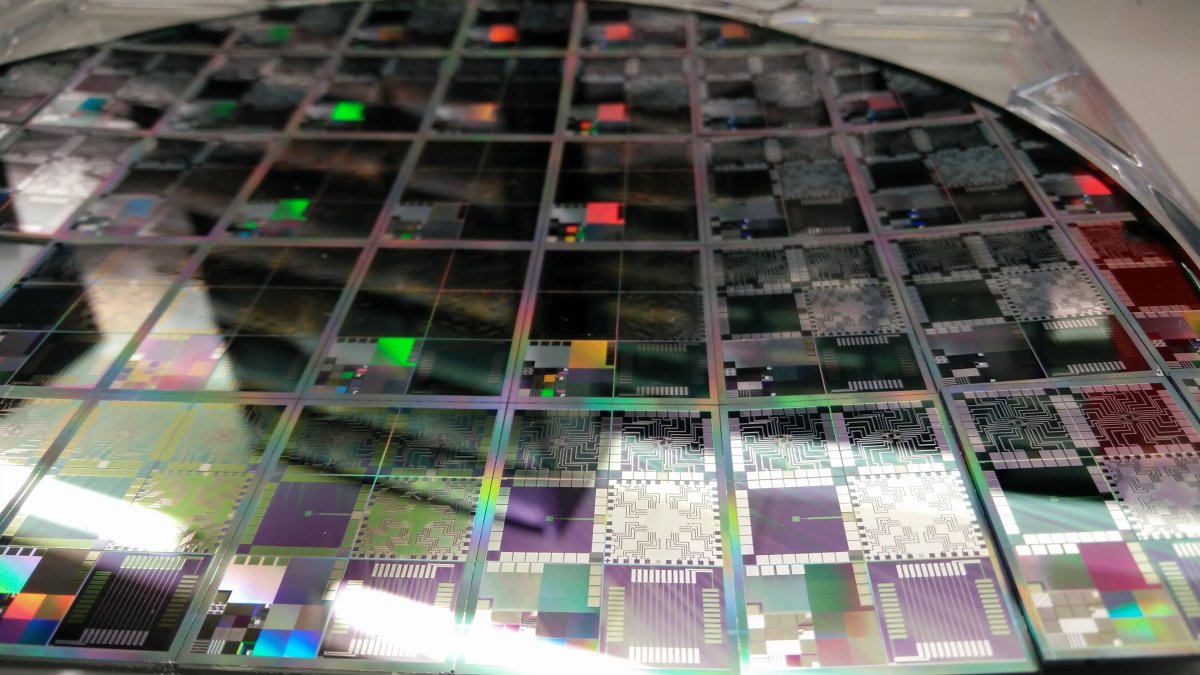
Anthropic's road to a public listing now includes an unusual pitch: the company has told prospective IPO investors that its newly formed 15-person chip design team is using its own Claude models to accelerate engineering work on custom AI silicon, The Information reported this week, with Chinese financial media including Cailian Press amplifying the details.
The disclosure came during closed-door meetings with institutional investors ahead of a listing that could value the company near 1.5 trillion dollars. According to people familiar with internal testing, Claude-assisted design has shortened the overall chip development cycle compared with the conventional workflows used by established players such as Nvidia and AMD, cutting the time from architecture validation through front-end design. Those claims rest on anonymous sources and company self-assessment, and Anthropic has not published independent benchmarks.
The data strategy is as notable as the ambition. To sharpen Claude's semiconductor expertise, Anthropic has approached multiple electronic design automation, or EDA, vendors about licensing their proprietary chip design datasets, according to the report. That pursuit highlights a structural tension: if frontier models trained on design data can compress chip development from years toward months, the specialized software tools and services that EDA firms sell could face competitive pressure, even as those same firms become potential data suppliers.
The move also follows a competitor's playbook. OpenAI's chief financial officer Sarah Friar said in September that the company, working with Broadcom, completed the design of its custom chip Jalapeño in nine months using internal AI systems, with large-scale deployment planned from 2027. Both companies previously confined hardware work to optimizing how their models run on other people's chips; designing their own silicon marks a step change in ambition and capital intensity.
Anthropic first confirmed the existence of its custom chip team in August 2026, saying at the time that it would maintain a multi-chip strategy in which hardware from Amazon, Google, Nvidia and AMD remains central. That positioning may prove hard to keep. The company's biggest investors, which have collectively put roughly 90 billion dollars into Anthropic, are also its primary infrastructure and cloud providers, and a serious push into self-designed silicon could complicate those relationships.
Commercialization faces another headwind even if the technology works. Chipmakers guard their design data closely and, wary of intellectual property leakage, tend to prefer open-weight models deployed in isolated internal environments rather than external frontier models, which would limit any third-party market for a Claude-based design service.
For investors preparing to underwrite one of the largest IPOs in history, the chip pitch serves a rhetorical purpose: it demonstrates that Anthropic's models are not just a product but a production tool inside the company itself. Whether that translates into faster silicon, or into a credible threat to the EDA incumbents, will only be testable once a chip tape-out actually ships.
Comments (0)
Log in to join the discussion
Log InNo comments yet