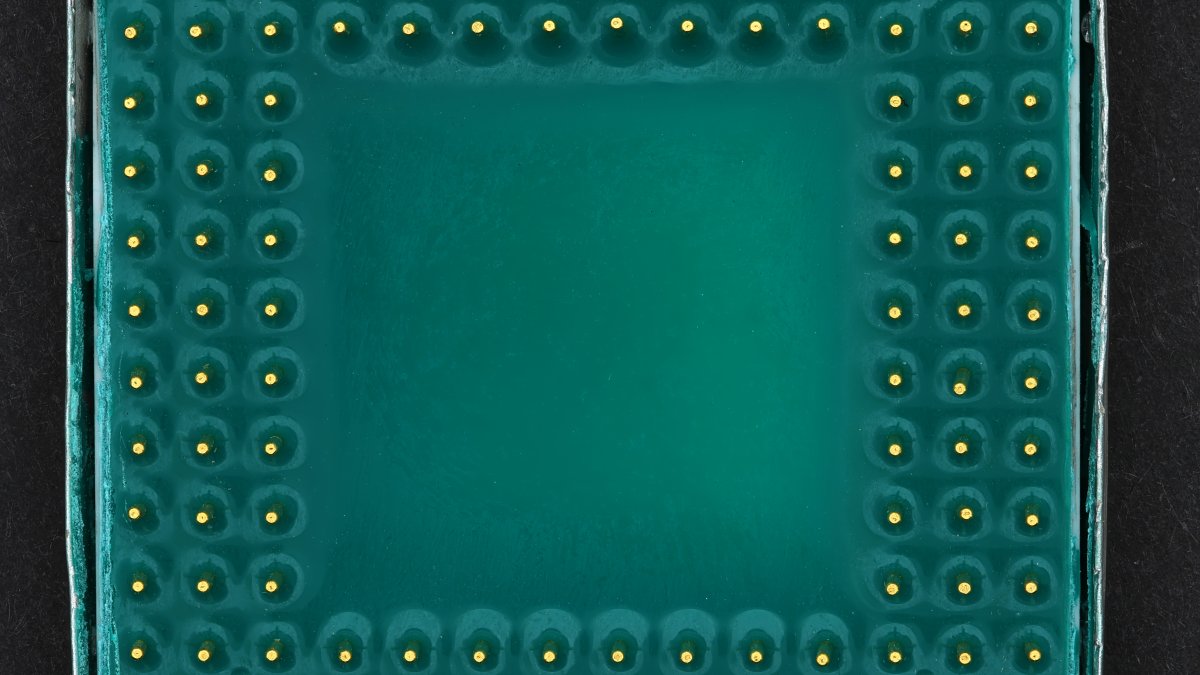
AMD has put a price tag on one of its quietest acquisitions. A quarterly filing disclosed on November 4 shows the company's August deal for Taalas, a Toronto startup building specialized inference silicon, is worth approximately $2.9 billion in cash and stock — with about $1.4 billion of that contingent on unspecified conditions, the Globe and Mail reported. When the deal was announced in August, no terms were given.
The size of the payout is remarkable for a company with no product on the market, and it reveals how valuable AMD considers Taalas's core idea: hardwiring a specific model directly into silicon. Instead of a general-purpose GPU that runs any model, a Taalas chip bakes one model into the hardware itself, cutting memory movement to nearly zero. The company has argued this delivers order-of-magnitude gains in latency and power efficiency for fixed workloads — the kind of inference-heavy, high-volume serving that AI products increasingly demand.
The structure of the deal — roughly half the value contingent on conditions AMD has not spelled out — suggests milestone-based retention, a common mechanism when the real asset is a small team of chip designers rather than revenue or patents. AMD said the purchase will bring Taalas's dedicated inference technology into its portfolio and strengthen the efficiency of its system-level solutions.
Taalas is only the second-biggest bet in AMD's shopping spree. In late September the company agreed to acquire World Labs, the spatial-intelligence startup founded by Fei-Fei Li, for about $8.2 billion in an all-stock deal, and said Li will become AMD's chief scientist once the transaction closes. Both deals are expected to complete by the end of 2026, and AMD's latest earnings call confirmed the purchases are central to its push across what it calls the full AI technology stack.
The spending comes against a booming quarter. AMD's data center revenue nearly doubled to $8.55 billion in Q3, and management guided Q4 to about $17 billion, above Intel's projection — while telling investors that 2027 revenue growth could exceed 80 percent, with data center work making up more than 80 percent of the total. Supply, not demand, is the constraint: AMD says it is prepaying suppliers for wafers, substrates, HBM memory and advanced packaging capacity to feed its Helios rack-scale systems.
Strip away the deal mechanics and the strategy is straightforward. GPUs are a shared commodity in which AMD must fight NVIDIA model for model; hardwired inference silicon and spatial-intelligence research are ways to own differentiated pieces of the stack that cannot be replicated by renting more Hopper-generation hardware. The $2.9 billion question is whether customers will accept chips that can run exactly one model — and whether that bet pays off before general-purpose silicon gets efficient enough to make specialization irrelevant.
Comments (0)
Log in to join the discussion
Log InNo comments yet