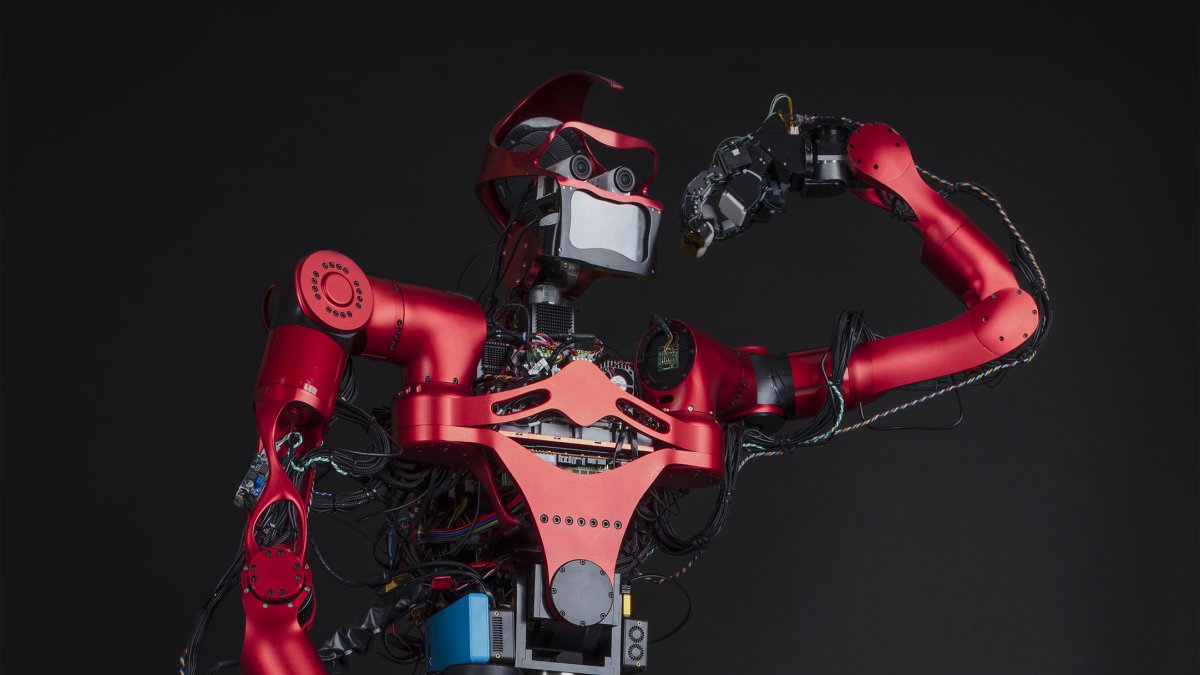
Xiaomi founder Lei Jun published a video on Monday morning showing the company's humanoid robot completing its first continuous eight-hour shift inside Xiaomi's car factory in Beijing - a full working day, not a demonstration loop. The task: sorting console side covers at a station on the assembly line, meeting the station's full-shift production demand, according to the company.
In the footage, the robot picks side covers from a delivery rack and slots them into a sorting rack alongside the line, coordinating with the production system as the line's takt time changes. Xiaomi says the robot also corrects anomalies on its own during the shift - a flag it raises itself when something is off rather than freezing or silently misplacing parts. The company is careful to note the robot still works more slowly than it ultimately should, and this remains a single-station trial, not a fleet deployment.
The progression tells the real story. In March 2026, the robot managed three continuous hours on a self-tapping nut loading station with 90.2 percent dual-side installation success at a 76-second line takt. By July, the same station hit 98 percent success and the robot had picked up two harder jobs: console side-cover sorting and folding crate recovery. November's eight-hour shift is the first time the robot has covered an entire workday at one station.
Le Jun's post also confirmed the domestic side of the program. Xiaomi's embodied foundation model has begun a pilot in a Xiaomi youth apartment, where the company says it runs continuous missions of more than 30 minutes covering three rooms and over 50 tasks - tool preparation, tidying sofas and desks, clearing trash, sorting and returning items, room inspection and exit. The claimed value of that loop is data: every home shift feeds the model real physical-interaction experience.
Xiaomi has open-sourced two generations of its embodied base model, Xiaomi-Robotics-0 and Xiaomi-Robotics-1, and says it has contributed to dozens of humanoid robotics standards. All of the performance figures above come from company posts and have not been independently verified.
The eight-hour milestone matters because it is the number factory managers actually care about. A robot that works 90 minutes and needs an operator is a research project; one that covers a full shift at line takt starts to have a business case. The open question - the same one facing Tesla's Optimus and every other humanoid program - is whether reliability holds across stations, seasons and supply variance, and whether the cost math beats the articulated arms that already run these lines. Xiaomi's answer, for now, is that a general-purpose humanoid whose hardware never changes is worth the wait.
Comments (0)
Log in to join the discussion
Log InNo comments yet