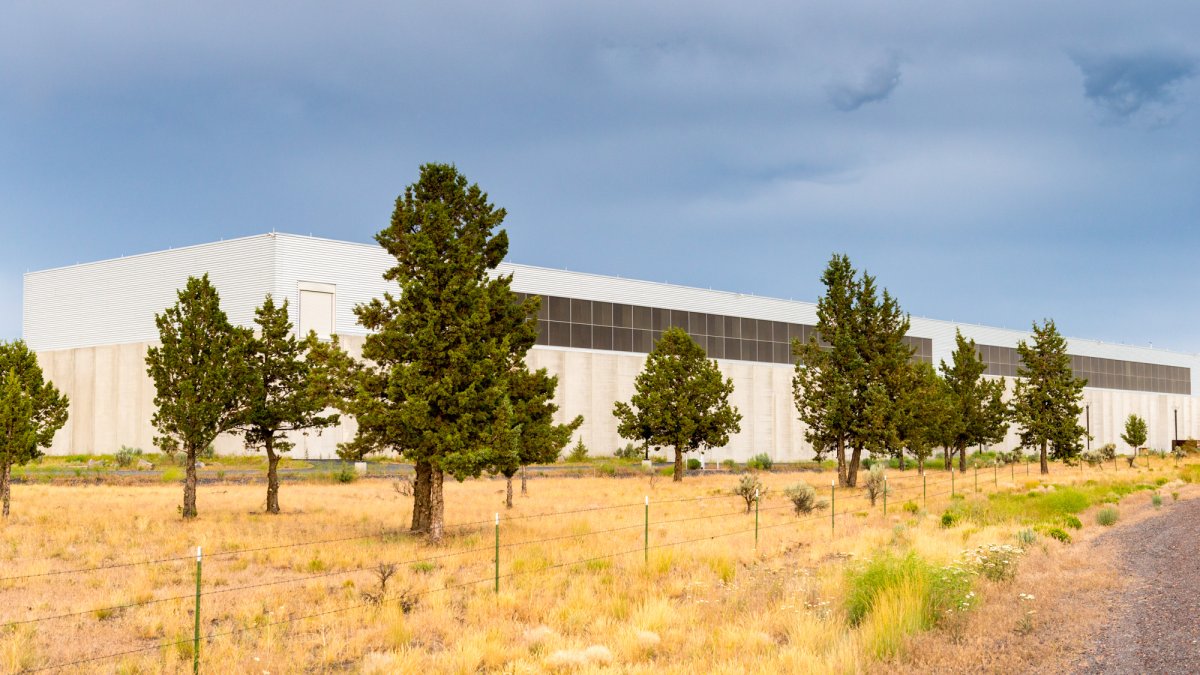
Meta has published an unusually candid engineering account of Prometheus, the gigawatt-scale training supercluster it is building in New Albany, Ohio. The post, written by Meta's data center engineering team, describes how a campus that was a conventional web-traffic data center only two years ago has been rebuilt into one of the largest single AI training sites the company operates.
Prometheus is being built in phases. The first phase is complete and, according to Meta, was used to train its Muse family of foundation models, including Muse Wonder, the agentic model the company has positioned as competitive at the frontier. Today the cluster spans several interconnected buildings connected by miles of fiber and holds hundreds of thousands of Nvidia GPUs; at full build-out Meta expects roughly one million distributed GPUs working as one machine.
The most telling numbers concern reliability rather than raw FLOPS. Meta says Muse Wonder pretraining ran at more than 85 percent goodput, meaning effective, useful compute after faults and stalls, while reinforcement learning runs exceeded 90 percent. Mean time between interruptions during training was about 47,000 GPU-hours at first; after firmware fixes and other tuning, the company says that figure has climbed past 54,000 GPU-hours and continues to improve.
Those figures are Meta's own, reported by the company and not independently audited. But they matter because at this scale, a single point of failure can idle an entire training run, and goodput, not peak performance, is what actually determines how much model a lab gets per dollar. Rivals including OpenAI, Anthropic, Google and xAI have all made similar reliability arguments while promoting their own mega-clusters.
On the hardware side, Prometheus currently runs two generations of Nvidia platforms. The first-generation Catalina racks use GB200 NVL72, including an Ariel variant that pairs two racks of 36 GPUs into a single 72-GPU NVLink domain, mounted in Open Rack V3 high-power enclosures. Meta says a third-generation platform based on Vera Rubin NVL72 is on the way, which would put the cluster on Nvidia's newest silicon as it scales.
The strategic context is a full-throttle infrastructure race. Analysts at SemiAnalysis argued this month that the industry is lined up for a 50-gigawatt acceleration in data center capacity in 2027, and Meta itself has committed to multi-gigawatt campuses beyond Ohio. A supercluster that can actually hold a million GPUs in one coherent training fabric, if Meta delivers it, would be the physical backbone of whatever comes after the Muse generation.
What the blog post quietly confirms is that the bottleneck for frontier AI has moved from chips to systems engineering: power delivery, cooling, fiber, and the unglamorous firmware work that keeps 47,000 GPU-hours between interruptions from becoming 4,700. Prometheus suggests Meta believes that, on that particular scoreboard, it is ahead.
Comments (0)
Log in to join the discussion
Log InNo comments yet