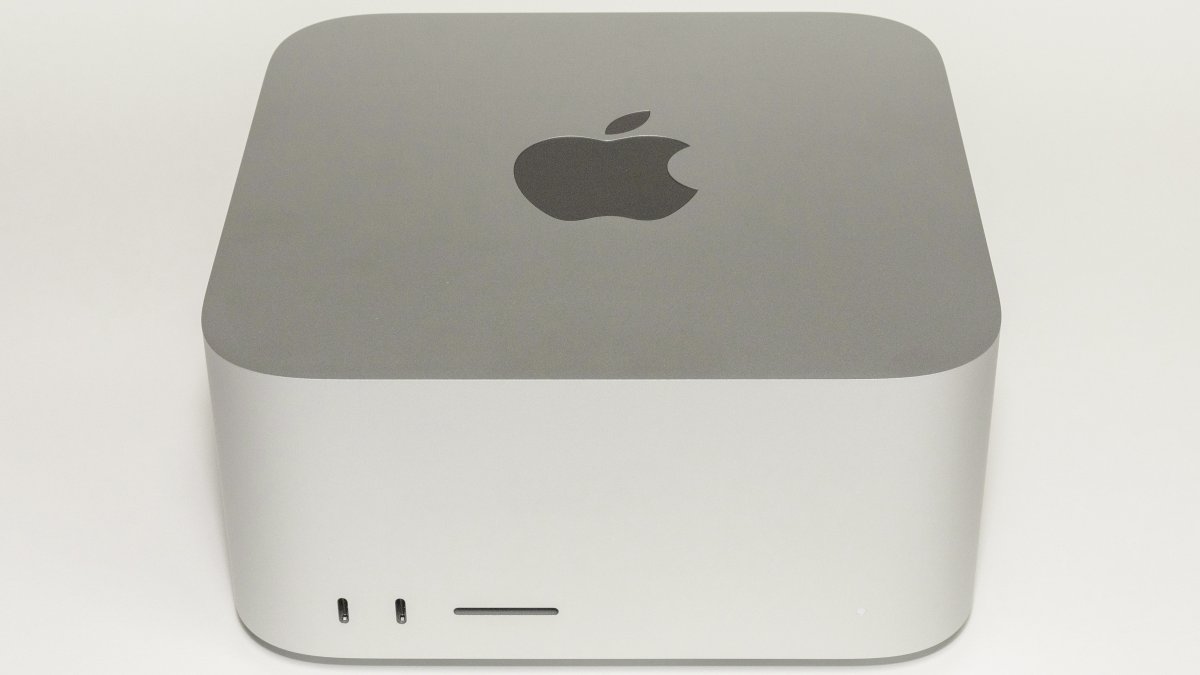
Meta on Thursday released the weights of Muse Spark Open, a new open-weight model it bills as the most capable ever published by a U.S. company, and made the announcement memorable with an unexpected co-pilot: Apple. The two longtime rivals worked together so the model can run locally on Apple's high-end Mac Studio desktops, with weights downloadable from Hugging Face and GitHub under Meta's Muse Model License, which permits limited commercial use.
The specifications are firmly in frontier territory. Muse Spark Open is a native multimodal mixture-of-experts model with 816 billion total parameters and 42 billion active per token, a context window of up to 1 million tokens, and compressed weights that occupy roughly 493GB of storage. Meta designed it for coding, multistep reasoning and agentic work — the model can plan and execute long task chains rather than answer one prompt at a time.
The catch is scale: no single desktop can hold it. Apple's solution, published alongside the release, lets developers connect two M5 Ultra Mac Studios with 512GB of unified memory each, or four machines with 256GB each, with an updated MLX framework splitting the model across Thunderbolt 5. Apple says the four-machine configuration works today while the 512GB setup ships in late October, and that in its tests four Mac Studios generated more than 36 tokens per second. "Two Mac Studios behave like one supercomputer," Meta wrote in its announcement. The hardware bill exceeds $40,000 before upgrades.
The demos lean on that local horsepower. Meta showed Muse Code — its coding agent running on the model — fixing bugs in Ice Cubes, an open-source Mastodon client for iOS, and driving DaVinci Resolve to review footage and cut vertical clips, all without a cloud round trip. Mark Zuckerberg posted a screenshot of the agent running on a Mac and thanked Apple's John Ternus, who replied that it was "remarkable" to run a model of this size so efficiently on a desktop. Meta's AI chief Alexandr Wang was blunter about the thaw between the two companies: "We're excited for mommy and daddy to be playing nice again." He credited Meta compute co-lead Daniel Gross, a former Apple director, as a key broker of the collaboration.
The benchmark claims deserve an asterisk. Meta's assertion that Muse Spark Open is the top U.S. open-weight model rests on its own evaluations, which place it first in six categories including workflow execution, tool calling, knowledge reasoning and complex visual reasoning. The same data shows Chinese open models from Kimi, Qwen and Zhipu still ahead on some software engineering tasks. Meta also acknowledged the open release sits below Muse Wonder, the closed model it launched Monday — the company's sharpest capabilities stay proprietary. All benchmark figures cited here are company-reported and have not been independently verified.
Distribution is broad. Hosted APIs are live through Baseten, Fireworks AI, Groq, Modal, Nebius, OpenRouter and Together AI, while weights are available via Amazon SageMaker AI, Google Cloud Model Garden, Hugging Face and Microsoft Foundry Models. Inference support spans SGLang, vLLM, TensorRT-LLM, Transformers, MLX, llama.cpp and Unsloth, with optimizations for AMD, Apple, Intel and Nvidia silicon.
Strategically, the release is a two-handed play. Meta gets proof that its open-weight line can live outside its own data centers, undercutting the narrative that only closed labs can ship frontier-class models. Apple gets a flagship demonstration that Mac silicon can host AI workloads developers would otherwise rent from a cloud — with the privacy pitch that Meta has no visibility into local use. A rivalry built on app-store fees and ad-tracking fights has found, for now, a shared interest in very large files.
Comments (0)
Log in to join the discussion
Log InNo comments yet