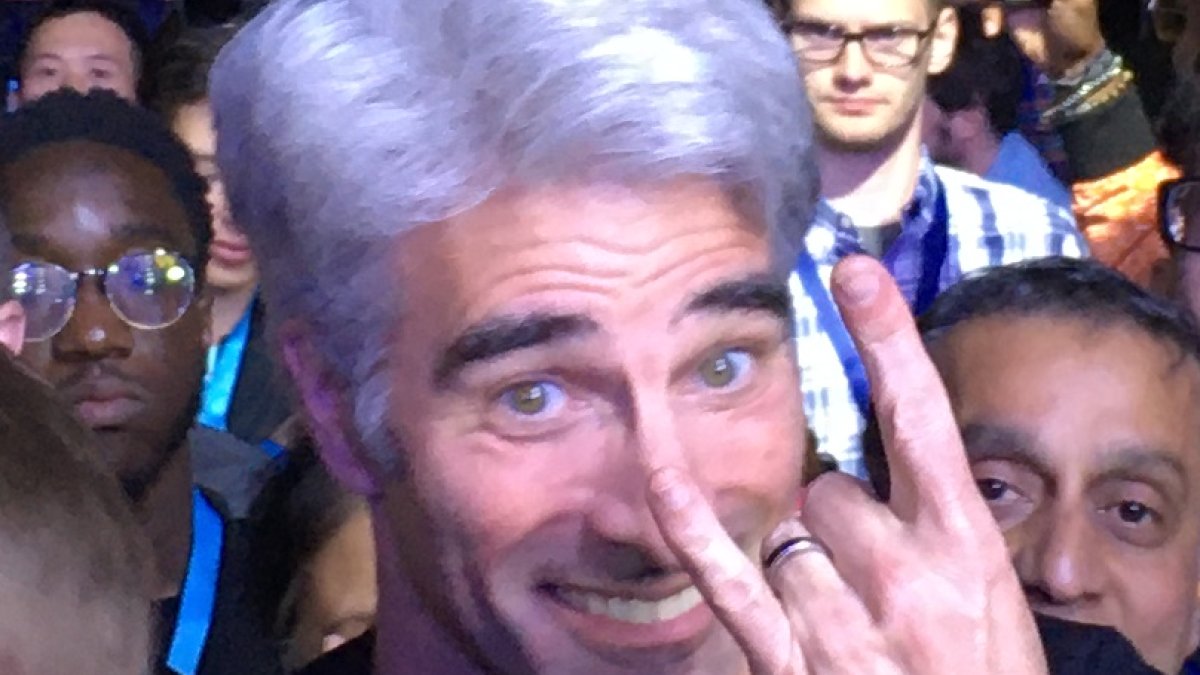
Apple's new chief executive wants the software organization to move faster on AI - and he has gone directly to the person in charge to say so. Bloomberg's Mark Gurman reports that CEO John Ternus held a closed-door meeting with software engineering chief Craig Federighi to demand more urgency, pushing the team beyond incremental Siri AI tweaks toward agentic and other advanced capabilities. According to the report, Apple wants Siri to behave more like an autonomous agent as early as next year: pursuing a goal, judging its own next step and continuing to execute a task rather than waiting for the user to issue each instruction.
If that description sounds familiar, it is because Apple's competitors have already staked the ground. Meta's Muse agents and SpaceX's Grok Bot each run inside their own virtual machines, working through tasks in the background and delivering results when they are done. Gurman notes that Apple's App Intents framework gives the company a different route to the same destination: Siri can act through deep system-level integrations rather than driving a generic computer interface, which makes execution cheaper and, in theory, more reliable. The trade-off is breadth - an intent-based agent can only do what apps expose, while a VM-based agent can attempt anything a user could.
The report also lands on the leadership question hovering over the effort. Mike Rockwell, the former Vision Pro chief who was moved over to lead the Siri AI team, is "seriously considering" his next move and could step down from the Siri AI role in 2027 or leave Apple altogether, according to the same Power On column. Gurman names two possible successors: Amar Subramanya, the former Google researcher who spent sixteen years there including on Gemini Assistant before a stint at Microsoft, and who took over Apple's foundation model work when John Giannandrea retired; and Sebastien Marineau, a longtime Apple engineering executive who reports to Federighi and has been floated internally as a potential Federighi successor in his own right. Both currently report to Federighi. Apple did not respond to the report.
Underneath the personnel question is a structural mismatch in how Apple plans its work. Gurman reports friction between Federighi's software teams, which typically plan on a 12-to-18-month horizon, and hardware divisions that work from multi-year roadmaps - a cadence that clashes with the iteration speed the current AI race demands. One response already underway: Apple is experimenting with a new engineering pipeline that deploys coding agents to write and audit code, with the goal of giving engineers roughly 50% more time for actual coding and exploration while compressing the system-integration phase that traditionally slows each release.
Context for the impatience is not hard to find. The deep app-control version of the upgraded Siri has reportedly slipped again, with internal expectations now pointing to spring 2027 at the earliest. Ternus, less than three months into the top job after succeeding Tim Cook, told Wired in October that Apple would "absolutely" leverage AI but refused to ship features that exist for hype - a philosophy that reads differently the longer rivals ship agentic products first. Meanwhile the HomeView smart-home hub, where Siri agent capabilities are expected to matter most, is set to go on sale November 13.
Whether Federighi can accelerate without breaking what makes Apple Apple is the open question. The company has consistently traded speed for polish and privacy review, and agentic assistants raise exactly the failure modes that punish both: an agent that misreads a goal and acts autonomously is worse than one that waits for instructions. But the competitive math is changing - Muse, Grok Bot and Tencent's WorkBuddy assistants are already running background tasks for real users, and Apple's answer so far has been a better memory and an open App Intents platform. The Power On report suggests the internal verdict on that pace has turned from patience to pressure. Nothing here is confirmed by Apple, and Gurman's track record on Apple roadmaps is strong but not infallible; treat the timeline as an internal ambition, not a shipped promise.
Comments (0)
Log in to join the discussion
Log InNo comments yet