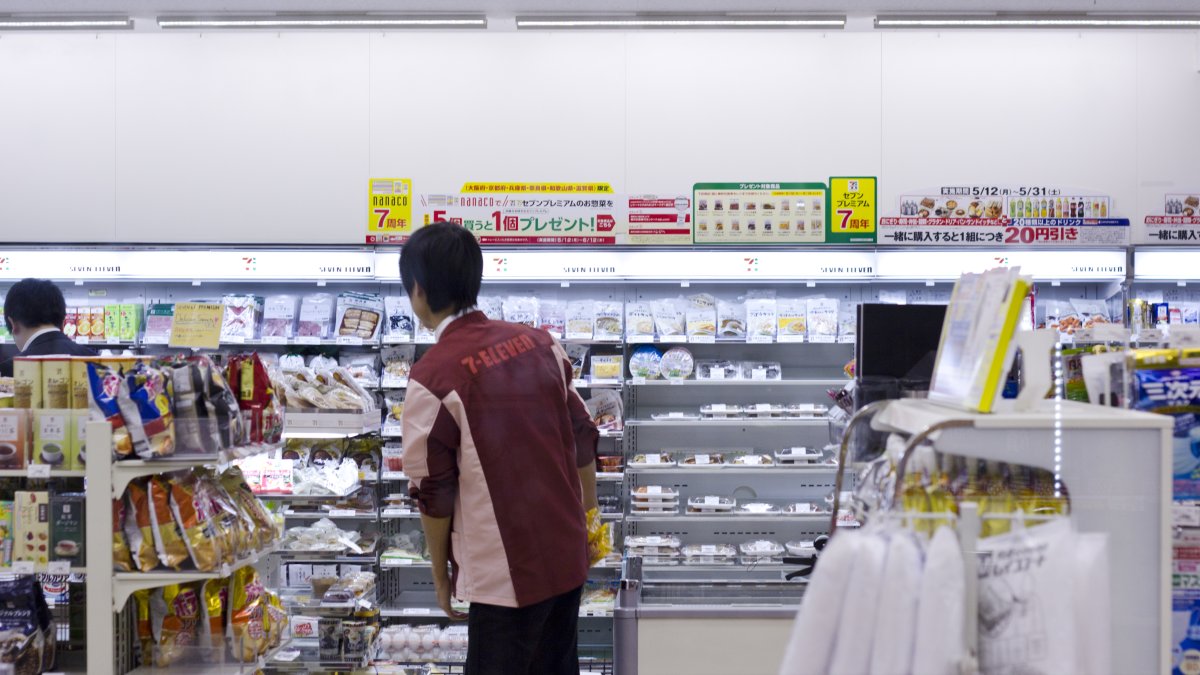
In March 2025, Hongqi Chain — Sichuan's dominant community convenience chain and the first convenience-store operator to list on China's A-share market — announced it was developing a "robot unmanned retail system." The market loved it: the stock hit its daily limit the next day and climbed roughly 35 percent by late April 2025. Sixteen months later, the company quietly terminated the project, and the story of why is a field study in the gap between lab demos and real retail floors.
The warning signs came early. Hongqi's own risk announcement acknowledged three problem areas: robotic arms had high grasp-failure rates on dense shelving and irregularly shaped goods; vision systems misidentified items or positions under varying lighting; and the system needed to juggle obstacle avoidance, stable data links and smooth payments simultaneously. A prototype was expected to roll off the line in May 2025. It never reached stores.
In early July 2026, Hongqi announced the termination, saying the system had "not reached the standard for large-scale commercial deployment" and that the company would shift resources to scaling its 24-hour cloud-staffed store business instead. A source close to the company told quantum-bit outlet QbitAI's robotics desk what killed it in practice: in summer, glass-bottle cold drinks developed condensation, robots could not grip them reliably and kept shattering them; complex packaging was unstable; and real aisles were narrower than lab layouts, with customers and staff constantly in the work envelope.
The economics were sobering too. Hongqi's 2025 annual report shows R&D expenses of about 2.8668 million RMB — the first time the company had ever disclosed an R&D line, suggesting the robot project's total budget was on the order of 2.9 million RMB, roughly 400,000 US dollars. "If two million RMB could solve retail robotics, embodied-AI companies would have no reason to exist," one industry insider told QbitAI. "One core scientist's annual salary costs more than that."
Yet the failure stands out against a boom: QbitAI's survey counts more than 100 robot retail kiosks across 30-plus Chinese cities, including Hong Kong, and at least 17 companies' robots operating in real stores — convenience kiosks, coffee and ice-cream stations, pharmacy picking. The reality behind most of them is humbler than the pitch. Reporters visiting Beijing kiosks found robots that take 20-plus seconds to fetch one bottle of water, shelves pre-arranged by hand, and a human attendant on site all day to restock, charge and reboot the machine. One robot's entire interaction loop reset after each order — "like a goldfish with no memory," the report noted.
The money doesn't close either: a retail robot runs near 700,000 RMB and a full kiosk close to a million, against SKU counts in the dozens and single-store weekly revenue of about 21,000 RMB during the May Day holiday. Industry veterans quoted in the piece describe robot retail as a marketing channel — an advertisement that happens to sell water — rather than a business, concentrated in scenic spots and landmark districts where tolerance for failure is high and foot traffic is the point. Their consensus estimate: two to five more years before a robot can genuinely replace a store clerk, and the sector is still waiting for its "GPT moment."
Comments (0)
Log in to join the discussion
Log InNo comments yet