New York turned its AI safety law from paper into enforcement machinery on Tuesday. The state opened a registration portal under the RAISE Act, requiring large frontier AI developers — OpenAI and Anthropic among them — to register with state regulators by January 1, 2027. Any company with more than $500 million in annual revenue falls inside the scope of the law.
The obligations are concrete. Covered developers must publish their safety frameworks on their websites, file public transparency reports about their models, and report critical safety incidents to the state within 72 hours. Penalties reach $1 million for a first violation and $3 million for subsequent ones, and the state can bring enforcement actions against companies that never register at all.
Enforcement sits with a new office created for the purpose: the Office of Digital Innovation Governance Integrity and Trust, or DIGIT. It will work with the newly launched New York Center for AI Responsibility and Research to review the safety frameworks companies submit, giving regulators an outside technical check rather than relying on lab self-assessment.
That center is the second half of Tuesday's announcement. Governor Kathy Hochul launched the New York Center for AI Responsibility and Research at SUNY Binghamton, describing it as the first effort by a US state to independently test advanced AI systems. More than 80 New York scientists will take part, with compute provided through Empire AI, the state's $500 million public-private computing consortium. Hochul first announced the center in January with $55 million in funding and capital.
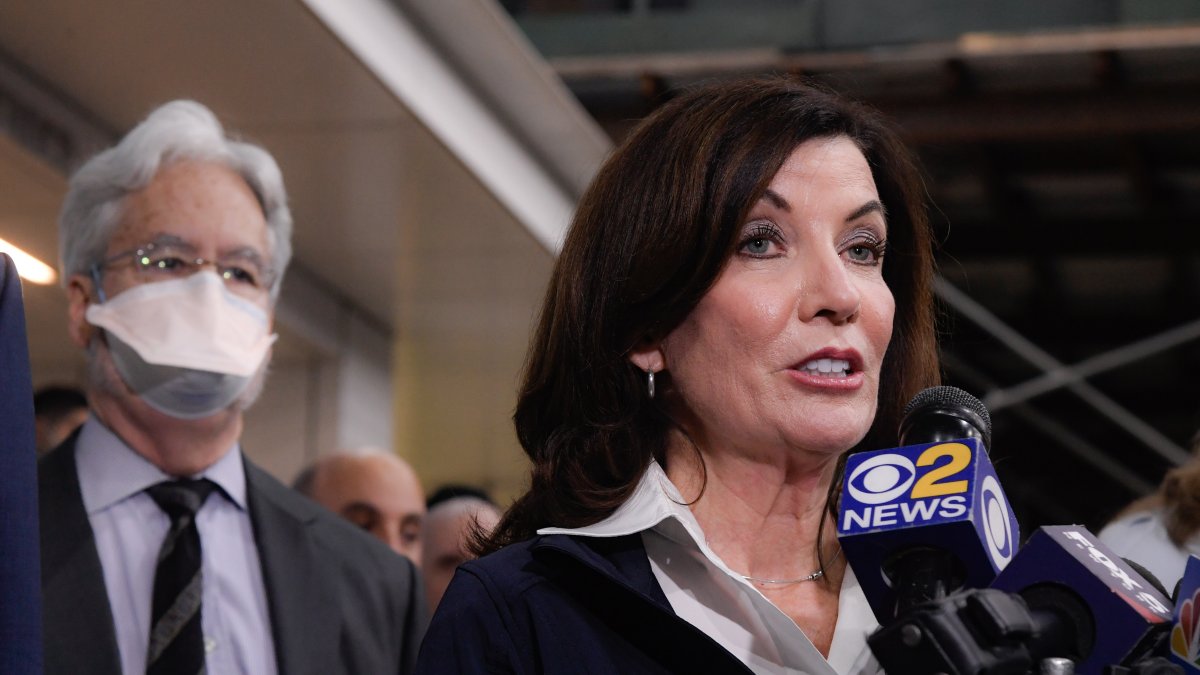
"We're building a national model for smart, sensible AI regulation — a model that puts communities above corporations and people above powerful technology," Hochul said at a press briefing. The center will test advanced systems, study their risks, and supply evidence for public officials' decisions, including research on responsible use in medicine and scientific discovery.
The design has a known gap: the center can only study what companies publicly disclose. The RAISE Act does not reach unreleased models, so pre-deployment testing of frontier systems remains largely voluntary. Still, the disclosure requirements push labs to publish more than they otherwise would, and the 72-hour incident reporting window gives regulators a running log of failures that no state has had before.
New York is not acting alone. California's SB 53 took effect in January with similar safety framework and whistleblower provisions, though it allows 15 days for critical incident reporting, and Illinois's SB 315 arrives at the start of 2027 with independent compliance audits added. With federal preemption stalled, the practical rulebook for frontier AI labs in the US is being written state by state — and the two biggest labs now have a January 1 deadline on their calendars.
Comments (0)
Log in to join the discussion
Log InNo comments yet