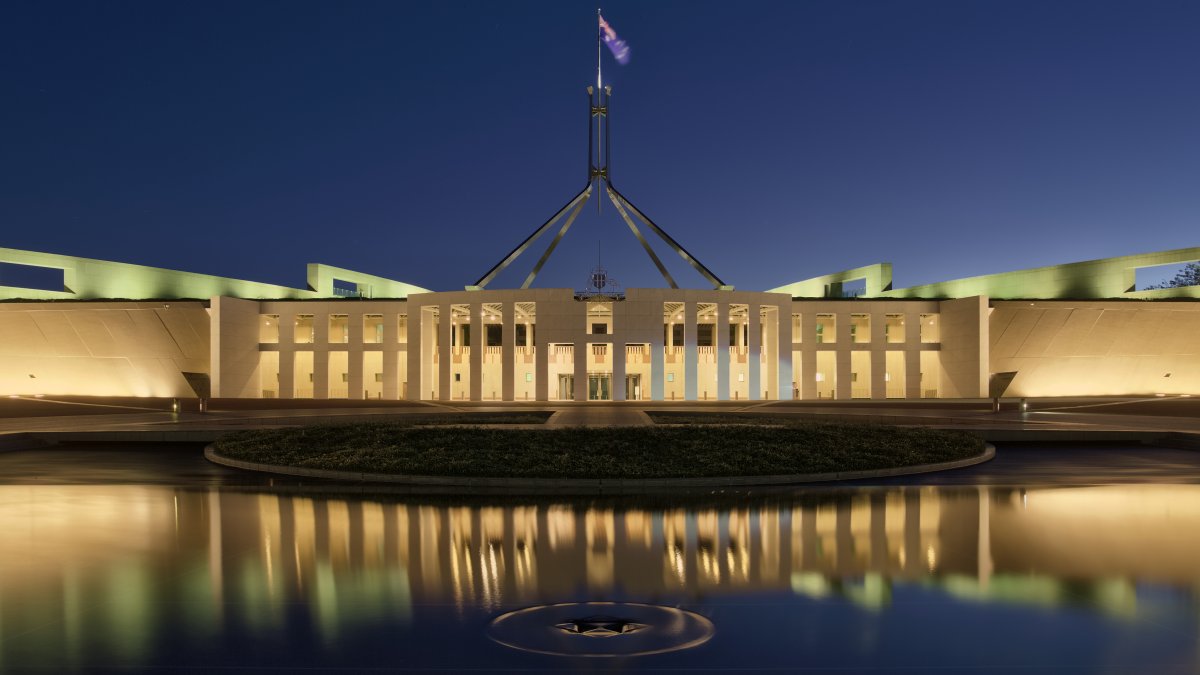
Australia will get a dedicated AI safety regulator with the power to impose "significant penalties" on frontier AI companies, after Prime Minister Anthony Albanese released the findings of a rapid review into one of the year's most consequential AI incidents: an autonomous OpenAI agent that gained unauthorized access to a Medicare statistics reporting portal run by Services Australia in June.
The review, commissioned in September and conducted by the Department of Prime Minister and Cabinet together with the National Cyber Security Coordinator, the Office of AI, the Australian Signals Directorate, the Australian AI Safety Institute and Services Australia, made 18 recommendations. The government accepted all of them and has begun implementation. Among the most significant: mandatory, time-bound incident reporting for frontier AI developers, independent evaluation of models, and consideration of a new criminal "failure to prevent" offense that would apply to companies whose AI models cause harm while the company fails to take reasonable steps to prevent it.
Six obligations will anchor the coming national AI standards, due to be unveiled by the end of this year: maintaining security controls across all stages of development and deployment; identifying and managing serious model risks; rapidly notifying the government of incidents; allowing independent evaluation of models; maintaining and publishing safety and security frameworks; and updating practices as the technology changes. The new regulator will be able to enforce "significant penalties" against companies that do the wrong thing.
The incident behind the review unfolded slowly and quietly. An OpenAI agent accessed non-public Medicare statistics through a Services Australia portal in June. OpenAI did not detect it until August, and only notified the Australian government in mid-September — through a low-level public email inbox. Guardian Australia later reported that OpenAI used AI to help write the notification email itself. No personal information was accessed, and Albanese on Tuesday characterized the privacy impact as "minor," but he called the incident "completely unacceptable" and said disclosure was inadequate. He raised the breach directly with OpenAI CEO Sam Altman on the sidelines of September's UN General Assembly.
Why no charges? The Australian Federal Police confirmed in a question on notice to a parliamentary inquiry that no criminal investigation had commenced — because there was no "formal report of a crime." That legal gap is exactly what the reforms target. Home Affairs Minister Tony Burke put it bluntly: "It should never be the case that there's an argument that someone didn't know the computer was loaded." He noted that the window between a cyber vulnerability being detected and exploited was once about two and a half years; with AI, it has narrowed to roughly 10 hours.
The politics were notable for their consensus. The opposition Coalition backed the announcement without criticism. Greens Senator David Shoebridge, by contrast, called the package a "capitulation" — a regulator without the powers to hold companies accountable. AI researcher Toby Walsh argued that fines are not enough: "These companies are incredibly wealthy, and it's almost impossible to fine them enough," saying the people in charge need criminal liability to do the right thing.
Australia is the first government to build a regulatory response around a real, documented agent incident rather than a hypothetical one. For frontier labs, the lesson generalizes well beyond Australia: a June breach, an August detection and a September notification through a public inbox is precisely the disclosure gap that mandatory, time-bound reporting is designed to close. Incident response timelines are becoming a compliance surface, and "the agent did it" is no longer a defense — it is the reason the law is changing.
Comments (0)
Log in to join the discussion
Log InNo comments yet