Torus, a Salt Lake City manufacturer of distributed power and compute infrastructure, on Wednesday launched Foundry, a prefabricated modular AI data center that packages power, storage, cooling, networking and compute into a shipping-container-scale system, alongside a $500 million growth round. The Series C was led by Magnetar with participation from ICONIQ, Origin Ventures, Ridgeline Partners and Trinity Capital. Foundry's first customers include AI infrastructure company Hydra Host and another AI cloud provider.
The pitch starts from a bottleneck everyone in AI now recognizes. Torus argues the constraint is not generation but capacity: much of the US grid has unused headroom sitting between substations and the commercial and industrial buildings already connected to it. Foundry installs behind the meter on existing interconnections, drawing steady high-load-factor demand without new grid construction. CEO and founder Nate Walkingshaw framed it as a reversal of the usual model: "Most providers are bringing power to the chips. Foundry brings the chips to power."
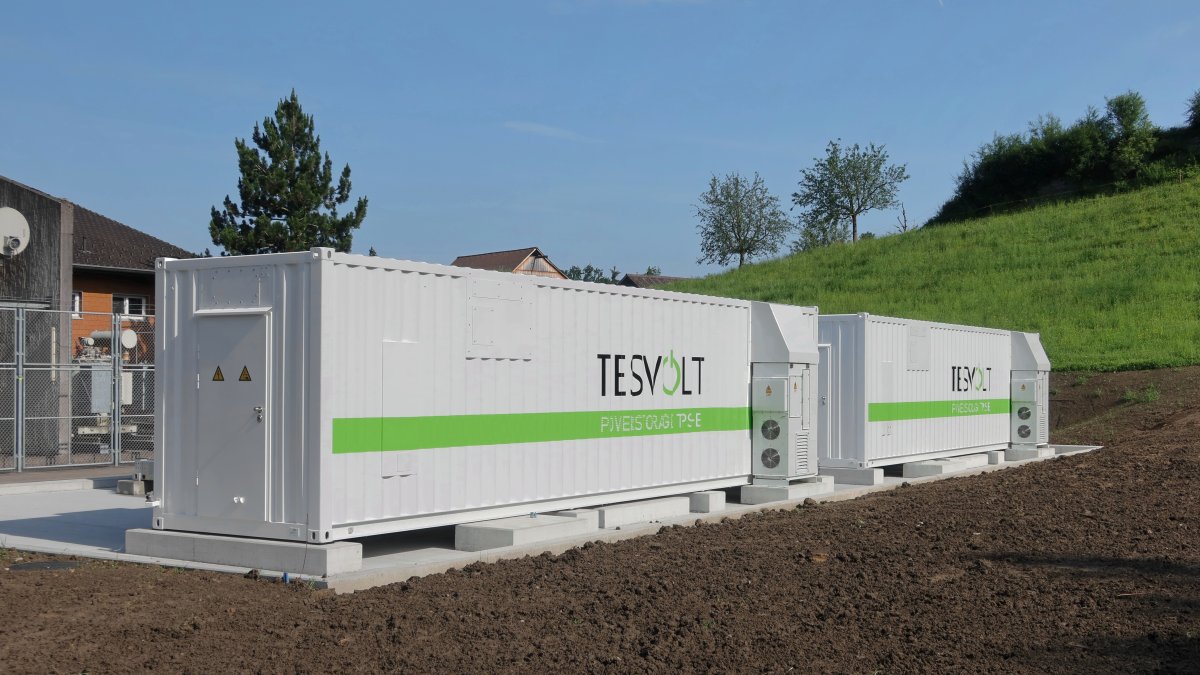
The product details are unusually specific for a launch. Foundry sites range from 1 to 20 MW, the smallest system is roughly the size of a small cargo van, and the company says a deployment goes from contract to running AI workloads in 12 to 16 weeks, with about a week of site preparation and one to two days of installation. Every Foundry is paired with Torus Reserve, a storage and load-shaping unit that combines an inertial flywheel with batteries to cover demand peaks, ramp power in milliseconds and smooth GPU loads for the grid. Cooling is waterless and closed-loop, using 95 percent less water than evaporative systems, per the company. Foundry ships in three commercial models: a powered shell without GPUs, a turnkey bare-metal unit, and single-tenant sovereign capacity sold directly to enterprises.
Manufacturing sits at GigaOne, Torus's 545,000-square-foot plant in Salt Lake City, where the company says it opened a new production line every 21 days in 2026. The Foundry line is designed for 500 MW of IT load with plans to expand toward 1 GW, and the roughly 400-person company says thousands of its GPUs are deployed today, targeting more than 47,000 GPUs in Foundry units by the end of 2027 — figures that are company projections, not independently verified.
The market logic leans on numbers like McKinsey's projection that data center demand for AI inference will grow 35 percent a year through 2030, versus 22 percent for training. Inference runs continuously and benefits from sitting close to users, which pulls compute toward distributed, smaller sites rather than gigawatt campuses.
Foundry lands in a week when grid politics are catching up with AI buildout: the US Senate is taking up a bipartisan energy bill that would speed permitting for new plants and transmission while requiring large data center operators to shoulder more of the grid upgrades they trigger. Whether the answer to AI's power problem is gigawatt campuses or thousands of container-sized sites is now a live architectural debate — and Torus just raised half a billion dollars betting on the latter.
Comments (0)
Log in to join the discussion
Log InNo comments yet