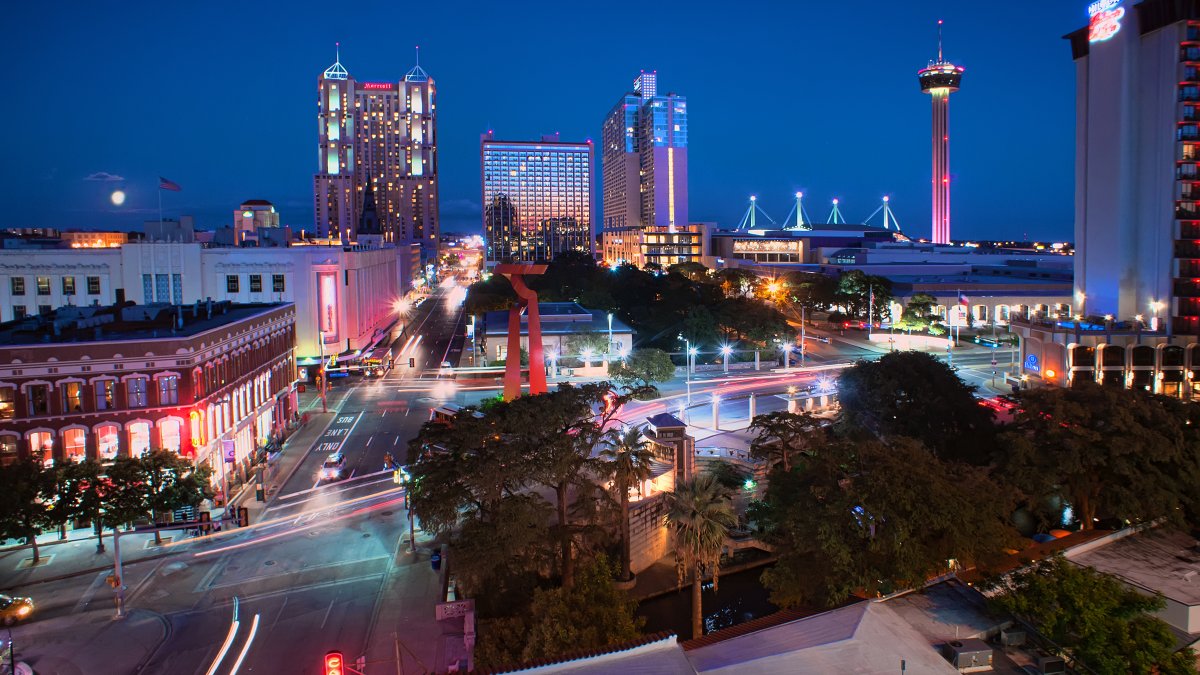
Tesla began accepting driverless Robotaxi passengers in San Antonio at 5 a.m. on November 9, making it the company's eighth unsupervised ride-hailing city and its fifth in Texas. The announced geofence covers roughly 274 to 275 square miles — the largest day-one service area Tesla has ever launched, eclipsing even Austin's opening map.
The zone centers on downtown and covers nearly everything inside Loop 410, extending north to Loop 1604 between Interstate 10 and U.S. 281, west past State Highway 151, east beyond Interstate 35 and south toward Interstate 37. Tesla says the area encompasses about one million residents. San Antonio International Airport sits inside the mapped zone, but airport pickups and drop-offs are not yet offered.
The fleet consists of modified Model Ys operating without an in-car safety driver, consistent with Tesla's recent unsupervised expansions. The two-seat Cybercab remains mostly limited to Austin for now. Tesla's official Robotaxi account announced the launch on X just after midnight, posting a map of the operational area.
The pace is striking when laid out by city: Austin launched with first rides on June 22, 2025 and has since expanded to 435 square miles; Houston opened at 254 square miles on April 18, 2026; Fort Worth debuted unsupervised service at 143 square miles on November 2, just one week before San Antonio; Dallas covers 81; Miami 31; Orlando 26; Tampa 24. Tesla began this year with no unsupervised rides at all.
San Antonio is also the first US market where two fully driverless operators compete for the same riders simultaneously. Waymo has operated in the city since February with a zone of about 59 square miles that already includes airport access. Waymo paused service for months earlier this year after flooding damaged vehicles, then relaunched in October with a redesigned flood-detection system.
One caveat tempers the headline number: independent tracking of Tesla's earlier launches in Austin, Miami and Houston found that only 59 to 78 percent of the advertised geofence area was actually bookable in the app. The real San Antonio service area may be meaningfully smaller than the map suggests. Investors shrugged off the ambiguity: Tesla shares rose 5.54 percent on Monday to close at $378.05.
The Texas strategy is deliberate — concentrate driverless expansion within a single permissive regulatory state before entering new regions nationally. What to watch next: how many vehicles Tesla actually deploys in San Antonio, whether airport access arrives, and how quickly the gap between advertised and bookable coverage closes. Tesla has said it aims for broader 24/7 operations by the end of 2026.
Comments (0)
Log in to join the discussion
Log InNo comments yet