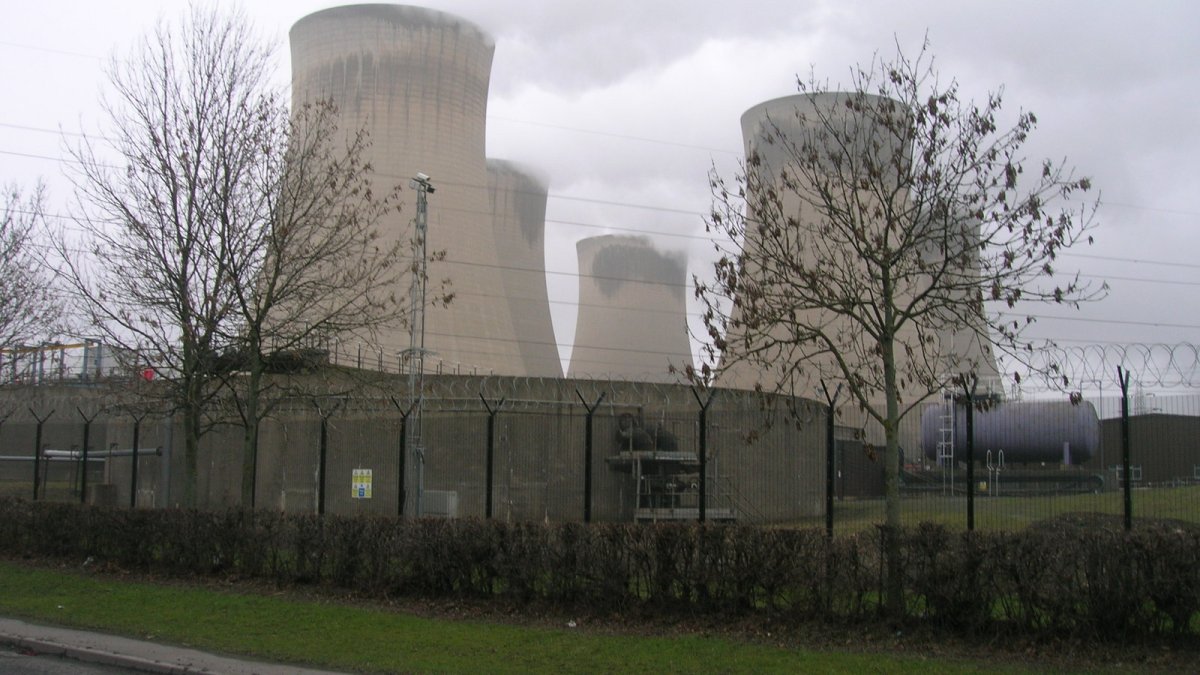
The largest single source of renewable electricity in Britain is being drafted into the AI build-out. On 3 November Drax Group, Brookfield and Radiant, Brookfield's UK-headquartered AI infrastructure platform, announced a strategic partnership to develop, deliver and operate gigawatt-scale data centre capacity on the Drax Power Station estate in North Yorkshire, with financing from the Brookfield-Qai joint venture.
The money is large even by the standards of this cycle. Brookfield estimates total investment in the full development could exceed 20 billion pounds, with roughly 2.5 billion pounds behind the first phase alone. Bloomberg put the potential figure at more than 26.8 billion dollars including semiconductor equipment, a reminder that in AI data centres the chips now cost more than the buildings around them.
The site is the argument. Drax's estate covers 1,000 acres and holds 4 gigawatts of grid access, with 2.6 gigawatts of active dispatchable generation and existing cooling systems on hand. It also sits close to the UK fibre backbone. For developers who spend years queuing for a connection, a brownfield power station with spare capacity and a substation next door is close to the ideal starting position.
The build is staged. Phase one targets up to 100 megawatts, operational from the first quarter of 2028. Phase two aims to reach 500 megawatts between 2028 and 2031. Phase three is additional capacity after 2031, with no date attached. Progression depends on planning permission, regulatory and network approvals from government and the system operator, and, critically, on securing a tenant, none of which is yet in hand. A community consultation opens shortly, with the formal planning application to follow.
Drax chief executive Will Gardiner framed the deal as a survival strategy for the plant as much as a growth story. "We are proud to be partnering with leading AI infrastructure providers on this project which can help secure the long-term future of the site and protect hundreds of jobs," he said, adding that if built in full the project could become one of the largest data centres in the UK.
The partnership is also a test of the British government's new Data Centre Covenant, the policy pathway intended to speed grid connections and planning decisions for strategically important sites. Drax says its initial assessment is that the project meets the criteria, and ministers have duly welcomed it: chief secretary to the Treasury Emma Reynolds called it a step toward "a new age of British reindustrialisation", while science and investment minister Chris McDonald described the Qatari and Brookfield money as a vote of confidence in the UK.
The Qatari dimension is worth noting. Qai, chaired by Abdulla Al-Misnad, is a Doha-based technology company operating under the Doha Investment platform, and this is one of the first major projects under its joint venture with Brookfield. Radiant chief executive Mahdi Yahya said designing, building and operating from the UK would give British researchers, startups and enterprises access to frontier compute at home.
Investors treated the announcement as good news for the power station: Drax shares rose 8.2 per cent in London trading. The harder question is whether a biomass plant with 2.6 gigawatts of dispatchable capacity can keep a multi-hundred-megawatt load energised around the clock while the UK simultaneously tries to decarbonise that same generation, and whether a single tenant large enough to absorb 100 megawatts will materialise before the first concrete is poured.
Comments (0)
Log in to join the discussion
Log InNo comments yet