Odyssey, the Palo Alto world-model startup founded by self-driving-car veterans, has launched Odyssey-3, which it calls its most powerful foundation world model. The company describes it as a learned dynamical system — an autoregressive diffusion transformer trained on a broad set of visual observations, annotated events, gameplay and simulated physical interactions — that predicts how objects move and interact, how actions change outcomes, and how situations evolve over time. A research preview is available now.
The headline number is company-reported. Odyssey says Odyssey-3 Pro scored 66.1 on the video-to-video test of Physics-IQ Verified, the benchmark built by Anates Labs and DeepMind that asks models to continue real footage of physics experiments, and that the figure is the highest reported on that leaderboard, computed as the best of eight attempts per task. It also says the model ranked first in three of WorldMark's four environment categories, a result from its own evaluations. For scale, the comparison set includes models from Nvidia and Black Forest Labs.
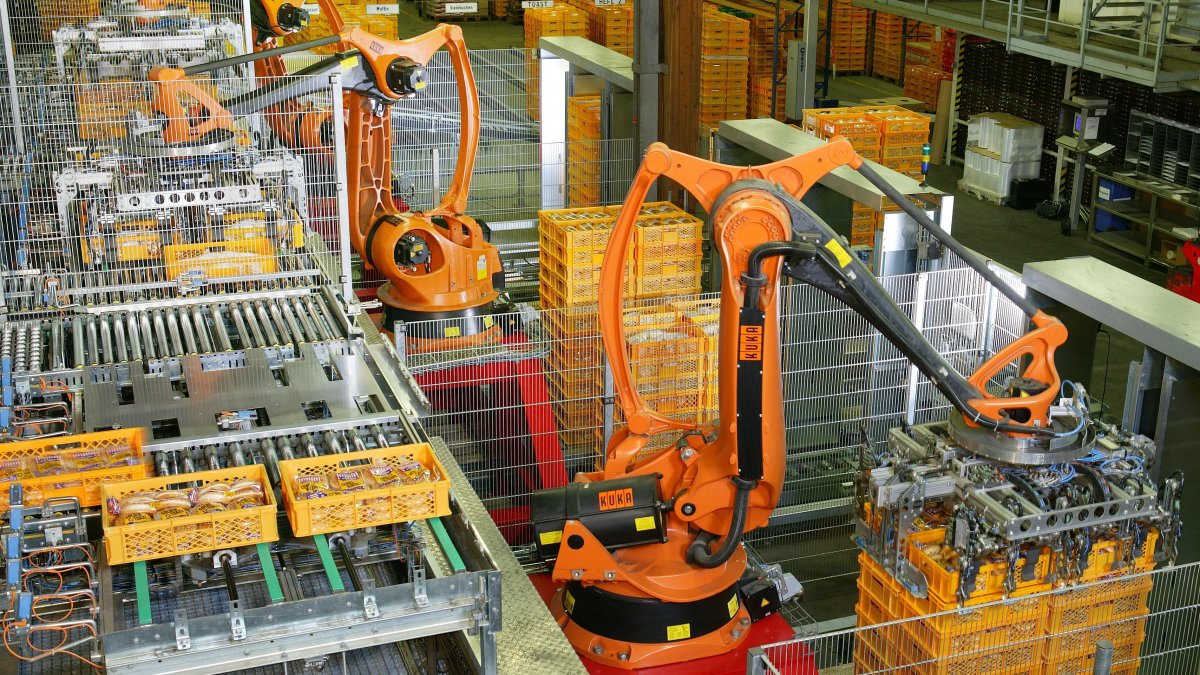
What separates the launch from a routine benchmark post is the breadth of the demonstrations. Odyssey showed the same backbone adapted to six domains: robot-arm manipulation from tens of hours of demonstrations, including recovery behaviors — a re-grasp after a missed pick — that were never shown in training; humanoid control policies built with Flexion that, the company says, held up under lighting changes that broke the baselines it tested; a car driven autonomously on real roads in India using a policy trained on roughly 20 hours of simulated driving data with the backbone frozen; indoor drone navigation; generated interactive environments for training AI agents; and gameplay, where the model plays Grand Theft Auto V and showed early transfer to other games without additional policy training.
CEO Oliver Cameron framed it as a step toward general physical intelligence: "Odyssey-3 is a big step toward a single intelligence that can understand and operate in the world around us." The founding team spent a decade building driverless cars, and Odyssey's research staff includes alumni of DeepMind, Tesla, Waymo, Meta, Apple and Wayve who contributed to systems like Gemini, Veo, GAIA and Tesla FSD.
The commercial context is moving quickly. Odyssey raised $310 million at a $1.45 billion valuation in June, with Amazon and AMD Ventures among its backers. AMD has since agreed to acquire Fei-Fei Li's World Labs for $8.2 billion in stock, Nvidia ships its own open Cosmos world models, and former DeepMind world-model researchers at Emulate have reportedly been negotiating a $700 million raise. Capital is betting that the layer beneath language — a predictive model of physical cause and effect — is the next platform.
The caveat is built into the benchmark itself. Generating physically plausible video is not the same as possessing an accurate model of the world, and every number in this launch is self-reported. Whether Odyssey-3 transfers to unfamiliar conditions, holds up over long horizons, and can safely control real hardware is exactly what independent validation is for — which is why the research preview, and the physical AI developers Odyssey is inviting to build on it, matter more than the leaderboard.
Comments (0)
Log in to join the discussion
Log InNo comments yet