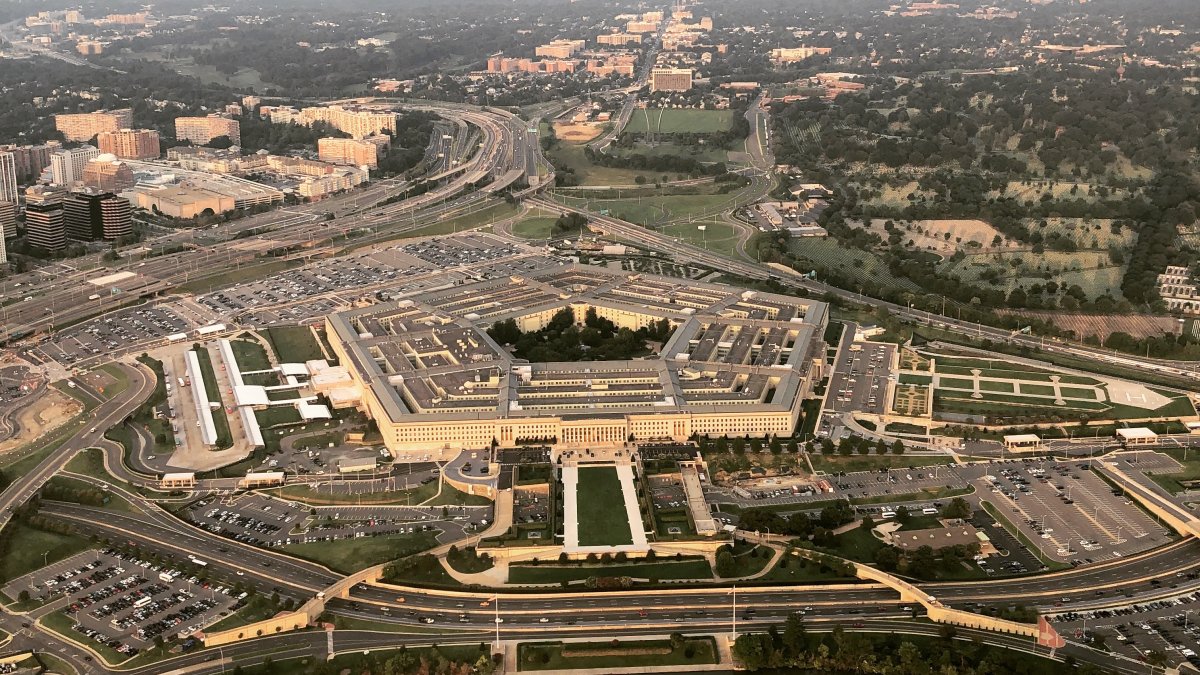
Anthropic has formally asked the U.S. Court of Appeals for the D.C. Circuit to reconsider the decision that kept the Pentagon's designation of the company as a national-security supply-chain risk alive. The petition, filed Tuesday and reported by Bloomberg and Reuters, asks for either panel rehearing or rehearing en banc — a review by the full court — under Federal Rule of Appellate Procedure 40.
The underlying ruling came on September 25, when a three-judge panel voted 2-1 to uphold the Defense Department's designation. The Pentagon notified Anthropic in March that the company and its products had been classified as a supply-chain risk to U.S. national security, and directed federal agencies to wind down business with the firm. Designations of that kind have historically been applied to companies viewed as tied to adversary nations, not to American AI developers.
The dispute traces back to contract negotiations over military use of Anthropic's models. The company sought assurances that its technology would not be used for mass surveillance of U.S. citizens or for autonomous weapons deployment. The government, citing national-security needs, refused to accept any limits on how the technology could be used, and the talks collapsed into open conflict between Anthropic and the Trump administration.
In its petition, Anthropic argues the panel majority misread the statute, transforming a law "aimed at hostile foreign actors into one that presumptively reaches every government contractor." The company says the court allowed the Pentagon to act "without any pre-designation process and despite straightforward evidence the designation was retaliation for Anthropic's speech about AI safety."
The majority had reasoned that the Pentagon acted reasonably after Anthropic refused to allow its AI to be used in autonomous weapons or mass surveillance, and it rejected the company's retaliation claim. Anthropic says the blacklisting has cost it billions of dollars in lost business.
Anthropic is fighting on a second front as well. In a separate lawsuit in California, Judge Rita F. Lin struck down a parallel designation in August under a different statute, ordering the government to lift the ban on federal agencies using Anthropic technology and writing that the Defense Department's motive appeared retaliatory rather than grounded in genuine security concerns.
Legal observers note that the petition itself changes nothing yet: the designation stands, and the D.C. Circuit has not said whether it will grant rehearing. But the stakes are unusually legible. The case will effectively decide whether the federal government or private AI developers control the guardrails on military use of frontier models at the exact moment when every major U.S. lab is racing to prove its systems are both safe and commercially viable.
For Anthropic, the en banc petition is also a test of how far courts will extend procurement-security tools built for foreign adversaries to domestic companies that publicly criticize the government's AI-safety posture. If the full court declines to hear the case, the company's remaining path runs through Congress or the Supreme Court.
Comments (0)
Log in to join the discussion
Log InNo comments yet