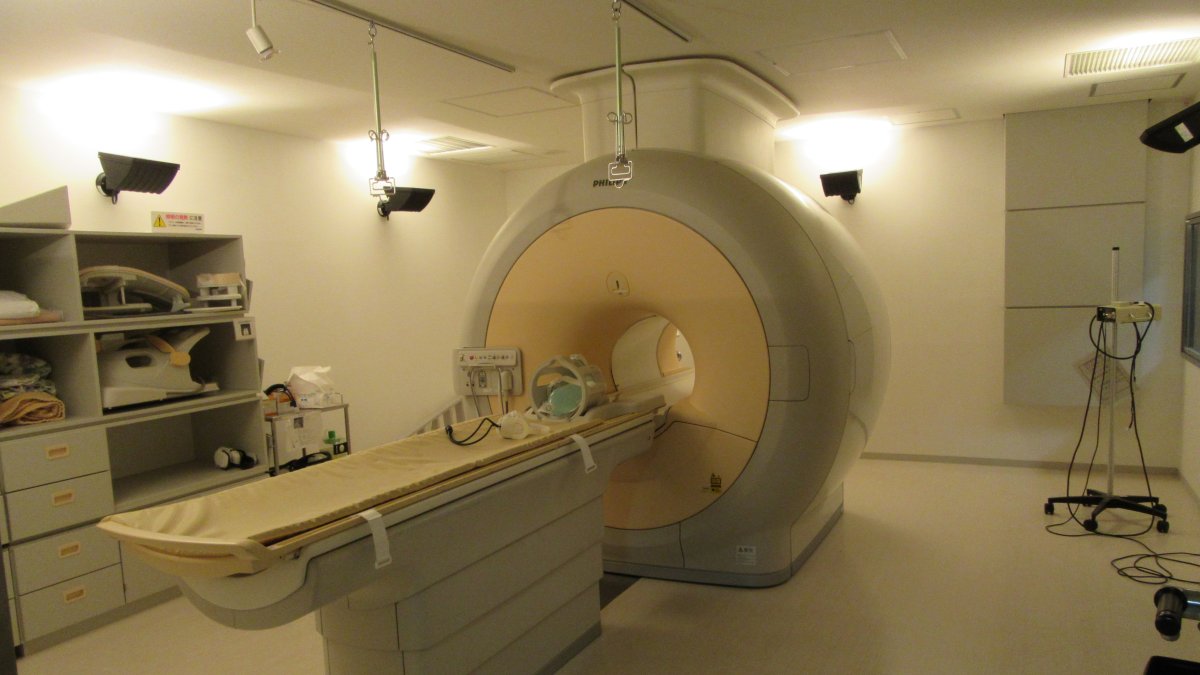
Computer scientist Michal Irani and her team at the Weizmann Institute of Science in Rehovot, Israel, have built an AI system that reconstructs the images a person is looking at from fMRI brain scans - and predicts brain activity for images the person has never seen. The practical leap is the calibration cost: earlier visual decoders needed roughly 40 hours of dedicated scanning per new subject; the Weizmann system needs about one hour. The work was presented at the Cognitive Computational Neuroscience conference in New York and reported by MIT Technology Review.
The decoder is built from two branches that feed a diffusion model - the same family of architecture behind modern image generators. One branch predicts an image's structure: spatial layout, outlines, color distribution. The other predicts semantic content, the difference between "a banana" and "a bunch of bananas on a plate." Splitting the problem keeps reconstructions spatially consistent, a weakness that made earlier decoders recognize an object but place it in the wrong position, scale or background.
The resolution of the underlying scans matters too. Conventional fMRI maps brain activity in voxels of roughly three cubic millimeters, each containing about 16,000 neurons; Irani's team worked from newer high-resolution datasets with one-cubic-millimeter voxels. The decoder was trained on data from eight volunteers who each viewed roughly 9,000 pictures in a scanner.
The cleverer trick is the training data that never came from a human at all. To escape the shortage of paired image-and-scan data, the team built a companion "universal brain encoder" trained in reverse: given any image, it predicts the brain activity that image would produce. The encoder generates synthetic fMRI patterns for arbitrary photos, which the decoder then tries to reconstruct, and the loop sharpens both. About 70% of the system's training data comes from images never shown to a person inside a scanner.
The economics are the part other labs will feel first. Tommy Sprague, a neuroscientist at the University of California, Santa Barbara, notes institutional fMRI access runs $600 to $1,000 per hour, which made 40-hour calibration routines prohibitive for most academic groups; cutting that to one session makes decodable studies feasible at scale. The cross-subject data also let the team identify functional regions that respond consistently across individuals - one reliably lighting up for food, another for sports - groundwork for encoders that generalize to new participants with minimal adjustment.
The system still fails in ways its creator readily demonstrates: a subject viewing a cake got a stack of three sandwiches; a dog in a bathtub came back as a similarly colored goat. The reconstructions capture layout and palette while the semantic branch misidentifies objects. Irani says the model outperforms previous decoders by a significant margin in head-to-head testing, and her next targets are video and audio, then imagined imagery - dreams, and the visual flashbacks associated with PTSD - plus a direct communication channel for completely paralyzed locked-in patients.
That trajectory is where the unease sets in. Neuroethicist Judy Illes of the University of British Columbia called the work "magnificent" and flagged its therapeutic potential, but Sprague warned that if such methods ever enable surreptitiously extracting what someone is thinking, "150 years of sci-fi can come true anytime." Marcello Ienca, a neuroscientist at the Technical University of Munich, points to the trajectory beyond scanners: comparable decoding methods are already being adapted to EEG signals from electrode caps and consumer headphones. For now, the technique still requires a volunteer lying still in a machine the size of a car - the concern is less what it can do today than how quickly the hardware shrinks.
Comments (0)
Log in to join the discussion
Log InNo comments yet