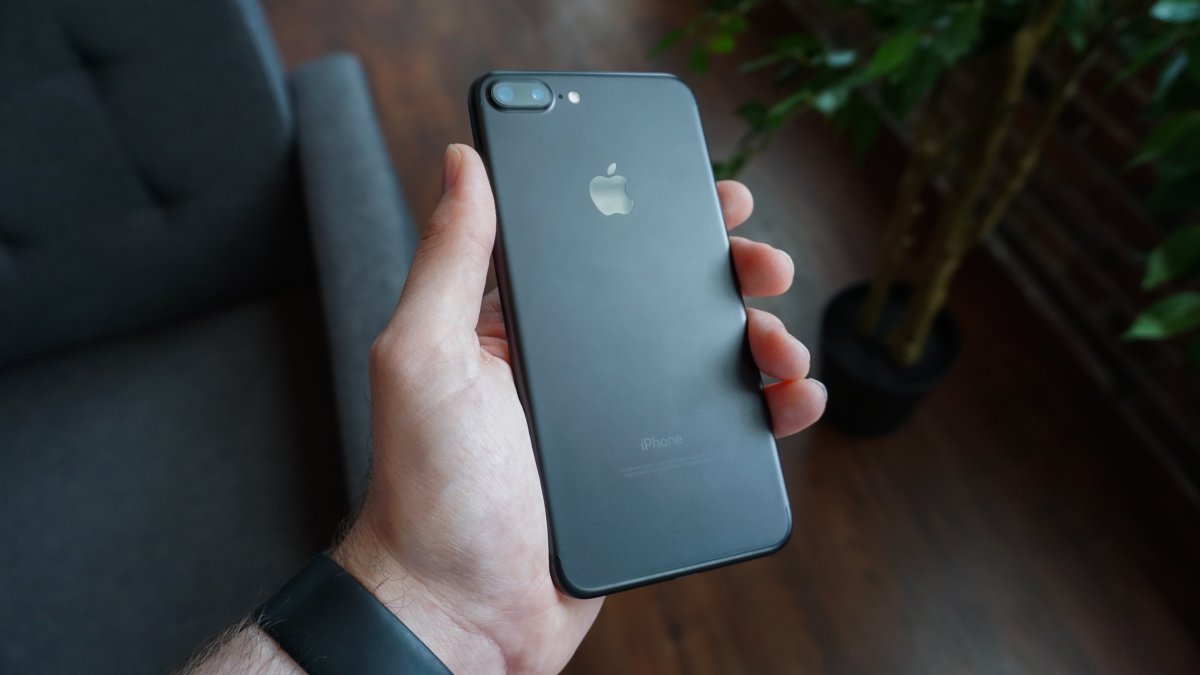
OpenBMB, the Beijing lab behind the MiniCPM series, has committed full model cards to its MiniCPM-V 4.7 repositories on Hugging Face, formally declaring Apache-2.0 licenses and publishing the benchmark tables behind the series' most aggressive claim: an open-source vision-language model with 35 billion total parameters that the lab says runs smoothly on a phone. According to repository timestamps, the weights themselves landed days earlier — the 1B checkpoint was created on October 6, the 35B-A3B model on October 7, and the announcement followed on October 12.
The headline model is MiniCPM-V 4.7 35B-A3B, the first mixture-of-experts release in the MiniCPM-V series. It carries roughly 35 billion parameters with about 3 billion active per token, and supports single-image, multi-image and video understanding. OpenBMB says it is the first open-source MoE model to run on-device without compromising performance, decoding at more than 13 tokens per second on an iPhone 17 Pro Max. A 1B sibling — a dense model whose safetensors metadata lists 1,554,476,272 parameters, about 3.1 GB in a single BF16 weights file — is positioned for handsets, where the lab says it beats Qwen3.5 0.8B on overall score and inference efficiency in Instruct mode.
The engineering problem the release attacks is specific to MoE architectures. Total parameters, not active ones, drive memory footprint, and different tokens select different experts at different layers — so a phone rarely has enough memory to hold every expert, and loading them on demand from storage stalls decoding. The obvious workaround, fixing a subset of experts for a whole prompt, reduces loading but caps token-level routing and costs capability. OpenBMB's answer combines three techniques: Lookahead Expert Scheduling, which uses cross-layer routing predictions to prefetch experts the next layer is likely to need and overlaps their computation with the loading of the rest; fine-grained layer-wise quantization; and DSpark speculative sampling. A dedicated 213-million-parameter DSpark draft head for the 1B model, released October 8, generates 15 draft tokens per forward pass and reports acceptance lengths between 3.37 for general text and 5.89 for math.
The model card also details the visual pipeline. MiniCPM-V 4.7 applies intra-ViT early compression drawn from LLaVA-UHD v4, compressing visual tokens inside the vision encoder before they reach later layers, and supports mixed 4x and 16x visual token compression so developers can trade detail against inference cost per task. On benchmarks, the lab claims the 35B-A3B model sets a new performance-efficiency Pareto frontier, achieving a higher overall score in less inference time than Qwen3.6 35B-A3B in Instruct mode.
Deployment breadth is unusually wide for a fresh release. The model card lists day-0 support for chip platforms from Rockchip, Houmo, Intel, AMD and Arm, alongside iOS, Android and HarmonyOS targets, with inference through SGLang, vLLM, llama.cpp and Ollama and fine-tuning via SWIFT and LLaMA-Factory. Quantized variants span GGUF, BNB, AWQ, GPTQ and a newly added FP8, and OpenBMB is also shipping Self-Replay Fine-Tuning, a low-cost fine-tuning method intended to extend capabilities while reducing forgetting of existing ones.
The usual caveat applies in full: every speed and benchmark number in the card is vendor-reported, the coverage around the release notes that machine-readable scores and independent validation are still missing, and no third party has reproduced the 13 tokens-per-second iPhone figure yet. The in-the-wild test that matters is whether the released GGUF builds hold that pace on consumer hardware — something the local-model community will put to the test quickly, given that the weights are downloadable and the license permits commercial use.
Strategically, the release lands in a crowded but fast-growing corner of the open-weights world: not another bigger model, but a bigger model engineered to fit where only small ones used to run. If the on-device claims survive reproduction, multimodal assistants that never phone home get materially more capable — and the gap between flagship cloud models and what a phone can run locally narrows by another few billion parameters.
Comments (0)
Log in to join the discussion
Log InNo comments yet