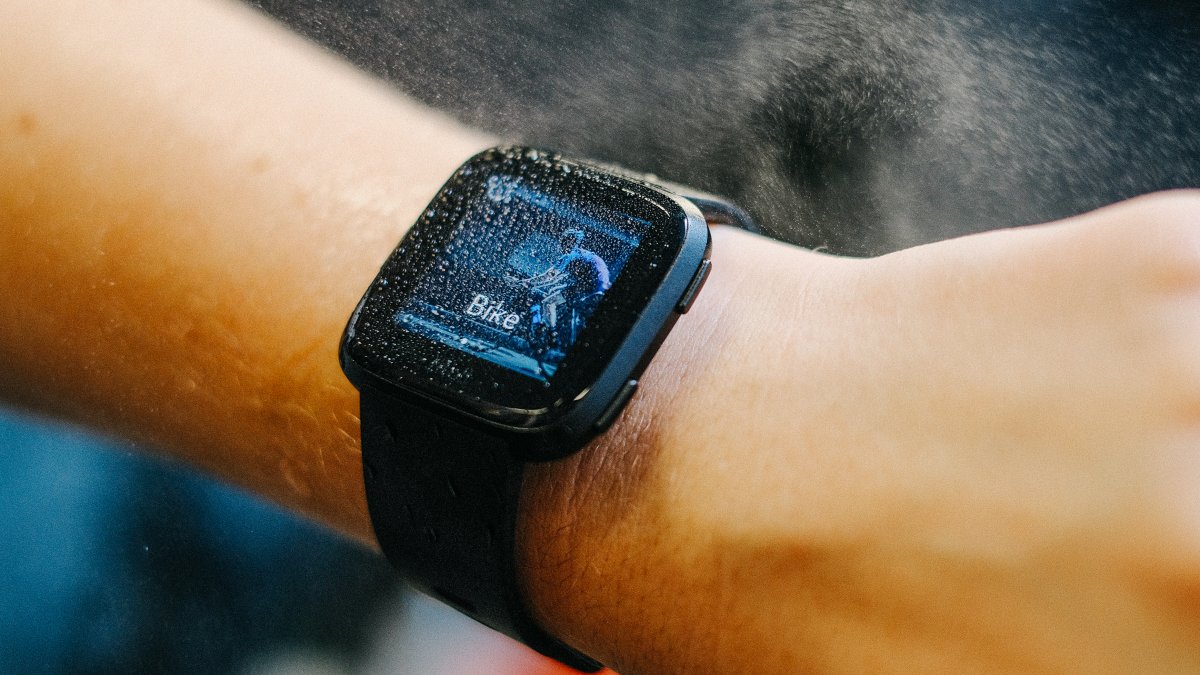
Google announced the Fitbit Edge on Monday, a $179.99 activity tracker that extends the company's health AI features to a new hardware tier. Pre-orders opened immediately and the device reaches stores on October 27, bundled with three months of the Google Health Premium subscription that most of the new intelligence requires.
The hardware sits between the screenless Fitbit Air and a full smartwatch. Google says the Edge is 11.5 millimeters thick, carries an OLED hybrid display with 46% more visible area than the Fitbit Charge 6, and runs up to seven days on a 90-minute charge, with five minutes of charging buying roughly a day of use. The sensor set includes an electrocardiogram reader, a skin temperature sensor and an optical pulse reader. In a notable set of omissions for a $180 device, there is no microphone, no speaker and no contactless payments support.
The software headline is Health Guardian. Introduced on the Pixel Watch over the summer, the feature now expands to the Fitbit Air and the new Edge later this month for Google Health Premium subscribers. It produces a monthly summary of blood pressure trends and insulin resistance trends inside the Google Health app, and Google said on a media call that the insulin analysis relies on onboard sensors and AI models trained on clinically validated data rather than an external continuous glucose monitor. An in-app Health Coach offers lifestyle and wellness recommendations based on the readings, plus insights meant to help users frame concerns for a doctor. The company is explicit about positioning: this is early indication, not diagnosis. "Health Guardian features give you this early indication that something needs attention, kind of like a check engine light for overall well-being," Google said.
Automatic workout detection is getting the broader overhaul. Google is expanding recognized activities from 10 to more than 100, adding strength training, swimming and racket and team sports, across the Fitbit Air, Fitbit Edge and Pixel Watches 3, 4 and 5. The system uses contextual reasoning — workout routines, historical data, manual edits and, with permission, location — alongside heart-rate signals, and Google claims nearly twice the detection accuracy and a reduction of missed workouts by more than half. Workouts lasting at least 15 minutes with a sustained elevated heart rate are logged automatically, with a summary delivered to the phone within about 30 minutes. The rollout begins later this month.
Underneath both features sits the Google Health app, which replaced the Fitbit app earlier this year as the central hub for activity, sleep, nutrition and increasingly clinical data. Google says the app has shipped more than 55 feature updates since launch, and the partnership list is growing in a medical direction: Flo Health cycle data will sync with Google Health starting early next year, Abbott's over-the-counter Lingo continuous glucose monitor will connect for US users soon, premium MyFitnessPal users can now share detailed food logs, and Function Health will allow clinical lab results to be imported later this fall.
The accessories business moved in parallel. A stainless steel Metal Mesh band for the Fitbit Air arrives October 27 at $69.99 in Champagne Gold and Polished Silver, with a bundle pairing the band and an Obsidian Fitbit Air for $149.99 at Target and the Google Store.
The strategy is legible enough: Google is rebuilding Fitbit as the sensor layer for a subscription health platform, moving chronic-condition signals — blood pressure, insulin resistance — behind a paid tier while the hardware itself stays cheap. That puts the company on the same collision course with medical-device regulators that Apple has been navigating for years, and it inherits the same open question. Consumers have historically balked at paying monthly fees for insights they cannot clearly act on; whether an AI coach and a monthly trends report change that arithmetic is the real test of the Edge, not the seven-day battery.
Comments (0)
Log in to join the discussion
Log InNo comments yet