A reporter at MIT Technology Review has published a firsthand account of Tau Robotics' humanoid home-cleaning service, booking visits in San Francisco without disclosing she was a journalist. The pricing is blunt: $60 for a weekly cleaning with two robots, or $100 for a one-time visit. When she first booked, the service cost $30 for an hour with a single robot. The robots are cheaper than you might expect for a reason the company does not hide — every visit generates training data, and the data is the product.
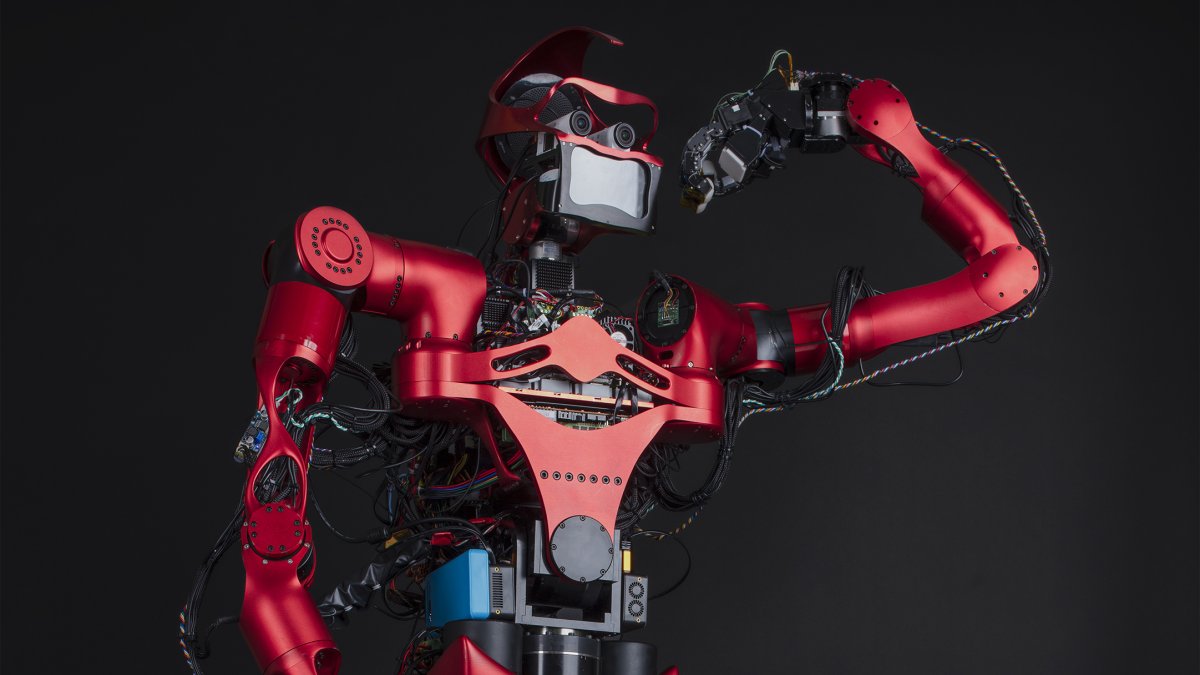
The machines are unglamorous by design. Each robot stands four and a half feet tall, wears a Tau Robotics shirt and grippy socks to protect hardwood floors, and carries cameras in its head and wrists. The head is 3D-printed, with antennae to keep a communications link with Tau's operators; the hands are two 3D-printed claws, because more humanlike fingers were not durable enough for cleaning work. Human pilots at the company's headquarters watch through the cameras and steer the robot through anything it cannot do alone.
Some tasks run under what the company calls kinematic guidance: the human pilot performs the motion — making a bed, folding laundry — and sensors transmit the movement for the robot to copy. Those guided demonstrations are the most valuable training examples Tau collects. Cofounder Cornelia Weinzierl told the publication that vacuuming and mopping already run without a pilot, which is the honest boundary of the current autonomy stack.
The first visit showed how fragile the loop still is. The robot stumbled on the eight steps to the building's entrance and had to be carried up the final steps of an interior staircase. During cleaning it kept stalling, and the visit ended before the booked hour. The initial suspicion was that the robot had overheated; the real cause, Weinzierl later learned from a colleague, was that heat had shut down the equipment the remote pilot was using to watch the apartment — and without remote assistance the robot cannot work. Tau refunded the visit and offered another for free, before learning the customer was a reporter.
The second visit, about a month later, went better. The robot climbed the stairs with little help and cleaned the kitchen, though not the stove, and then the toilet — arguably its best performance. The toilet-wand head detached three times, and each time the robot reattached it by maneuvering the handle until the parts connected at the right angle. It also left taps dripping, knocked over a closed bottle of olive oil, and toppled an air purifier it could not right itself.
The scale is early and the gap to autonomy is wide. Tau has completed only a couple hundred cleanings. Third-party analyses of the household robotics wave point to a large sim-to-real gap — success rates near 89 percent in controlled simulation benchmarks versus roughly 12 percent on real-home evaluations such as Stanford's BEHAVIOR-1K — and the Wall Street Journal's trial of 1X's Neo home robot was reported as fully teleoperated. Those figures are from independent and third-party reporting, not from Tau, and Tau's own pilots contradict none of them.
What it means: the paid cleaning visit is a data-collection pipeline wearing a service uniform. Customers pay a modest fee, the company collects expert demonstrations in real kitchens, and the business only closes if autonomy improves fast enough that the robots stop needing pilots before customers tire of slow, supervised cleaning. The remarkable part is not that a humanoid can scrub a toilet — it is that someone is now charging for it, a couple hundred times over, while quietly training its replacement.
Comments (0)
Log in to join the discussion
Log InNo comments yet