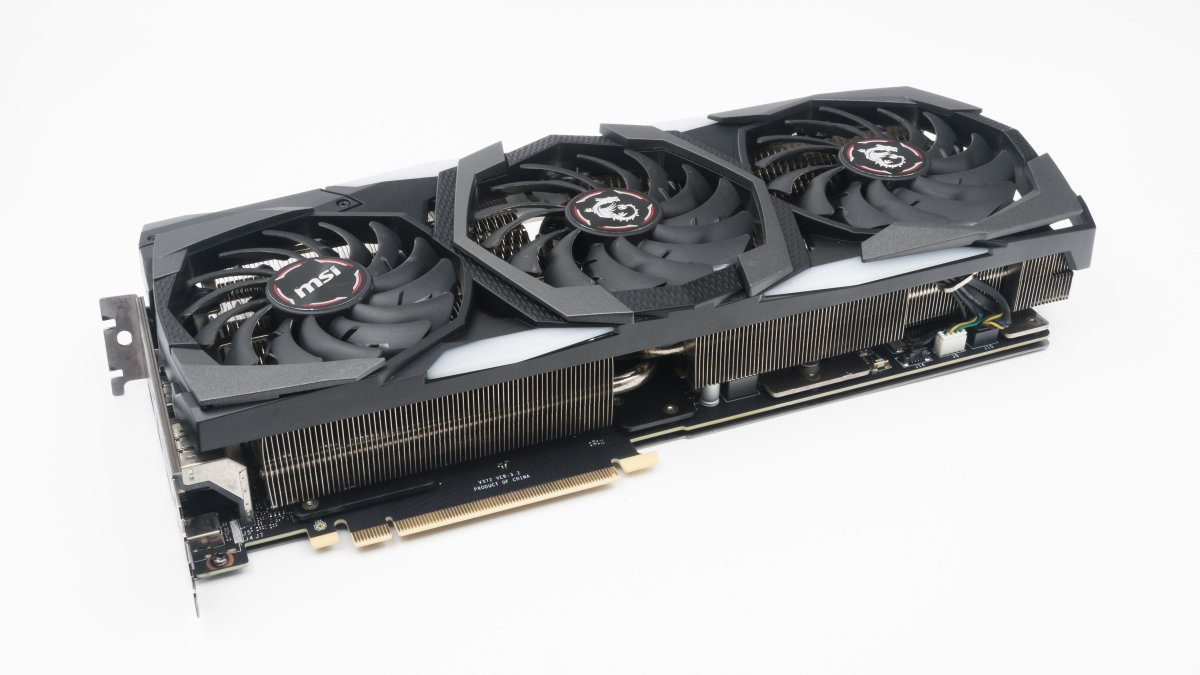
Less than a year ago there were 209 companies in the business of renting out Nvidia GPUs. As of September the research firm SemiAnalysis counts 323 of them — a 55% expansion in under eleven months — and a CNBC survey of the landscape published Saturday found a market that has split into half a dozen distinct tiers, from hyperscalers to "baby neoclouds" that will hand you bare-metal silicon by the hour.
The demand side explains the supply. Nvidia's market capitalization is closing on $6 trillion after another record week, and management is guiding to $108 billion of revenue for the October quarter — an 89% year-over-year jump. Five customers each accounted for at least 10% of Nvidia's accounts receivable in the July quarter, up from three in January, according to its SEC filing: concentration at the top even as the mid-market proliferates.
At the top sit the hyperscalers. Amazon, Microsoft and Google controlled 59% of the cloud infrastructure market in 2025, according to Gartner, and in the past year Anthropic and OpenAI alone have committed more than $500 billion of spend across Amazon and Microsoft. The trust premium is real — "when you're talking to enterprises, your subprocessor had better be Azure," Abacus CEO Bindu Reddy told CNBC — but so is the shortage: Amazon CEO Andy Jassy said in July that his company cannot serve all the demand it foresees this year, and expects the same dynamic in 2027.
Hence the neoclouds. Modal, a startup running sandboxes for AI agents, now buys from 25 of them, says CEO Erik Bernhardsson. CoreWeave's near-term capacity is essentially sold out, per CEO Michael Intrator, and even Google and Microsoft have started renting from CoreWeave while competing with it. Below the brands, specialist providers like Runpod and Massed Compute sell flexibility — hourly bare-metal GPUs — into a market where the hourly spot price for an Nvidia B200 has more than doubled since March, according to the index maintained by Ornn.
The structural quirks are getting stranger. Oracle, with less balance-sheet room than its peers, is letting clients bring their own GPUs and simply rent the data center — a route Guggenheim analyst John DiFucci thinks could even make sense for Nvidia and AMD themselves. OpenAI has committed over $300 billion to Oracle over five years without mentioning bring-your-own hardware. And SpaceX has turned its Colossus complex into a merchant compute business: $1.25 billion a month from Anthropic through mid-2029, plus a GPU deal with Cursor in April that it followed by buying the coding startup outright for $60 billion.
The old school is not dead, either. Lenovo's enterprise infrastructure revenue nearly doubled in the June quarter as customers ask how to bring AI "into my four walls," and companies from Dropbox to storage vendor Pure Storage have bought their own GPUs to run open-weight models — insurance against a spot market that keeps repricing upward.
For buyers, the practical takeaway from the CNBC reporting is that GPU access has become a portfolio decision rather than a procurement line: hyperscaler contracts for enterprise credibility, neocloud reservations for scale, spot capacity for experiments, and owned silicon for the base load. Nvidia — whose CEO Jensen Huang predicts "a whole new crop of really, really exciting neoclouds with hundreds of billions of dollars backlog" — is the one player that wins in every column.
Comments (0)
Log in to join the discussion
Log InNo comments yet