RobCo, a Munich-based maker of modular industrial robots, has crossed a $1 billion valuation in a transaction that combines fresh investment with a roughly $40 million secondary share sale, in which employees sold part of their holdings to new and existing investors. The Wall Street Journal first reported the deal, which roughly doubles the price set by the company's January Series C.
The structure matters as much as the headline. Most of the $40 million came from current and former employees selling existing shares, making this as much a liquidity event for early staff as a fundraise; the company says its total capital raised now stands near $200 million. Co-founder and CEO Roman Hoelzl framed it that way: "This is an important moment for RobCo, and I cannot think of a better way to mark it than by giving some of the people who built this company the opportunity to realize part of the value they created."
Existing backers Sequoia, Lightspeed, Greenfield, Kindred, Lingotto and Promus Ventures participated alongside new investors Cherry Ventures and European Tech Collective. Sequoia partner Luciana Lixandru put the thesis plainly: "RobCo is building for a future in which AI doesn't just reason and generate, but acts in the physical world."
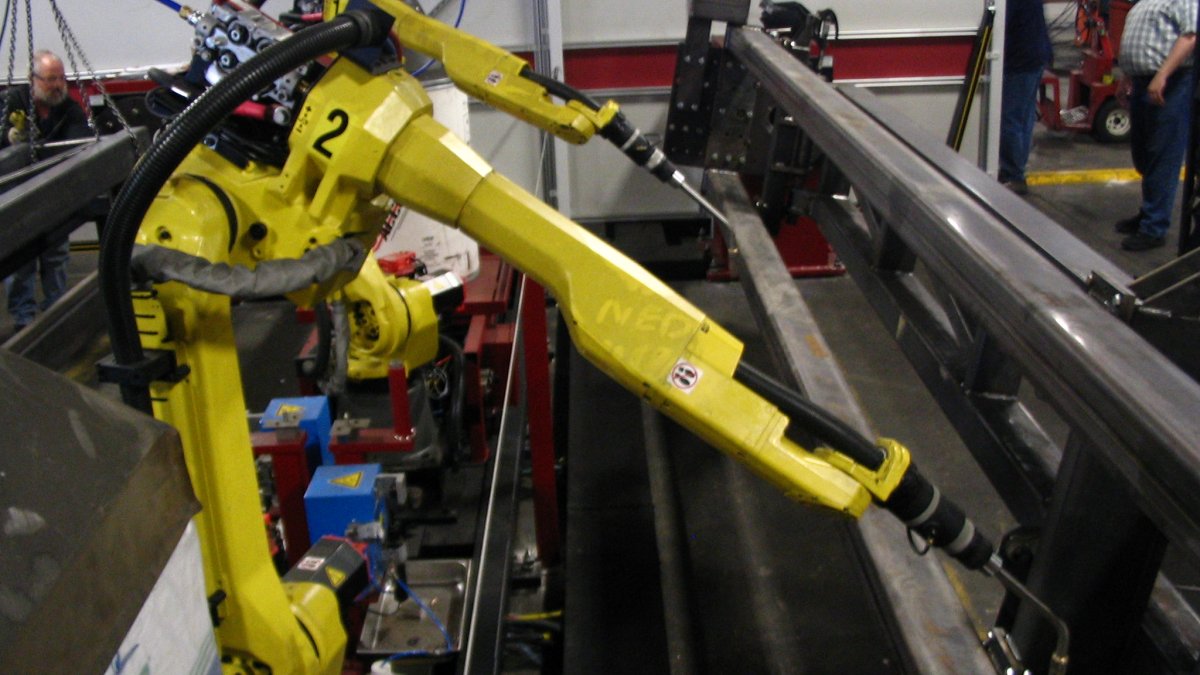
Founded in 2020 by researchers from the Technical University of Munich - Hoelzl, Paul Maroldt and Constantin Dresel - RobCo rents rather than sells its robots under a Robotics-as-a-Service model aimed at mid-sized factories without in-house automation engineers. Its machines handle machine tending, palletizing, dispensing and welding; the largest arm lifts roughly 40 kilograms over a reach of more than two meters. The company has sold more than 1,000 robots, with BMW, T-Systems and Rosenberger among its named customers.
The next act is Alfie, a two-armed, self-learning industrial robot designed for variable factory work that fixed automation handles poorly - holding a car part steady with one arm while the other paints it, for instance. RobCo's RobVision software adapts the robot from an uploaded photo plus synthetic training images, so a changed production line does not require reprogramming. Alfie is slated for commercial launch at the company's RobCoN summit in Munich on March 4, 2027, and several customers have already installed prototypes.
Alongside the valuation, Hoelzl has relocated to the United States, where RobCo says customer operations now span more than a dozen states. The company assembles robots for American customers in Austin, Texas, runs a lab in San Francisco, and keeps its manufacturing and engineering base in Munich. "The US market is larger in absolute terms and is growing faster than Europe," Hoelzl told Reuters.
The context is a market pulling in two directions. The International Federation of Robotics counts 603,000 industrial robots installed worldwide in 2025, up 11 percent, with a projected 655,000 in 2026 - yet German installations fell 8 percent to under 25,000 units, and press coverage citing PitchBook data says robotics and physical AI startups raised $33.4 billion in the first half of 2026 alone. One honest caveat applies to the headline: a secondary sale sets a price paid by one group of buyers for one block of shares, not a primary round valuation. RobCo joins NEURA Robotics, Agile Robots and the UK's Humanoid in Europe's small club of billion-dollar robotics startups - and, like them, is finding that the customers, the capital and now the leadership are drifting west.
Comments (0)
Log in to join the discussion
Log InNo comments yet