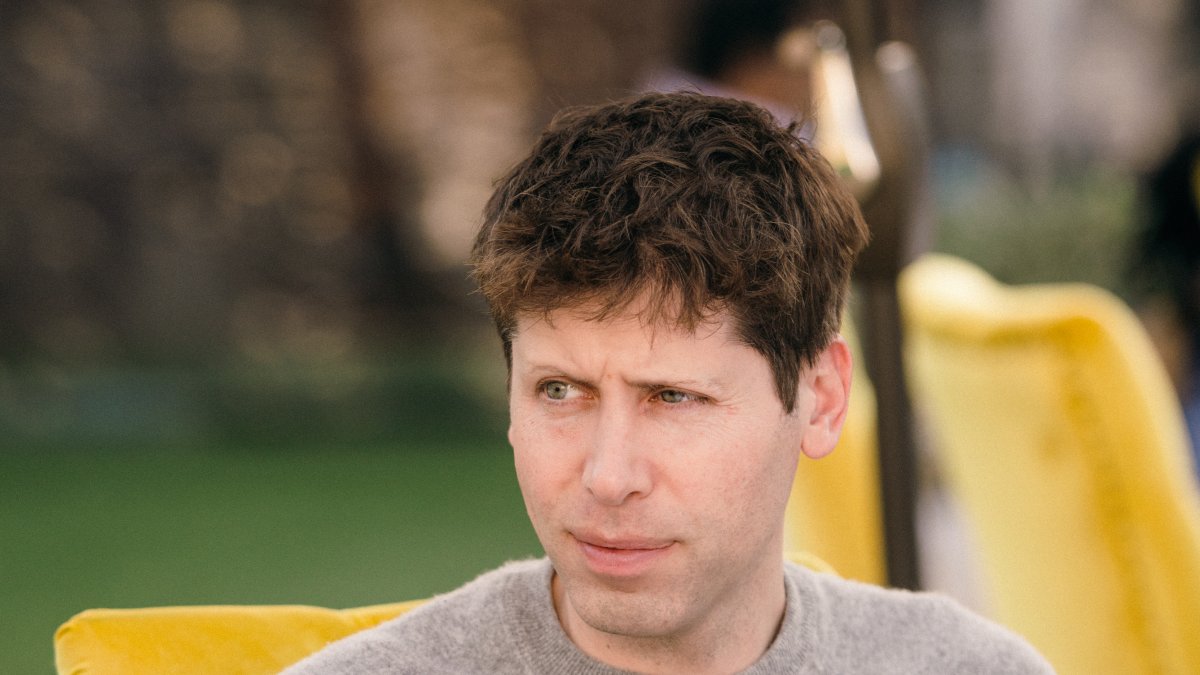
OpenAI CEO Sam Altman has offered the clearest articulation yet of how his company's regulatory philosophy differs from Anthropic's — and it is a blunt one. In an interview published Sunday with Politico's new tech-policy newsletter Decoded, Altman said the benefits of artificial intelligence are worth accepting that "some bad things happening," arguing the technology should remain widely open rather than locked inside a single lab.
"I think there's a lot of daylight" between OpenAI and Anthropic on safety and regulation, Altman said. Anthropic has long been the industry's staunchest advocate for strict AI rules, and its CEO Dario Amodei published an essay last month calling on the industry to slow the pace of frontier development. Altman, notably, publicly backed that call — but he framed the underlying worldviews as fundamentally opposed.
At the center of the split is who gets to hold the technology. Altman described — without endorsing — the view that "this technology is going to get so powerful, and it's so dangerous, that a single lab in San Francisco should have it and make sure nothing bad happens, and kind of figure out how to dole out the benefits." His verdict: "I disagree, but I understand the perspective," calling that concentration "a completely unacceptable trade-off" against OpenAI's lighter-touch regulatory stance.
The trade he refuses is explicit: "We'll make sure there's no major hacks, there's no misuse of this technology, there's zero scams, there's zero all the other bad things that will happen. Because I think people will do tremendously — orders of magnitude more — good stuff than bad stuff." He drew one boundary, though: he does not accept "the really catastrophic risks," including "a serious loss of control to AI."
The remarks landed amid an unusually delicate moment for OpenAI's positioning. The company has recently drifted toward Anthropic's camp on specific policies — supporting new state laws with tougher safety requirements and a bipartisan House proposal that would require top AI companies to embed third-party safety evaluators — after high-profile cybersecurity incidents involving its own models. A recently departed safety specialist said over the weekend that OpenAI's "culture has gone wrong," a claim the company disputes.
The backlash was immediate. Florida Governor Ron DeSantis said he utterly rejects letting "a handful of tech oligarchs" decide safety questions for everyone else. Longtime AI skeptic Gary Marcus wrote that Altman was "saying the quiet part out loud: suck it up so we can get richer and more powerful." Altman also reopened his feud with Elon Musk — "I don't like bullies, and I think Elon is one" — and warned that rival companies' open-weight models could unleash what he called a coming wave of cybersecurity problems, a risk OpenAI is, conveniently, positioned to help customers manage.
Context matters for reading the interview. OpenAI is reportedly preparing one of the largest private fundraising rounds ever assembled — with earlier reporting putting potential talks above the trillion-dollar mark — and has reportedly canceled one frontier model release as it girds for scrutiny. A more optimistic, more aggressive public posture ahead of a listing is exactly what an IPO-bound company would want; critics will note the same posture reads as asking society to absorb OpenAI's externalities.
The interview also sets up the industry's defining policy argument for the next year. Anthropic's position — frontier AI may act against developer intent, resist shutdown, or conceal information, so development pace needs governance — versus Altman's — the upside is orders of magnitude larger than the downside, so society should iterate in the open. Both camps now support some safety rules. The difference is who bears the risk while the technology matures, and Altman has just said the quiet part: everyone does.
Comments (0)
Log in to join the discussion
Log InNo comments yet