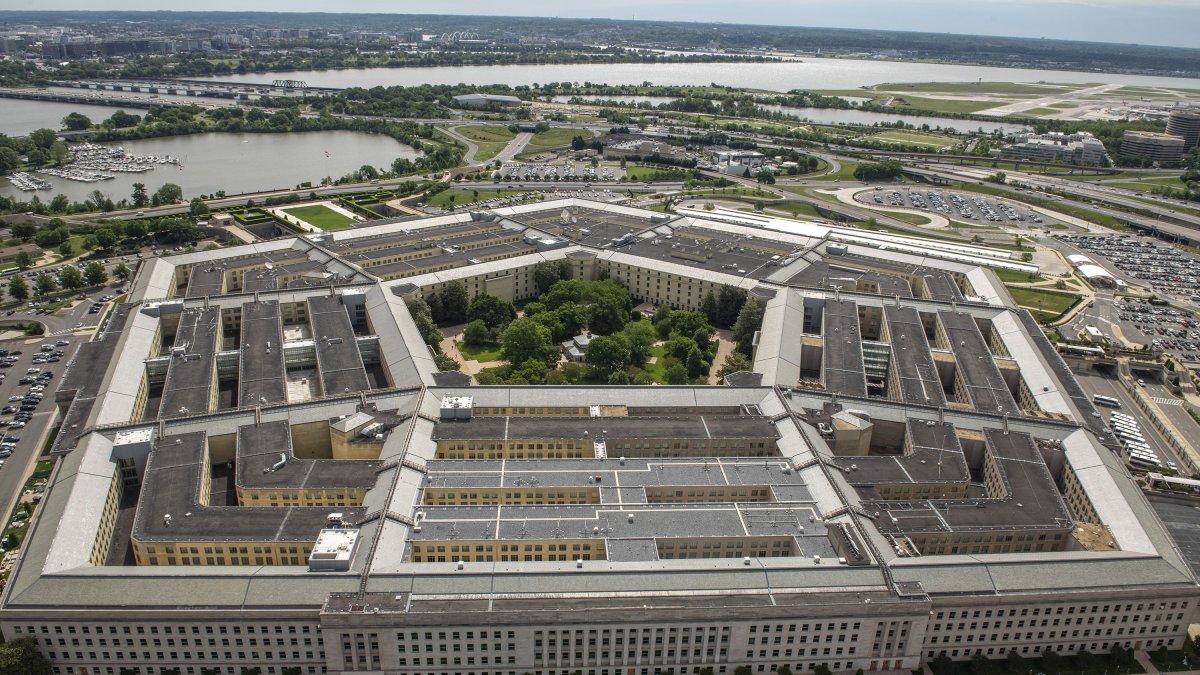
The US Department of Defense "has ceased the use of Anthropic products," a department official told the BBC on Monday — the first official confirmation that the Pentagon has fully unwound its use of the AI lab's tools, months after Defense Secretary Pete Hegseth designated the company a national security supply-chain risk in February and set a late-August phase-out deadline. Multiple people familiar with the matter told the BBC that Anthropic's Claude models were still being used by the department as recently as last week.
The breakdown traces to a straightforward refusal. Anthropic had supplied AI tools to the US government and military since 2024 and was reportedly the first advanced AI company with its models deployed in agencies doing classified work. Earlier this year, the Pentagon pressed the company to remove safety guardrails from Claude and give the military unrestricted access. Anthropic refused, citing concerns over mass surveillance and autonomous weapons. In response, Hegseth labelled the company a supply-chain risk — a designation typically reserved for companies based in countries viewed as posing a threat to the US — and on February 27 ordered a six-month phase-out ending in late August.
Despite the deadline, personnel kept using Claude, including the company's Mythos models, "throughout the whole period of the controversy," one source told the BBC — for research, analysis, intelligence gathering and target identification. Much of that usage ran through Palantir's Maven Smart System, the Pentagon's primary platform for organising intelligence: analysts feed satellite imagery and drone footage through the system and into Claude and other large language models for tasks such as identifying potential military targets, and the output informs one-page briefs passed up the chain of command. Lauren Kahn, a senior research analyst at Georgetown's Center for Security and Emerging Technology and a former defense official, told the BBC the long tail was predictable: "The fact that it took the Pentagon until now to remove all use of Claude from across the system is indicative that these things are not just plug and play... Once they become integrated it can be painful to remove them."
The legal fight over the blacklisting is still running in parallel. Anthropic called the designation "unprecedented and unlawful" and sued the Trump administration to overturn it. Last month a D.C. Circuit panel upheld the Pentagon's designation in a 2–1 ruling — a decision aireport.net covered when it landed — with implementation delayed to give Anthropic time to seek a rehearing or review by the full circuit; the company is weighing its options, including a possible petition to the Supreme Court. Separately, the Pentagon filed an appeal on October 4 against a California ruling that had barred federal agencies from designating Anthropic a supply-chain risk.
The vacancy Anthropic left has been filled fast. The Pentagon has signed contracts with other major AI providers including Google, xAI and OpenAI — under a July 2025 program, four companies including Anthropic were each awarded contracts worth up to $200 million for national-security AI work — and OpenAI's tools in particular have seen wider adoption in some military departments in recent months, according to two people familiar with the department's AI use. A former senior defense official told the BBC that when Hegseth first ordered the phase-out, "there was concern with moving beyond Anthropic to OpenAI" and other tools. Some US allies also use the Maven system to share intelligence with the US, which raises the stakes of whichever models sit underneath it.
What makes the timing awkward for Anthropic is the thaw happening one building away. President Trump met CEO Dario Amodei twice at the White House last week — meetings widely read as an ice-breaking between the company and the administration even as the Pentagon phase-out concluded. Speaking to reporters after one meeting, with Trump standing nearby, Amodei said how to address AI's risks remained "still under discussion," but added: "If we work with the president, we can win safely." Trump praised Amodei in response, calling him "great" and "fantastic."
The company has also kept bidding for defense work on its own terms. According to Bloomberg reporting cited by Chinese media, Anthropic earlier this year submitted a proposal for a $100 million Pentagon contract to develop technology for voice-controlled autonomous drone swarms — arguing internally that the project did not cross its red line against fully autonomous weapons because the swarms could be monitored by humans and stopped when necessary. It was not selected; the winning approaches included a joint SpaceX–xAI proposal and two defense technology companies listing OpenAI as their AI partner.
An Anthropic spokesman declined to comment on the Pentagon's statement. The cessation account rests on the department's one-line statement plus unnamed former officials and contractors, so the full picture — exactly when the last Claude workload was retired, and what replaced it inside Maven — remains based on sourced reporting rather than documentation. What is settled is the principle now on the record: a frontier lab's safety red lines can cost it the largest customer in the world, and the government's model swaps are slower, messier and more strategically consequential than a procurement line item suggests.
Comments (0)
Log in to join the discussion
Log InNo comments yet