Reuters put the same question to 15 of the world's larger environmental, conservation and development organizations. Every one of them uses artificial intelligence in some form. Every one of them also said it worries about the data centers that make that use possible. The finding, published on Nov. 8, is less a contradiction than an honest description of where the nonprofit sector now sits: the tools that make nature legible run on infrastructure that its users spend the rest of the year fighting.
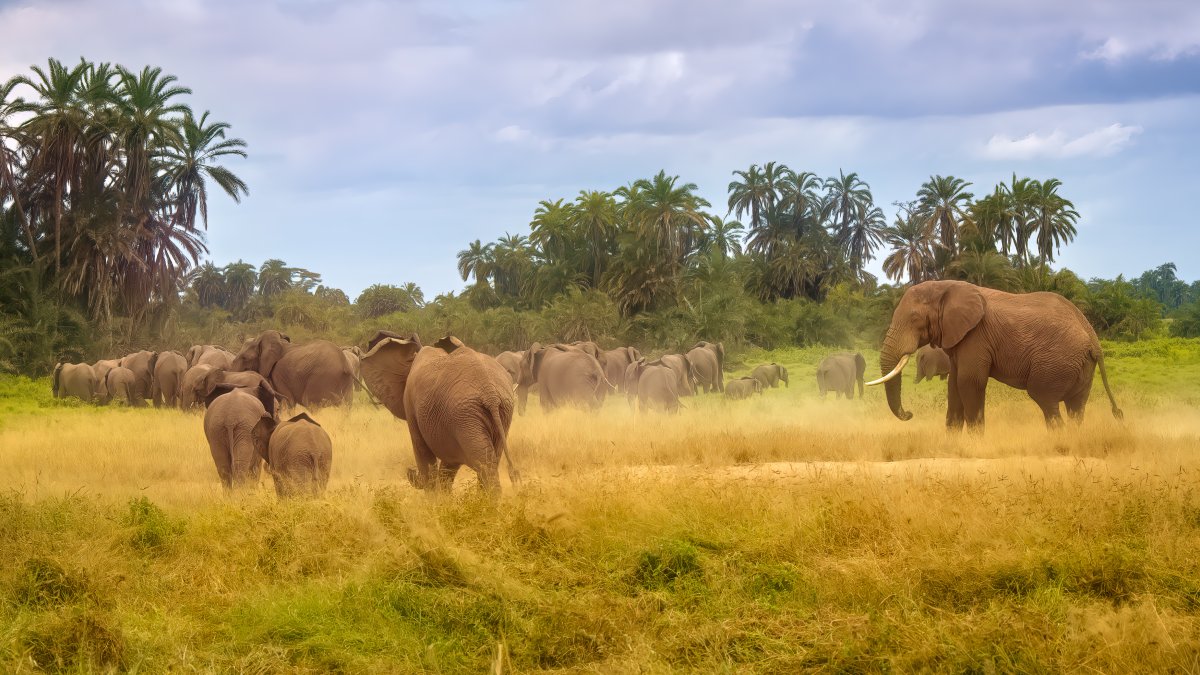
The strongest case for the technology comes from counting animals. Kenya's Save the Elephants flew an aerial survey of the country's largest protected area and came back with about 200,000 images. Reviewing them by hand took nine people nine months. Models trained on Nvidia graphics hardware now do comparable analysis in hours, according to chief executive Frank Pope. The accuracy result was the surprise: compared with the machine counts, human surveyors had been missing roughly a third of the elephants, about half the zebras and giraffes, and three-quarters of the oryx population. Pope's framing is that better numbers make biodiversity measurable, and therefore investable.
The Jane Goodall Institute had a different bottleneck: an archive. Decades of handwritten chimpanzee observations from Gombe National Park in Tanzania were recorded in the local Kiha language and in scientific shorthand, and digitizing them was projected at 13 to 15 years. A tool built with Amazon Web Services scans, translates and structures the notes, and vice president of conservation science Lilian Pintea puts the new timeline at about two years. He said Goodall supported the work on the condition that people keep control, and described the technology as something that should stay human-centered.
Other groups are applying it to decisions made in the field rather than in an archive. Conservation International assesses satellite-detected hotspots and pushes real-time alerts to community forest patrols in remote parts of Cambodia, where waiting for someone to scroll through imagery can mean the fire spreads first. The Nature Conservancy puts AI-enabled cameras on commercial fishing vessels so footage is processed aboard instead of shipped to a distant data center, cutting both transfer volume and energy use. The World Resources Institute limits resource-heavy image and video generation and caches query results so identical requests are not processed twice.
Against those gains sit numbers that the same organizations cite when opposing new builds. The International Energy Agency estimates global data centers will draw about 945 terawatt-hours a year by 2030, roughly double current consumption and about equal to Japan's annual electricity use, producing the equivalent of more than 300 million metric tons of carbon dioxide. IEA also projects annual water consumption rising from about 560 billion litres in 2023 to roughly 1.2 trillion litres by 2030. Researchers at the United Nations University Institute for Water, Environment and Health estimate the global data-center footprint could more than double by 2030, to an area about twice the size of Jakarta. These figures cover all data centers, not AI alone, which is precisely the problem for anyone trying to argue that a wildlife survey nets out positive.
Microsoft, Amazon and Google have all reported rising emissions tied partly to data-center expansion, raising questions about their own climate targets. Amazon told Reuters its AI products were among the most sustainable because of low-carbon energy purchases and efficiency work; Microsoft and Google did not respond to requests for comment. Greenpeace International takes the more combative line, using AI mainly through software with built-in features while developing transparency and human-oversight guidelines, and continuing to oppose the buildout itself. As climate and energy campaigner Katrin Xueying Wu put it, other organizations are asking how to use AI responsibly, while Greenpeace is asking whether all these massive data centers need to exist.
The policy hook is close. COP31 opens this month with Turkey as host, and the government intends to ask governments, businesses and institutions to sign a pledge on developing and deploying AI sustainably. UN Secretary-General Antonio Guterres wants major AI companies to disclose their systems' environmental impacts publicly. BirdLife International chief scientist Stuart Butchart framed the alternative as dereliction: if conservation groups do not explore these tools, he said, they are failing in their duty with the limited resources they have.
What this round of interviews actually establishes is narrower than either side would like. It does not show that AI is good or bad for the climate; it shows that the organizations with the most credibility on environmental harm have decided the trade is worth making locally while opposing it globally. That position is defensible only if the accounting is specific, which is why the more interesting question is no longer whether conservation uses AI, but where the inference runs, what tasks justify a GPU, and whether the footprint data arrives before the pledge does.
Comments (0)
Log in to join the discussion
Log InNo comments yet