AMD closed its books on a third quarter that comfortably outgrew Wall Street's expectations, and the part of the business that matters most to the AI buildout is now doing nearly all the lifting. Company-reported results released after the bell on Tuesday showed revenue of $13.38 billion, up 45% year over year and ahead of the roughly $13.1 billion consensus, with adjusted earnings per share of $2.09 against expectations near $1.97.
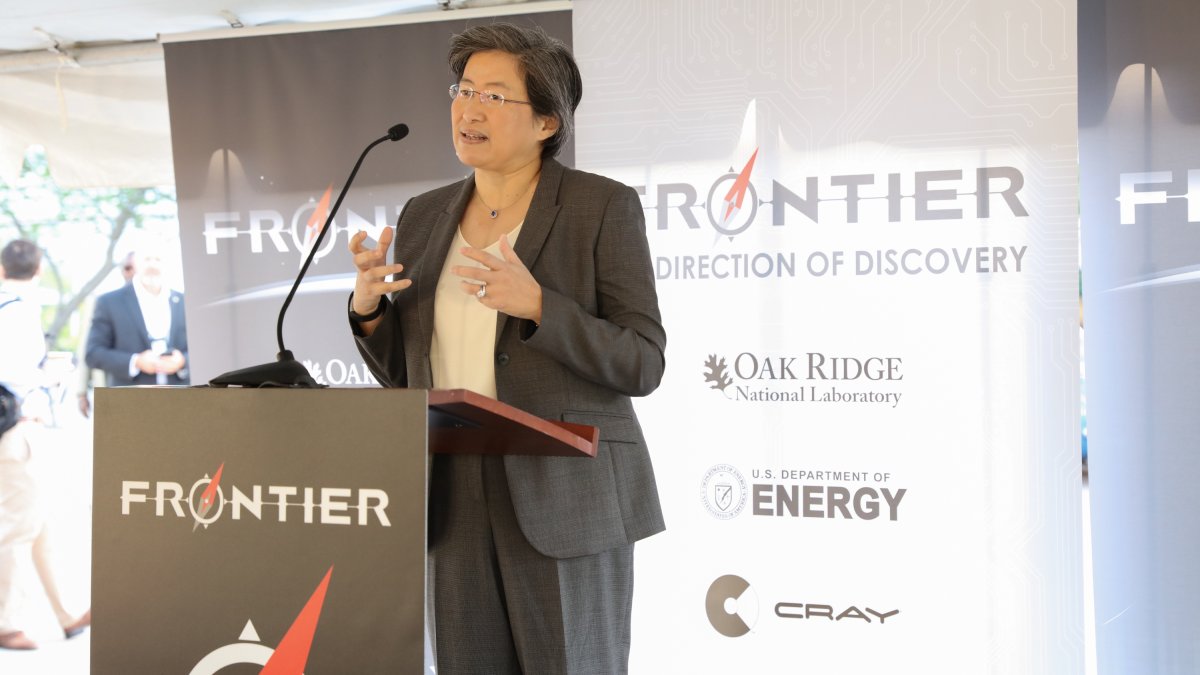
The data center segment was the headline act: revenue nearly doubled to $8.55 billion, up 97% from a year earlier and now about 64% of total company revenue, compared with roughly 47% a year ago. CEO Lisa Su told investors that demand for data center processors is expected to accelerate further and that the company has the capacity roadmap to meet AI chip demand — a notable claim at a time when GPU supply remains the industry's binding constraint.
The rest of the profit-and-loss statement was solid if less spectacular. Adjusted gross margin came in at 56%, up from 54% a year ago. Adjusted operating income rose 75% to $3.92 billion, a 29% operating margin. Research and development spending climbed 31% to $2.80 billion, and capital expenditures more than doubled to $648 million. One soft spot: free cash flow fell 64% to $554 million, well short of the near-$2 billion analysts had modeled, as working capital and inventory build absorbed cash.
Guidance was the other reason the stock jumped more than 9% in after-hours trading. AMD called for fourth-quarter revenue of about $17 billion, plus or minus 3%, well above the $16.2–16.3 billion consensus, while flagging adjusted gross margin of roughly 55% — a touch below the 55.3% analysts expected, reflecting the same memory-cost inflation now squeezing every hardware vendor.
Indeed, the client and gaming side of the business showed what that squeeze looks like. Combined PC and gaming revenue fell 8% to $3.7 billion, with gaming revenue down 40% as surging memory prices and tight supply weigh on the console and graphics markets. The contrast — record data center growth alongside a shrinking gaming line — is becoming the defining shape of the semiconductor cycle in 2026.
The after-hours move rippled across the chip complex, lifting Nvidia, SK Hynix and other memory and accelerator names in extended trading. All figures above are from AMD's company-reported release and management commentary; the data center growth trajectory will get its next test when hyperscaler capex plans for 2027 start to firm up in the coming weeks.
Comments (0)
Log in to join the discussion
Log InNo comments yet