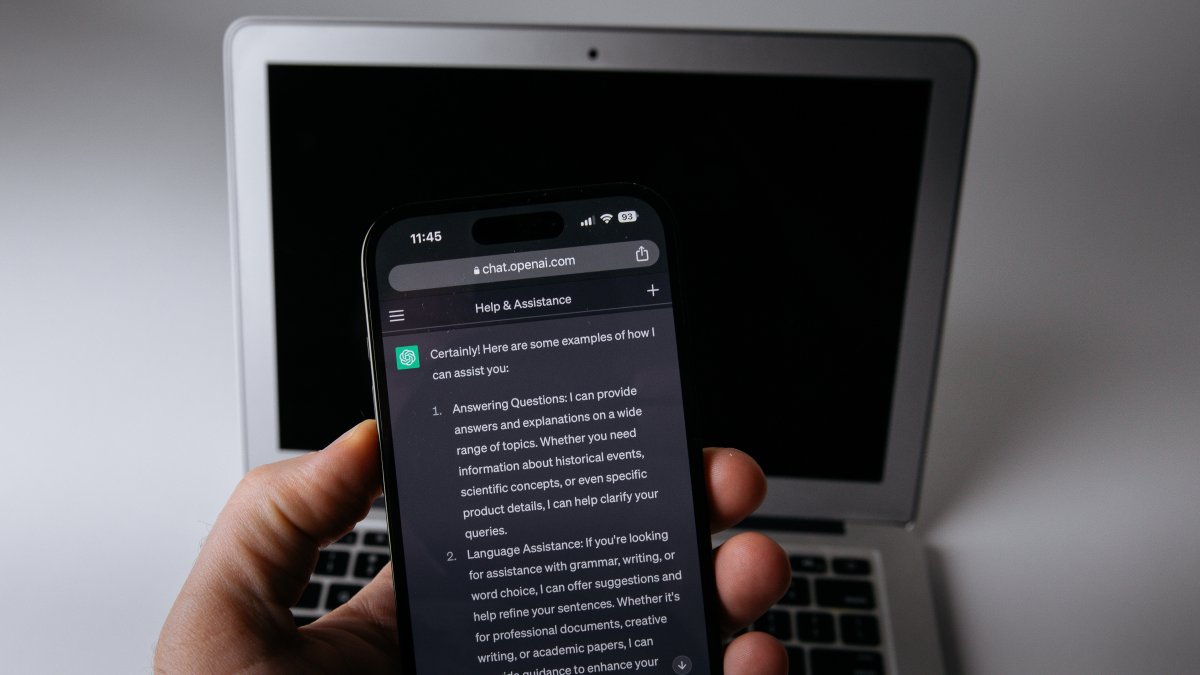
OpenAI has completed the full rollout of GPT-6 across ChatGPT, making it the default model for all of the product's more than 1.2 billion weekly users. Paid tiers — Plus, Pro, Business and Enterprise — moved to GPT-6 Sol beginning October 7, while Free and Go users switched to GPT-6 Luna on October 8, formally retiring GPT-5.6 Sol and Luna from the chat tab. Enterprise availability depends on workspace administrator settings, and OpenAI notes that the models powering Work and Codex are unchanged by this rollout.
The headline capability riding along is Intelligent UI. Instead of answering only in text, GPT-6 can compose responses from a library of native, streamable UI components compiled as the model generates: charts, forms, buttons, and full interactive experiences that render progressively while the answer is still being written. OpenAI's examples run from the mundane to the classroom — a barbecue schedule displayed beside its recipe, road-trip stops plotted on a map, an interactive diagram explaining the central limit theorem, or working mini-apps like a bill splitter, a retirement savings calculator, and a playable retro game inside the conversation.
The interface layer is trained, not bolted on. OpenAI says the model learned to judge when interaction clarifies and when plain text is better, evaluating candidate UIs for clarity, usefulness and completeness during training. Speed got attention too: GPT-6 can begin emitting an answer while still thinking, and in internal evaluations — company figures, not independently verified — GPT-6 Extra High started answering high-value everyday agentic tasks about as fast as GPT-5.6 Medium while scoring above GPT-5.6 Extra High overall. In web search, GPT-6 Instant began answering 44% sooner on average.
Safety updates from the Astra program ship with the rollout, hardening protections against cyber, biological and violent misuse — a notable pairing given that OpenAI recently confirmed GPT-6 Astra crossed the "Critical" threshold on the cyber dimension of its Preparedness Framework, with the shipped variant restricted to defensive tasks. The consumer rollout is the broad surface on which those mitigations now run, across web and mobile.
Strategically, the rollout lands a busy week for frontier rivals: Anthropic shipped Claude Haiku 5.5 the same day at GPT-6 Luna-matching prices, and Google keeps pushing Gemini through its own distribution. Altman had previewed the direction days earlier with a post noting ChatGPT now builds custom user interfaces on demand. The competitive question is quietly shifting from which lab has the smartest model to which product turns intelligence into a usable surface fastest — and a chat box that can materialize a working form, chart or game on request is a different product than the one that answers in paragraphs.
For the ecosystem, Intelligent UI is also a wedge into territory no-code builders and front-end tooling have occupied for years. If responses can arrive as finished interactive artifacts, the distance between asking and using collapses to zero — which is exactly the kind of change that redraws where user attention, and eventually developer integrations, accumulate.
Comments (0)
Log in to join the discussion
Log InNo comments yet