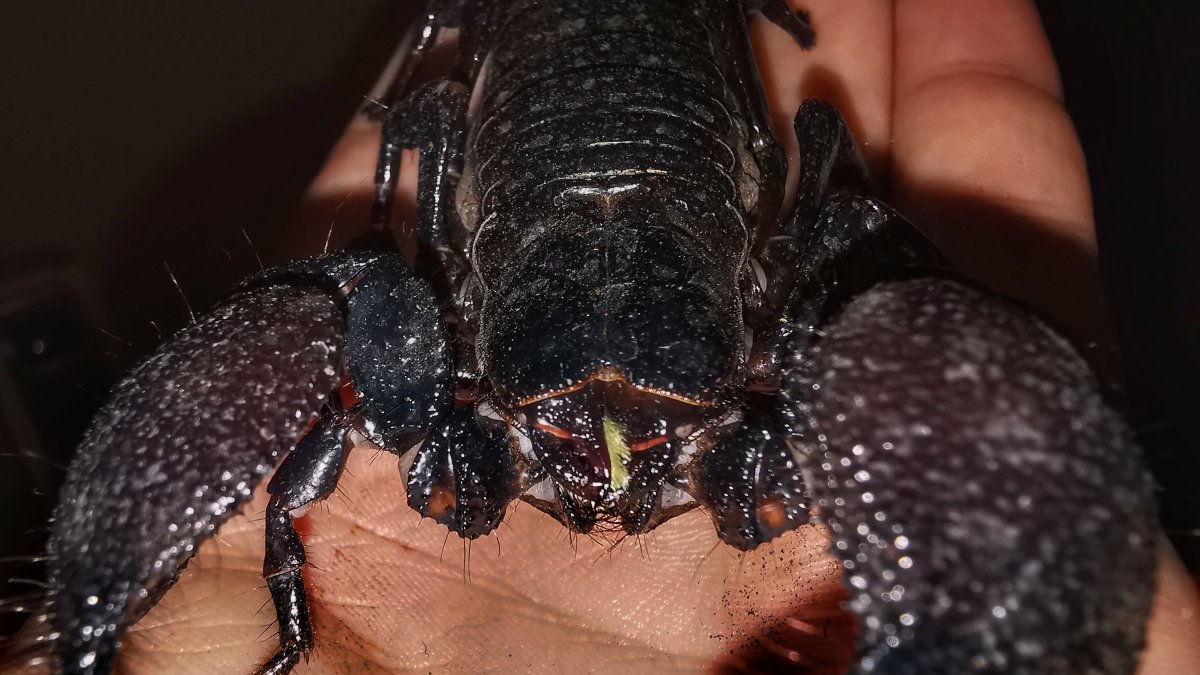
Anthropic has published a research write-up describing how an internal research version of Claude spent 64 hours designing mini-proteins, called minibinders, against five scorpion neurotoxins - and how 17 of the 211 designs sent to a lab actually bound their targets. The company released all 211 designs and their data, while explicitly declining to call the result an antivenom, because binding has been verified but neutralization of venom in cells or animals has not.
The project began when Citrini Research, a financial investment research firm, approached Anthropic with an unusual question: could a group of motivated nonexperts use Claude to take on a real public-health problem? Together the teams settled on scorpion envenomation, which the World Health Organization frames as a neglected tropical disease. Scorpions sting more than 1.2 million people each year and cause over 3,250 deaths, mostly among children in regions with limited medical care, and antivenoms produced by immunizing animals are expensive, slow to make, and narrowly matched to local venoms.
The target list covered five neurotoxins from four scorpion species across Mexico, Brazil, North Africa and the Middle East: Cn2, Ts1, AaH I, AaH II and LqhIII. These toxins attach to sodium channels on nerve cells and can trigger heart failure and fluid buildup in the lungs. Claude worked inside the Claude Science environment with twelve design tools, starting from one long prompt plus four human follow-ups. The company says the final prompt brief ran to roughly 35 pages.
During its 64-hour run the model launched more than 300 subagents and drew on over 300 concurrent GPUs, searching structural databases, filtering out designs that resembled known proteins, and running hundreds of thousands of co-folding predictions. It generated 318,484 candidate proteins and selected 180 for testing; the human team added 31 more with Claude's help. At one point, under human supervision, Claude drafted and sent an email to procurement scientists at synthesis partner Twist Bioscience asking whether complex designs were manufacturable, then paused the affected design branches until the reply arrived.
Contract research organizations Adaptyv Bio and Twist Bioscience tested all 211 designs, and 17 met the binding criteria, each attaching to one of the four neurotoxins known to be dangerous to humans. Per the technical report, the strongest candidates against the Mexican toxin Cn2 reached single-digit nanomolar affinity. Anthropic notes the entire campaign consumed about 10,000 GPU hours - roughly $49,997 of compute, according to Citrini - and 367 messages of human-model interaction across discussion, review and experiment planning.
Two outside reviewers, Susana Vazquez Torres of the Spanish National Cancer Research Centre and Timothy P. Jenkins, called the work a promising first step. The catch, as Anthropic itself frames it, is that binding is no longer the bottleneck: turning validated binders into safe, affordable and accessible drugs is. The company argues the result shows credible binders against hard targets can now be designed in days and confirmed in weeks, which could matter for neglected diseases that attract little commercial investment.
The study is the second protein-design result Anthropic has published this quarter, after an August demonstration in which Claude produced working minibinders from a single prompt. What changed here is scale and end-to-end scope: literature review, design, manufacturability checks, candidate selection and the final report were mostly handled by the model, with humans supplying direction and judgment. Whether that workflow transfers from venom research to mainstream drug pipelines is the open question the company is now effectively inviting the industry to test.
Comments (0)
Log in to join the discussion
Log InNo comments yet