Most robot brains built today are vision-language-action models: cameras locate an object, a language model interprets the instruction, and the system decides how to move. Eka Robotics, which on Tuesday announced a 150 million dollar Series A at a 1.45 billion dollar post-money valuation, is betting the last few centimeters of grasping belong not to vision but to force.
The round was led by Andreessen Horowitz and F-Prime, according to TechCrunch, which first reported the raise. Eka was founded by MIT professor Pulkit Agrawal and Tuomas Haarnoja, a former Google DeepMind researcher who co-created the Soft Actor-Critic reinforcement learning algorithm. The two first met as graduate students at UC Berkeley.
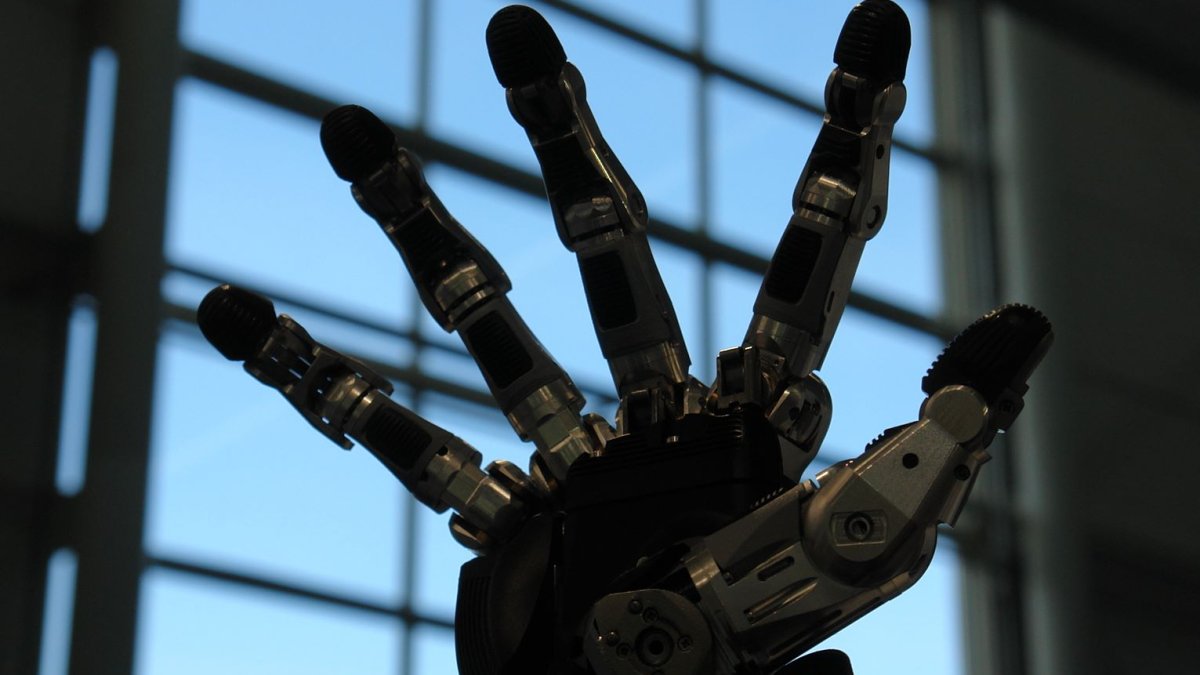
The company calls its architecture a vision-force-action model. Vision tells the robot roughly where an object is, but the actual grabbing and searching happens through force sensors embedded in a purpose-built gripper. "Vision is not the primary way in which you close this last millimeter problem," Agrawal told TechCrunch. The hand is flexible enough to react to contact, which is why Eka's demonstration robot can pick up a raspberry without crushing it.
Its training pipeline is equally contrarian. Instead of relying on human demonstration videos, Eka runs reinforcement learning inside a physics simulator that models the many forces a robot encounters while grasping. The founders say they can generate thousands of hours of robot experience in minutes — a claim that scales with compute rather than with gigworker labor.
The results, as company-reported and demo figures, are striking: about 1,500 picks per hour on objects weighing up to a kilogram, versus roughly 600 for a human, with a reliability rate above 95 percent. The gripper costs under 1,000 dollars and is rated for 5 million duty cycles, with a goal of reaching the 20 million cycles of standard industrial arms. Investors say the system already exceeds human performance on certain dexterous tasks.
Outside roboticists have been unusually effusive. Kris Hauser, a professor at the University of Illinois Urbana-Champaign, said Eka's demo had a "wow factor" and that the robot adapted to a large number of objects without retraining. One frontier-lab roboticist who saw it in action described the experience as emotional, comparing it to when robots first achieved reliable legged locomotion.
The caveats are the ones that always follow lab demos. Eka is running undisclosed pilots with industrial customers in pick-and-place and wire handling, but Hauser noted the real test is running on a real assembly line for a full year without breaking. Durability, generalization beyond picking, and unnamed customers all remain open questions for a company valued like a proven platform.
Eka's raise, coming a day after a robot-brain startup founded by ex-Nvidia GR00T people banked 90 million dollars, confirms that physical AI is where 2026's venture money is flowing. If force-based manipulation holds up outside the lab, the tasks robots can automate stop being the ones that are easy to see and start being the ones that are easy to touch.
Comments (0)
Log in to join the discussion
Log InNo comments yet