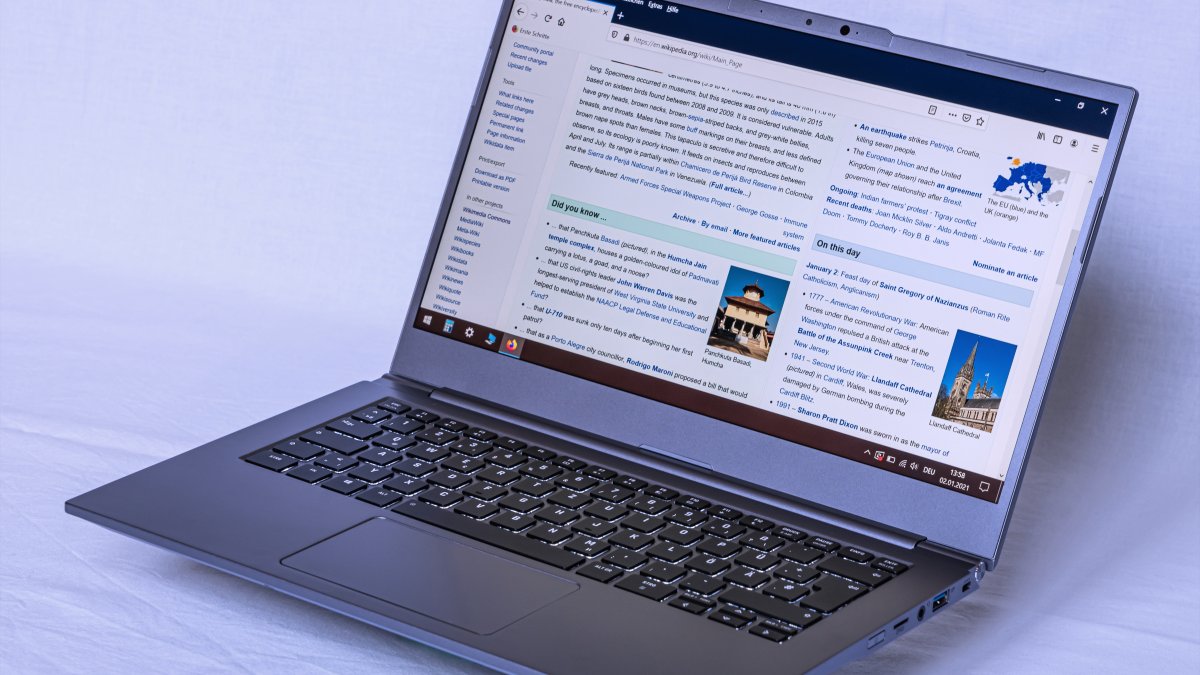
Browser maker Opera announced WebAI on Monday, a proposed web standard that lets websites and extensions run AI models on the user's own computer instead of calling a cloud API. The feature ships as an opt-in early preview in Opera One for Windows PCs (64-bit Intel/AMD) and Macs with Apple silicon, with the gaming-focused Opera GX and the agentic Opera Neon browsers to follow. Nothing is downloaded until the user turns the feature on in Settings, and it can be switched off at any time.
WebAI is deliberately model-agnostic. Opera names Google's open-weight Gemma as one supported example, and on Macs the browser can also tap Apple's on-device foundation model. The design traces back to April 2024, when Opera became the first major browser to ship built-in access to local models in a developer build, offering some 150 LLM variants from around 50 model families. Two years of progress in open-weight models and consumer hardware, the company argues, have made the same idea ready for mainstream users.
For developers, WebAI introduces three building blocks: a Prompt API for generating text, a Decision API for classifying information, and a Semantic Embeddings API for finding relationships between pieces of content. Opera's developer documentation also lists Summarizer, Writer, Rewriter, Translator and Proofreader APIs with playgrounds that run entirely on-device. Because inference is built into the browser, there is no separate app to install, no local server to configure, and no API key to obtain — and no per-request cloud bill.
The privacy pitch is central. "A lot of what people want from AI doesn't need a data center. Your laptop can already do it, without sending your data anywhere," said Krystian Kolondra, Opera's EVP of Browsers and AI. Page data processed by local models stays on the device, and site-specific permissions let users decide which websites can access local AI at all. To show what the APIs enable, Opera's team built six experimental extensions — including one that colors an article's paragraphs by relevance to a stated project and another that generates a comprehension quiz from the page you just read.
The trade-offs are real. Local inference leans entirely on the consumer's hardware, so responsiveness varies by device, and Opera's preview excludes Intel-based Macs, Linux and Windows on Arm outright. Open-weight models also trail the cloud frontier on hard tasks, which is why the company positions WebAI for the long tail of everyday jobs — sorting tabs, flagging clickbait, summarizing articles — rather than frontier reasoning.
Still, the strategic signal is hard to miss. If Google and Microsoft genuinely back the standard, browser-embedded local AI could become a baseline web capability the way geolocation and push notifications did, shifting AI features from a subscription line item to something any site can call. For independent developers and small teams, it lowers the cost of shipping AI-powered tools to roughly zero. For the cloud providers, it is a quiet reminder that a growing slice of AI demand may simply stop hitting their APIs.
Comments (0)
Log in to join the discussion
Log InNo comments yet