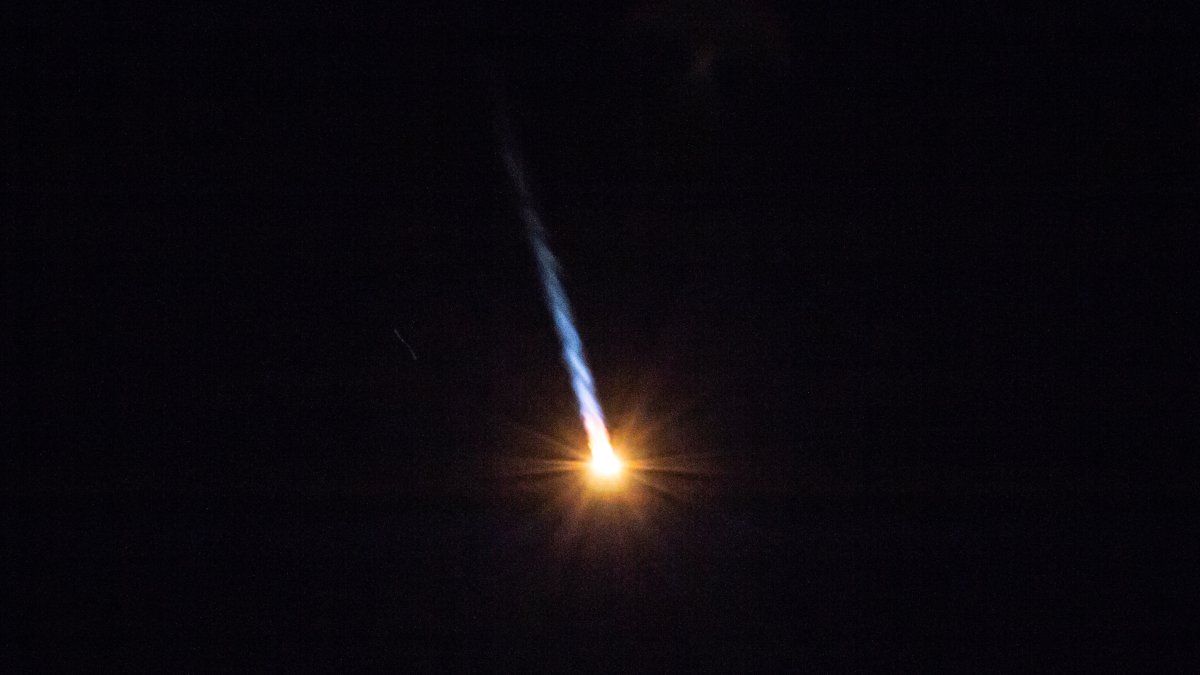
Google is about to find out whether its AI silicon can survive space. On Thursday, a SpaceX Falcon 9 rocket slated to lift off from Vandenberg Space Force Base in California at 11:15 a.m. PT will carry a solar-powered prototype satellite equipped with Google's tensor processing units, the chips that power most of Alphabet's AI workloads. The flight, the Transporter-18 rideshare mission, marks the first in-orbit test of Project Suncatcher, the "moonshot" Alphabet first laid out in November 2025 to explore whether space could one day host scalable machine learning infrastructure.
The prototype is flying aboard satellites operated by Planet Labs, the Earth-imagery company that has become a recurring launch partner for experimental payloads. In its announcement, Google framed the mission as a data-gathering exercise rather than a product milestone: the satellite's job is to report how Trillium TPUs cope with the radiation, thermal swings and physical stress of low Earth orbit — conditions no terrestrial data center can reproduce.
The case for moving compute upward is, at least on paper, seductive. Satellites in low Earth orbit can "access near-constant sunlight, generating up to eight times more solar power than on Earth," Alphabet said in its launch post. Eventually, Google expects to link multiple satellite constellations so they can manage larger AI workloads in orbit. The company has already run AI workloads on TPUs in a test facility at the University of California, Davis, but ground testing only approximates what orbit will do to the hardware.
Google's engineers put the chips through a punishing pre-flight regimen. Reaching low Earth orbit takes roughly ten minutes of sustained acceleration of up to 10 g, and individual components can see forces of 50 to 100 g; the team vibration-tested the hardware on three axes before it passed. On the radiation side, the TPUs were blasted with protons at UC Davis' Crocker Nuclear Laboratory while running AI workloads — and Google says preliminary results indicate the Trillium silicon can tolerate the total ionizing dose of a mission lasting more than five years without failure.
Two harder problems remain unsolved. Vacuum offers no airflow, so heat must leave the spacecraft through radiators and heat pipes, which Google tested in a thermal vacuum chamber. And networking a swarm requires laser inter-satellite links delivering high bandwidth at very short range, a feat Google compares to "hitting a coin-size target from miles away while both points are in motion." The next milestone is already scheduled: in 2027, two satellites will fly to test laser interconnects, en route to clusters carrying dozens of TPUs per satellite.
The financial ties between the two companies make the partnership unusually intimate: Alphabet's stake in SpaceX is currently valued at more than $82 billion after the rocket maker's record IPO in June. The alliance persists even as their AI divisions compete directly for model customers. SpaceX, for its part, has its own orbital-compute ambitions, with plans for satellite swarms built in Redmond, Washington carrying GPUs and Tesla-made solar arrays. Elon Musk has argued space data centers will be the cheapest way to train AI "within two years, maybe three at the latest," and COO Gwynne Shotwell said in September the company intends to deploy "supercompute in space" in 2027.
Independent experts remain skeptical that orbital data centers pencil out on physics or economics: launch capacity is scarce and expensive, chips must survive extreme temperature swings and radiation, cooling is radically harder without convection, and orbital debris is an ever-growing hazard. Thursday's flight will not answer those questions — but for the first time, Google will have real telemetry from a TPU running in orbit, and that data will decide whether Project Suncatcher graduates from moonshot to roadmap.
Comments (0)
Log in to join the discussion
Log InNo comments yet