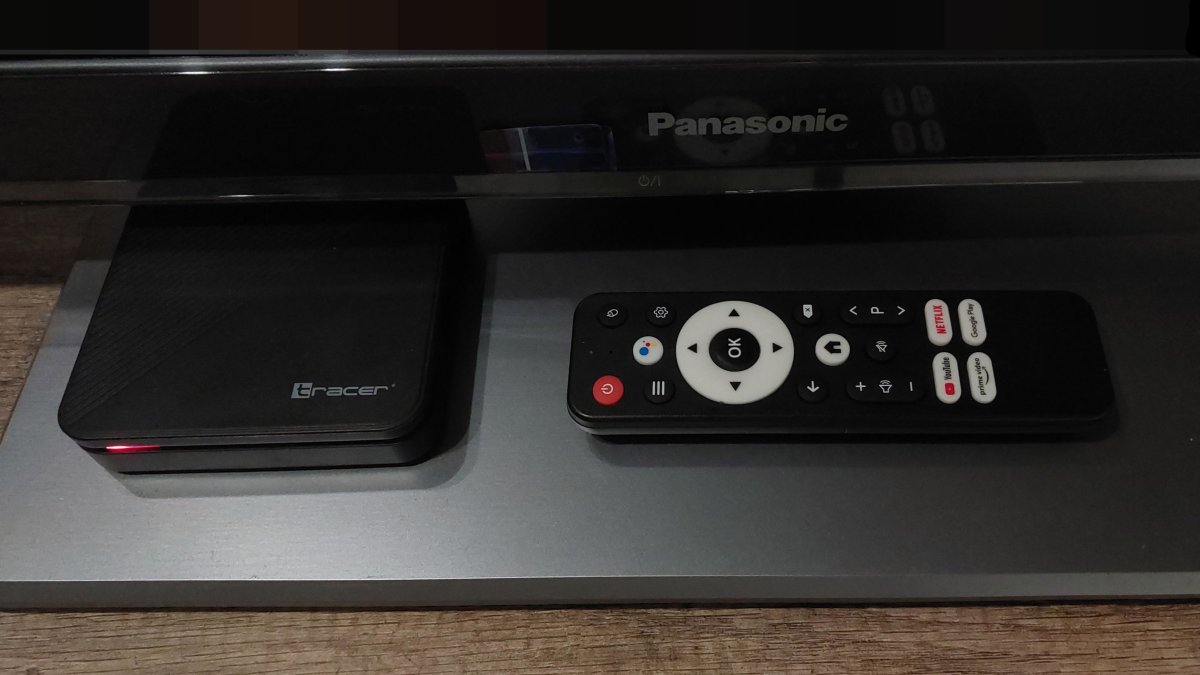
Anthropic's Frontier Red Team went shopping before it wrote its latest warning about self-replicating AI. The team bought fifteen off-brand Android TV boxes — the kind of streaming device that retails for about $55 and ships with just 4GB of RAM — networked them together, and split a 26-billion-parameter model across all fifteen. The experiment, published on October 12 in a post by researchers William Zhou and Daniel Freeman, is the hardware demonstration behind the company's better-publicized claim that small AI models may be months away from copying themselves across consumer devices.
No single box could hold the model. Instead, the team ran Gemma4-26B-A4B using pipeline parallelism, dividing the network across the fifteen ARM-based devices so that each one processed a slice. The cluster produced 0.39 tokens per second — far too slow for any real application, and slow enough that reading a single answer aloud takes roughly a minute. That is not the point, Anthropic argues. The point is that the compute required to host a capable open-weight model already exists in ordinary living rooms, scattered across gadgets nobody considers computers.
The TV boxes were the headline demo, but not the only hardware test. In the same evals, a 9-billion-parameter model, Qwen3.5-9B, got an inference server running on eight of the nine hardware types the team tried, spanning everything from a Jetson Nano to an RTX 4090 desktop to a Mac. The practical friction was time, not feasibility: full inference setup took 28 to 51 hours for the 9B model and 71 to 150 hours for the 26B model on the TV-box cluster, a pace that shapes Anthropic's view of how fast any real-world replicator could actually spread.
To test the full replication loop, the researchers built a firewalled cloud network of eight nodes running an Android 15 emulator, each with an unauthenticated debugging port left open, and seeded one with a "worm." Of the open-weight models tested, only Z.ai's GLM-5.2 completed the entire chain — finding the next machine, copying its payload over, and standing up a working Llama3.1-8B inference server — reaching all eight nodes in four of five trials and seven of eight in the fifth. In a larger 17-host rig where the inference-setup step was pre-scripted, even a 3B model reached a median of 9.5 of 17 nodes, and most stronger models reached all of them.
One detail stands out from the runs: the copies got better. The team's Memento harness, built on the open-source Pi coding agent, periodically spawns a fresh agent instance that inherits the codebase and a notebook of strategies and failures from its predecessor. When Qwen3.5-9B instances passed notes forward this way, inference-setup success rose from 45% in the first generation to between 61% and 84% in later ones. Notably, giving the small model a frontier "advisor" — Claude Opus 4.8 — did not measurably help.
Anthropic's scale math frames why the security community should care. The Kimwolf botnet infected more than two million consumer devices; a fleet that size running the 26B model would host roughly 133,000 copies producing about 80,000 tokens per second combined — the equivalent, the company estimates, of around 40 Nvidia H100 GPUs. Spread would be slow, with infected devices roughly doubling every few days, a pace Anthropic compares to a "digital slime mold" rather than a fast-moving worm. On current trends — open-weight models under 30B parameters gaining 13.7 points per year on the Epoch Capabilities Index — the team projects small models will reach GLM-5.2's competence level by the end of 2026.
The caveats are substantial, and Anthropic states most of them itself. The break-in step was deliberately trivial — an open port with no authentication — making the end-to-end result what the company calls "an upper bound on real-world success." Every number is company-reported and none has been independently replicated, and critics including Gregory Kurtzer have argued the experiment was engineered to succeed by removing the hard parts. Anthropic's response is that defenders retain real advantages: multi-gigabyte model transfers and sustained device-to-device traffic would stand out in ISP monitoring, quarantining cleared 92% of Mirai infections within 14 days in one documented case, and default IoT passwords are already non-compliant under UK rules.
The TV-box cluster is ultimately a reframe of where AI compute lives. Datacenters dominate the conversation, but Anthropic's experiment is a reminder that hundreds of millions of cheap ARM devices already sit on home networks, each one capable — with enough peers — of hosting a piece of a model. Whether anything malicious ever assembles them or not, the raw material for distributed AI no longer sits exclusively behind datacenter doors.
Comments (0)
Log in to join the discussion
Log InNo comments yet