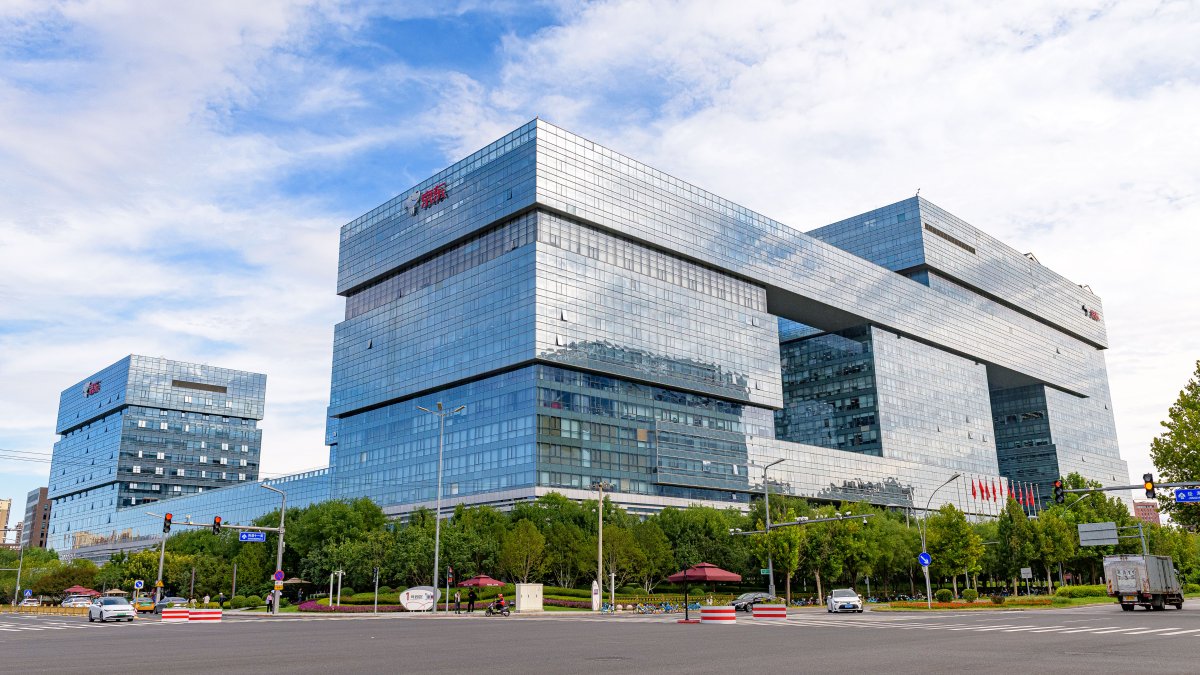
JD, the Chinese e-commerce and logistics group, laid out one of the largest robot procurement commitments ever announced at the World Internet Conference in Wuzhen on November 4. Cao Peng, chairman of JD's technology committee, told the conference robotics and embodied intelligence forum that JD Logistics plans to purchase 3 million robots, 1 million unmanned vehicles and 100,000 drones over the next five years to serve logistics, offline retail, healthcare, industrial parks and other operations.
The procurement pledge sits inside a broader program the company calls the JD Physical AI Acceleration Plan, whose first phase focuses on embodied intelligence robots across six areas: data, bases, manufacturing, sales, logistics and service. The framing matters. JD is positioning itself less as a robot maker than as the demand side of the embodied AI market, using its scale to pull hardware vendors toward production-grade reliability.
The company is equally explicit that data is the real bottleneck. JD is building embodied intelligence data collection centers with a two-year target of more than 10 million hours of high-quality video of humans performing real work, plus more than 1 million hours of robot operation data, collected under what the company describes as strict legal and compliance requirements. So far its collection effort covers more than 100 fine-grained production and service scenarios with over 100,000 real task records in hand.
The deployment has started. Robots from Shanghai-based AgiBot are already operating inside JD Logistics' Zhiliang warehouses, and Cao Peng described the arrangement as a way to test product limits in real operations and push robots from single-point tasks toward coordinated processes. He told the forum that for robot makers, shipping a product is only the starting point, and that making it genuinely work at scale is the harder test. JD says its AI systems already serve more than 3,000 scenarios across retail, logistics, healthcare and industry, supported by a physical network of more than 3,800 warehouses, over 200,000 partner pharmacies and more than 10,000 own-brand and partner stores.
The announcement fits a wider Chinese push. Industry tracker ITjuzi counted roughly $13 billion raised across 322 deals by Chinese embodied AI startups in the first half of 2026, five times the year-earlier level, and Unitree founder Wang Xingxing told the same Wuzhen forum that 2027 will likely be an inflection point for the robotics industry as physical AI models begin to close the gap between simulation and real hardware. JD's commitment is the demand-side counterpart to that funding wave.
The numbers deserve the standard caveat: they are company targets, not contracts already signed, and Chinese logistics operators have a history of ambitious robotics roadmaps that arrive slower than announced. Procuring 3 million robots over five years implies an average of roughly 1,600 robots a day, every day, a figure that depends on suppliers that mostly remain in early mass production.
Still, the strategic logic is clear. JD is converting the one asset its competitors cannot easily replicate, an enormous network of warehouses, stores and delivery routes full of repetitive physical work, into training environments and purchase orders that could de-risk the supply side of embodied AI. If the plan survives contact with reality, the largest beneficiary may not be any single robot maker but the data flywheel JD is building around its own operations.
Comments (0)
Log in to join the discussion
Log InNo comments yet