FieldAI, a California startup selling what it calls a "universal general-purpose brain" for robots, is raising \$700 million at a \$10 billion valuation, Business Insider reported, citing a person familiar with the deal. The round is signed on a term sheet but not closed, and no lead investor has been named. FieldAI did not respond to a request for comment.
The valuation is the striking part: the Irvine-based company was worth \$2 billion when it raised \$405 million in August 2025 from Jeff Bezos' family office, Laurene Powell Jobs' Emerson Collective and Khosla Ventures. Nvidia's NVentures fund and Intel Capital are also on the cap table. Five-fold jumps in a year are no longer unusual in AI, but they are for a robotics software company that mostly sells into construction sites and industrial yards.
What FieldAI sells is a control stack that runs across "humanoids, robot dogs, drones and industrial rovers" without per-task retraining. The pitch is deliberately contrarian. Where most embodied-AI companies try to scale by scraping robot demonstrations, human video and simulation data, FieldAI's Field Foundation Models are grounded in physics — terrain resistance, motion feasibility, risk probabilities — so a machine can decide safely in an environment it has never seen.
That translates into practical selling points industrial buyers understand. The models do not require a pre-built map of the site, which matters because construction sites change daily and static maps go stale. They work without GPS, an internet connection or user-defined travel paths, and they adjust behavior to risk — slowing a robot down, for example, when it enters a section of a factory where the lights are malfunctioning. FieldAI converts sensor data into continuously updated digital twins that customers can also use to simulate changes before making them.
There is a revenue number attached, which is rare in this category. CEO Ali Agha said the company has added at least \$35 million in new revenue and customer contracts since June, taking the total above \$135 million across more than 30 customers spanning construction, data centers, energy, defense and the public sector. FieldAI had already crossed the \$100 million mark in June. The report does not break out how much of that is recognized revenue versus signed but unbilled contracts — a distinction worth holding onto.
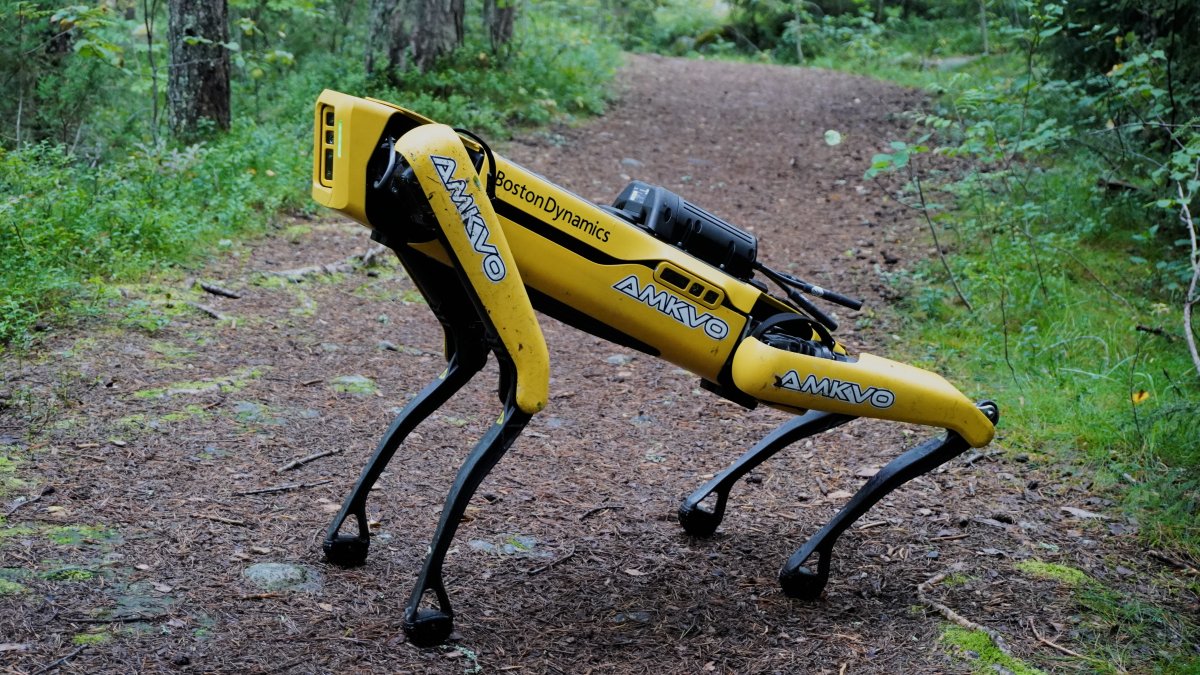
Agha, who spent seven years at NASA's Jet Propulsion Laboratory building autonomy for Mars exploration, has been hiring from Google DeepMind, Tesla, Nvidia and Boston Dynamics. The company partnered with Boston Dynamics in March to add support for the Spot quadruped, aimed at automating equipment inspections for industrial customers.
The \$10 billion tag places FieldAI close to Physical Intelligence, valued at roughly \$11 billion, and behind Skild AI, above \$14 billion — the two other startups competing to be the operating-system layer under the humanoid race. Skild trains on data scale; FieldAI leans on physics priors. Both answers to the same data-starvation problem are now priced in the double-digit billions, which means the market is no longer asking whether the approach works in a lab but whether it holds up across a growing fleet of paying customers.
Comments (0)
Log in to join the discussion
Log InNo comments yet