Mosaic Intelligence Labs, a startup building robotics for vascular surgery, has exited stealth with a 47 million dollar seed round led by venture firm 8VC, according to startup funding trackers and healthcare industry newsletters.
The company's product, as described in funding disclosures, is an AI-powered semi-autonomous catheter designed to navigate veins and arteries during surgery. Rather than a surgeon guiding a catheter wire by hand through fluoroscopic imaging, Mosaic's system pairs the physical catheter with AI that handles navigation under human oversight, keeping the operator in command while the software manages the fine motor work of steering through branching vessels.
The design choice embedded in the phrase "semi-autonomous" matters. Endovascular procedures, from stent placements to thrombectomies, involve threading devices through millimeter-scale anatomy where a misplaced advance can perforate a vessel. Fully autonomous surgery remains far from regulatory or clinical acceptance, and Mosaic's framing keeps the clinician as the supervising decision-maker while the AI takes over repetitive, fatigue-prone manipulation.
The round stands out for its size. A 47 million dollar seed is well above the norm even by current standards, and it puts Mosaic in a cohort of recent physical-AI companies that have skipped the usual staged financing. The investor leading it, 8VC, has built one of the more active portfolios at the intersection of defense, logistics and healthcare technology, and has repeatedly backed companies where AI meets regulated physical operations.
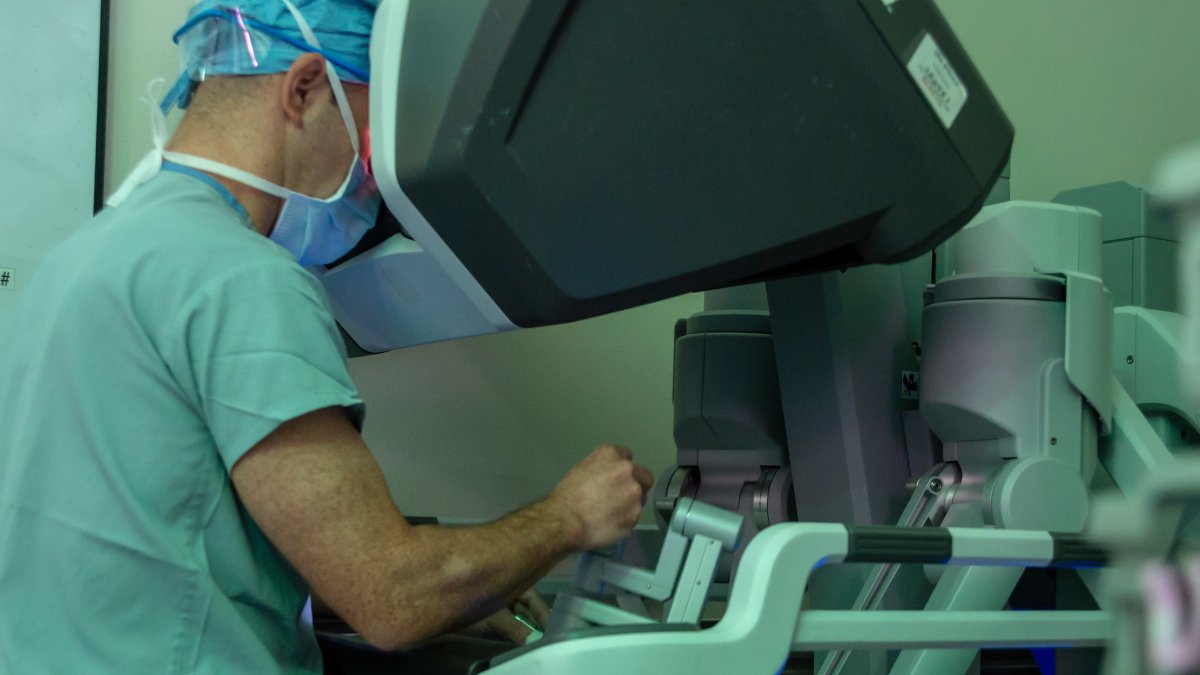
Mosaic is entering a surgical robotics market that has matured around one dominant playbook. Intuitive Surgical's da Vinci system proved that robot-assisted surgery could be a durable, high-margin business, but its success concentrated on soft-tissue procedures controlled from a console. Vascular navigation has lagged that wave: catheter work is longer, thinner and more imaging-dependent, which makes it both harder to automate and, if automation works, more valuable, because operator fatigue and radiation exposure are chronic problems in interventional suites.
The company has released few operational details beyond the round itself, and it was not immediately clear how far its system has progressed in preclinical or clinical work, what regulatory pathway it intends to pursue, or when it expects first-in-human use. Those answers will matter more than the funding total: surgical robotics companies live or die on trial results and clearance timelines, not on seed headlines.
Still, the round is a marker of where AI investment is flowing next. The past month has seen capital pile into robots that weld, sort, inspect and now operate inside blood vessels, with investors reasoning that intelligence is becoming cheap while skilled human labor is not. Mosaic's 47 million dollars is a bet that the same logic applies to the inside of the human circulatory system.
Comments (0)
Log in to join the discussion
Log InNo comments yet