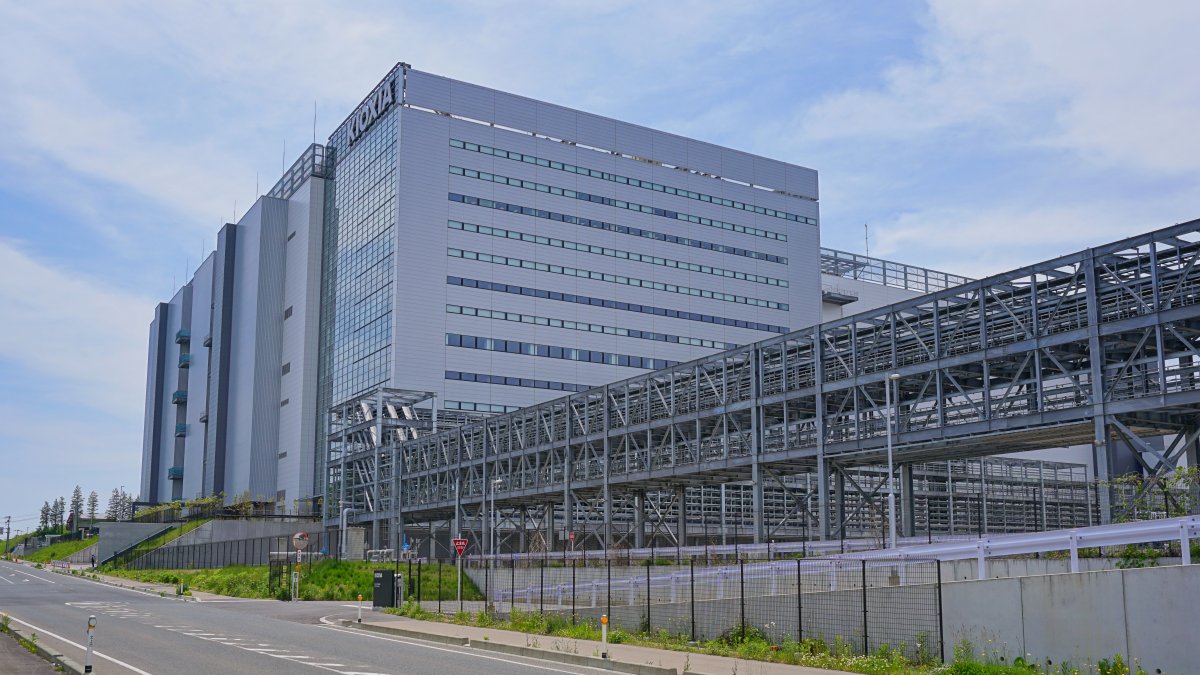
SK hynix is about to become the largest shareholder of one of its fiercest competitors. In a regulatory filing on November 20, the Korean memory maker said it will convert 129 billion yen — about $810 million — of convertible bonds into 129,000 common shares of BCPE Pangea Cayman2, the Bain Capital-led investment vehicle known as SPC2 that has held its Kioxia position since 2018. It will also buy 1,001 more SPC2 shares from Bain for 100 million yen. Once the conversion closes, expected on December 4, SK hynix will hold an indirect stake of about 14.1 percent in Kioxia, ahead of Toshiba, which held roughly 10.5 percent in early November.
The mechanics matter as much as the headline. No new money flows into Kioxia itself, and the number of Kioxia shares SPC2 holds does not change. The only fresh cash is the 100 million yen needed to acquire Bain's residual 1,001 shares, after which SK hynix owns 100 percent of the vehicle. What was a debt claim on an investment fund becomes direct ownership of the entity that sits on top of roughly a seventh of a direct competitor.
The position dates to 2018, when a Bain-led consortium paid 3.95 trillion yen for Toshiba's memory business, the company that became Kioxia. SK hynix put 2.66 trillion yen into the deal through the SPC1 fund and another 1.29 trillion yen into SPC2 convertible bonds. After Kioxia listed on the Tokyo Stock Exchange in December 2024 and the NAND cycle turned, SPC1 sold all of its Kioxia shares by June 2026. The bond conversion is the final step in unwinding that eight-year-old investment structure — this time by keeping the equity rather than exiting it.
Both companies are moving to contain the awkwardness of the arrangement. SK hynix said the conversion does not signal any intention to deepen involvement in Kioxia's management, and that it has no plans to buy more shares or sell its stake. Under the original investment agreement, its voting rights are capped at 15 percent until 2028 unless Kioxia consents otherwise. A Kioxia representative said management and operations will stay independent. Even so, Kioxia's own annual report already lists the SK hynix stake as a potential conflict of interest, because the two compete directly in the same NAND market.
The market context sharpens the point. In the second quarter of 2026, trackers put global NAND share at roughly 28 percent for Samsung, 19 percent for SK hynix, 14 percent for Kioxia and 11 percent for Sandisk, Kioxia's manufacturing partner, with different trackers giving different figures. An SK hynix-plus-Kioxia combination of influence would rival Samsung's leadership, even without any consolidation. AI data center demand for high-capacity enterprise SSDs has tightened NAND supply and pushed contract prices up sharply over recent quarters, raising the stakes of any coordination between two of the four companies that control the market.
For now, the financial effect is modest: SK hynix's business is overwhelmingly DRAM and HBM, and the added exposure is a small slice of NAND price risk layered onto an investment that has already paid back several times over. The open question is what happens after the voting cap expires in 2028. The announcement says nothing about that, and with no plans to increase the stake, talk of consolidation remains speculation. But a rival sitting at the top of a competitor's shareholder register changes the conversation around pricing discipline, information flow and future M&A — and both companies will spend the next seven years answering for it.
Comments (0)
Log in to join the discussion
Log InNo comments yet