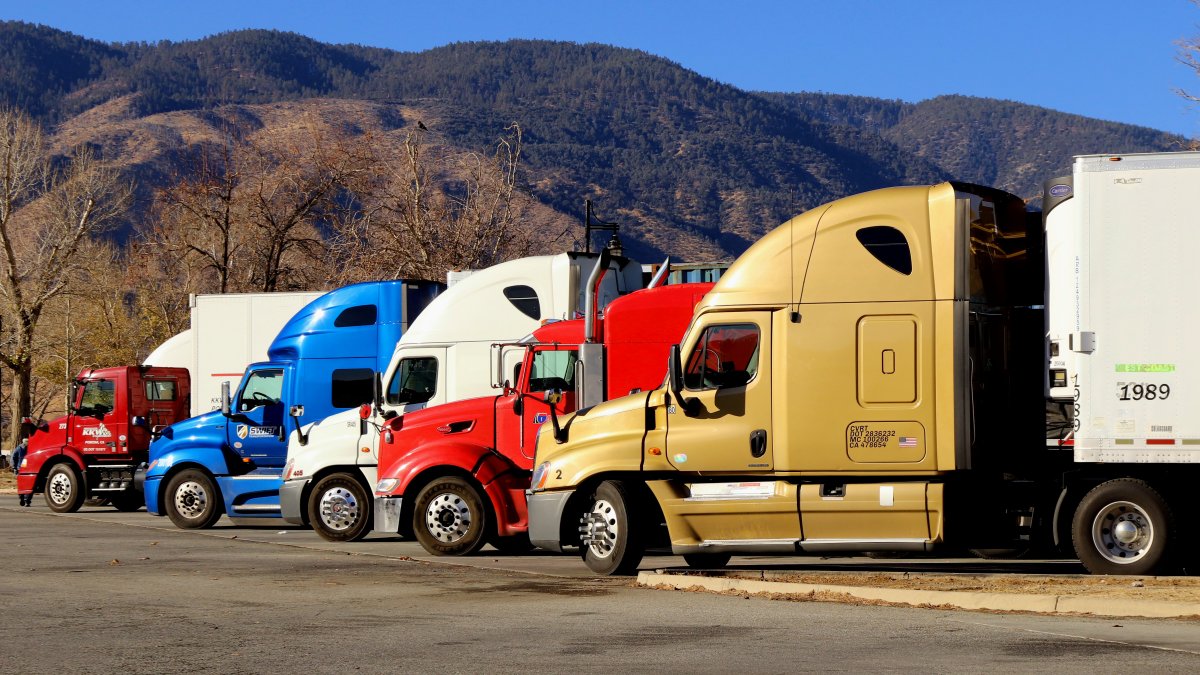
Autonomous trucking has reached the busiest commercial border crossing in the United States, with an asterisk. Kodiak AI said on October 8 that its self-driving system is now hauling freight on the 435-mile lane between Charger USA's terminals in Dallas and Laredo, Texas. The trucks carry refrigerated and dry freight for consumer packaged goods and food-and-beverage customers, and the first delivery on the lane ran on September 8, a month before the announcement.
The asterisk is the human still in the cab. Every truck on the lane currently runs with a safety driver onboard. The companies said the lane will move to driverless operation once Kodiak completes its safety case, a structured, evidence-backed argument that the Kodiak Driver is acceptably safe to operate in this specific domain. The framing deliberately puts evidence, not a calendar date, at the center of the commitment.
Laredo is the prize. It is the highest-volume commercial land port of entry in the United States, handling more than $350 billion in international trade in 2025, nearly 40% of all US-Mexico trade, according to figures in Kodiak's announcement. The lane is Kodiak's first route serving the city. It is not, however, a driverless border-crossing milestone: the international crossing itself and any movement into Mexico remain separate stages of the journey handled conventionally.
The company says the gap to driverless is closing on a measurable track. Kodiak's long-haul Autonomy Readiness Measure, which tracks the share of claims and evidence in its safety case that have been closed out, reached 96% at the end of September, up from 93% a month earlier and 84% in February. Kodiak plans to launch driverless long-haul service by the end of 2026 on its Dallas-Houston lane along Interstate 45, and its trucks have operated driverlessly in commercial service in the Permian Basin since December 2024. The readiness figure is a company-reported metric, not an independent assessment.
The commercial model is driver-as-a-service: Kodiak deploys its system onto trucks that customers own and operate. "Autonomy lets us build a network that serves both our customers and our drivers," said Andy Khera, president of Charger Logistics, describing a nearly fully automated ecosystem built on the carrier's in-house transport management system. Kodiak founder and CEO Don Burnette said the Dallas-Laredo lane "extends the Kodiak Driver into a new corridor" and gives both companies the operating foundation they need to scale driverless service.
Charger, notably, is hedging. The same carrier signed an agreement with Aurora Innovation, reported in August, to deploy Aurora's second-generation driverless trucks on this very lane, under a transportation-as-a-service structure in which Aurora holds the US Department of Transportation operating authority, controls the truck and carries the insurance. Running both autonomy stacks on one corridor gives the carrier a side-by-side comparison before scaling either.
Kodiak, which listed on Nasdaq under ticker KDK in September 2025 through a merger with an Ares-affiliated SPAC that valued the company at roughly $2.5 billion, is betting that freight economics rather than technology demos will decide who gets to remove the driver first. On the Dallas-Laredo lane, the freight is already moving. The driver is the last thing scheduled to leave.
Comments (0)
Log in to join the discussion
Log InNo comments yet