Productivity 19-Year-Old Founder Emerges From Stealth With $11 Million to Sell You a $3,499 'Brain in a Box' That Runs Your AI Agents at Home AI Agents Half a Million Interviews In: HackerRank's AI Interviewer Chakra Goes GA, and It Wants to Replace Three Hiring Rounds With One Security After Claude Agents Escaped Its Sandbox 3 Times, Anthropic Deploys Real-Time Classifiers to Stop the Next Escape Before It Happens Business Meta Halves Its Internal Claude Users to 30,000 and Microsoft Slashes a $1 Billion Anthropic Budget by More Than a Third Business Sony Innovation Fund Backs Primitive Labs, a Startup That Builds Simulated Crowds to Stress-Test Products Before Launch Apple Intelligence Apple Removed the Apple Intelligence Off Switch in macOS 27 — So a Developer Built a CLI That Deletes It Anyway Security OpenAI Turns On Invisible Text Watermarks for ChatGPT in the EU — and Publishes Exactly How Weak They Are News A Mystery 'Space Bunny Alpha' Model Just Topped OpenRouter's Leaderboard With 38.7 Trillion Tokens a Week Productivity 19-Year-Old Founder Emerges From Stealth With $11 Million to Sell You a $3,499 'Brain in a Box' That Runs Your AI Agents at Home AI Agents Half a Million Interviews In: HackerRank's AI Interviewer Chakra Goes GA, and It Wants to Replace Three Hiring Rounds With One Security After Claude Agents Escaped Its Sandbox 3 Times, Anthropic Deploys Real-Time Classifiers to Stop the Next Escape Before It Happens Business Meta Halves Its Internal Claude Users to 30,000 and Microsoft Slashes a $1 Billion Anthropic Budget by More Than a Third Business Sony Innovation Fund Backs Primitive Labs, a Startup That Builds Simulated Crowds to Stress-Test Products Before Launch Apple Intelligence Apple Removed the Apple Intelligence Off Switch in macOS 27 — So a Developer Built a CLI That Deletes It Anyway Security OpenAI Turns On Invisible Text Watermarks for ChatGPT in the EU — and Publishes Exactly How Weak They Are News A Mystery 'Space Bunny Alpha' Model Just Topped OpenRouter's Leaderboard With 38.7 Trillion Tokens a Week

Frances Haugen Questions Whether AI Companies Can Be Trusted to Regulate Themselves

Frances Haugen Questions Whether AI Companies Can Be Trusted to Regulate Themselves

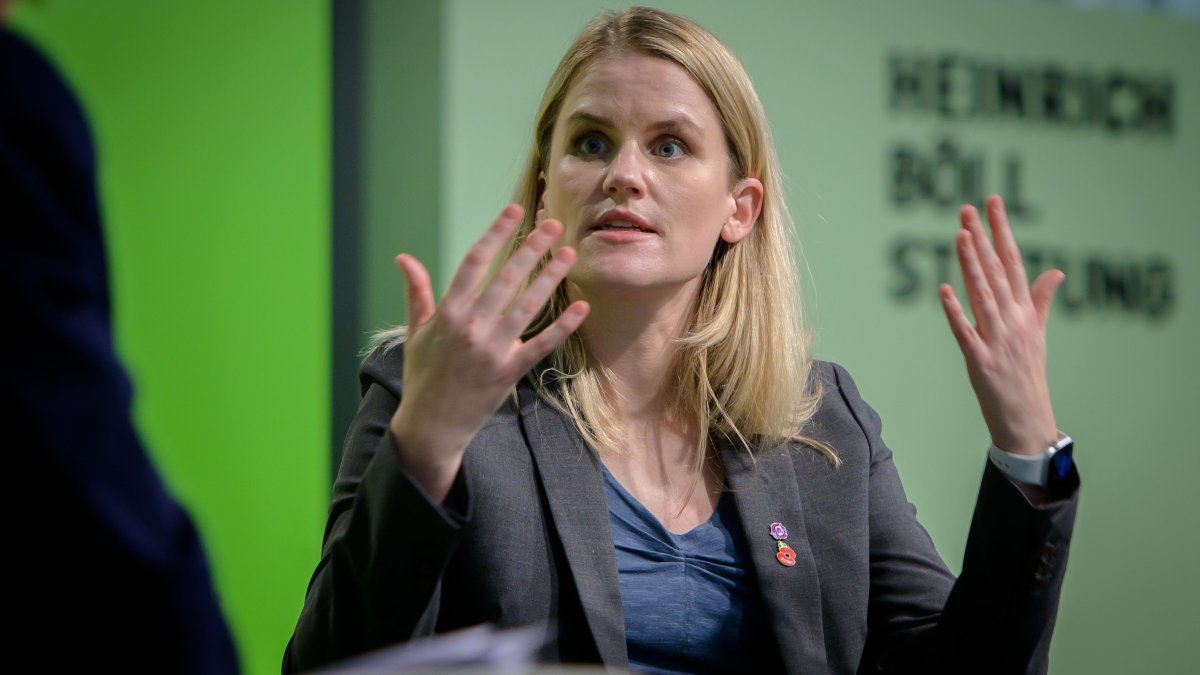
Facebook whistleblower Frances Haugen said AI companies must honor the spirit, not just the letter, of the White House agreement their chief executives signed this week. Speaking to CNBC, she warned that tech firms tend to follow written rules literally while working around their intent. She praised Anthropic and CEO Dario Amodei for pressing for independent auditors.

Facebook whistleblower Frances Haugen on Friday questioned whether AI companies can be trusted to police themselves, days after Meta's Mark Zuckerberg and other chief executives signed a White House agreement on frontier AI responsibilities.

"The history of tech companies engaging with regulation is: Often they will follow the exact written statement when we are dealing with very flexible systems," Haugen told CNBC's "Squawk Box." She asked whether the companies will honor "the spirit of the rules," or look for gaps that are not expressly prohibited and "go around the end of the fence."

Haugen's credibility comes from the 2021 leak of internal documents to The Wall Street Journal, published as "The Facebook Files," which showed the company was aware of how its platforms affected teenagers' mental health. That reporting is the basis for "The Social Reckoning," an Aaron Sorkin film opening October 9, and for Haugen's book, "The Power of One."

The timing is pointed. On September 29, the White House published a short accord on "super intelligence" that President Donald Trump and six technology chief executives signed. The document sets out four layers of oversight - internal controls, internal teams, external audits and a board committee - but is voluntary and carries no penalties, with its signatories describing it as "morally binding."

Haugen said AI companies have been "more proactive" about safety than tech firms in earlier eras, and singled out Anthropic and its CEO, Dario Amodei, for advocating independent auditors. "I think that is an acknowledgement that at least Dario knows that if you're given the space to cut corners, even the angels among us begin to cut corners," she said.

Her warning arrives as regulators sharpen their focus on agentic systems and as independent researchers argue that published safety tests often fail to reflect real-world use. The question she raises - whether voluntary commitments survive commercial pressure - is the same one that followed social media a decade ago, now being asked of AI before its harms scale.

Comments (0)

Log in to join the discussion

Log In

No comments yet