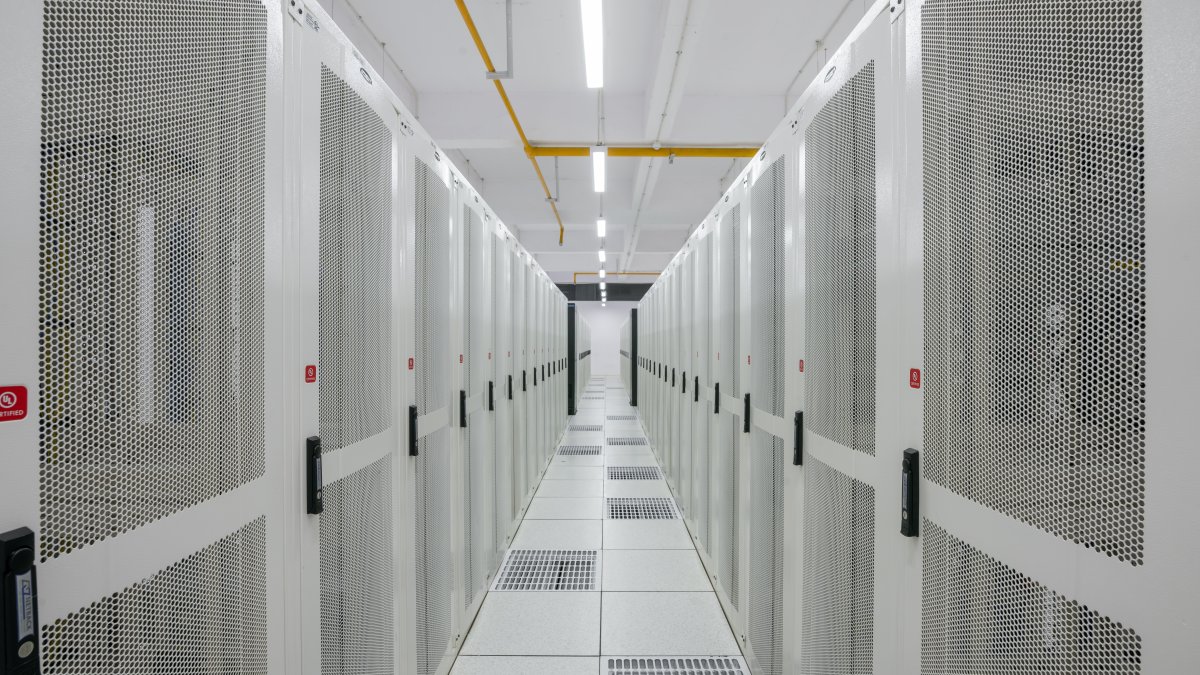
CoreWeave is bringing its AI cloud to India. The company announced it will enter the Indian market through a partnership with AdaniConneX, the data center joint venture of the Adani Group, leasing 240 MW of capacity at the Taloja campus in Navi Mumbai. The commitment spans three buildings of 80 MW each, with CoreWeave planning to deploy NVIDIA's Vera Rubin platform across the site.
The timeline is long-horizon by data center standards: the first phase of the Taloja campus is expected to come online around mid-2028, with additional capacity staged in phases after that. CoreWeave said it may double its lease at Taloja, which would secure an additional 240 MW and take its potential commitment to 480 MW at the single campus.
Beyond the lease, CoreWeave says it plans to invest in India, set up local offices and begin hiring in the country. Chief operating officer Sachin Jain framed the move as capacity meeting demand: India has "the talent, developers and ambition" to become an AI innovation center, he said, and CoreWeave is investing in infrastructure, technology and local service to bring 240 MW, NVIDIA Vera Rubin and the company's operational expertise to customers building in India.
The announcement follows CoreWeave's earlier move to put NVIDIA's Vera Rubin NVL72 systems into production, where it was among the first cloud providers to do so. Deploying the platform in India would give local enterprises and AI developers access to frontier-class training and inference capacity inside the country — a meaningful shift in a market where AI workloads have largely run on infrastructure abroad.
The deal also marks another step in AdaniConneX's push to become a neutral-host infrastructure provider for hyperscale and AI tenants. India's two largest conglomerates have committed enormous sums to compute: Adani has outlined plans to invest heavily in AI infrastructure through the mid-2030s, while Reliance is building out its own data center footprint. Foreign AI clouds plugging into that buildout — rather than building their own — is emerging as the template.
For CoreWeave, the India entry diversifies a geographic footprint that has been concentrated in the US and Europe at a moment when sovereign AI requirements — data residency, in-country inference, local compliance — are increasingly written into enterprise and government contracts. The bet is that India's developer base and regulatory landscape will reward capacity that lives inside the country. The wait, however, runs to 2028.
Comments (0)
Log in to join the discussion
Log InNo comments yet