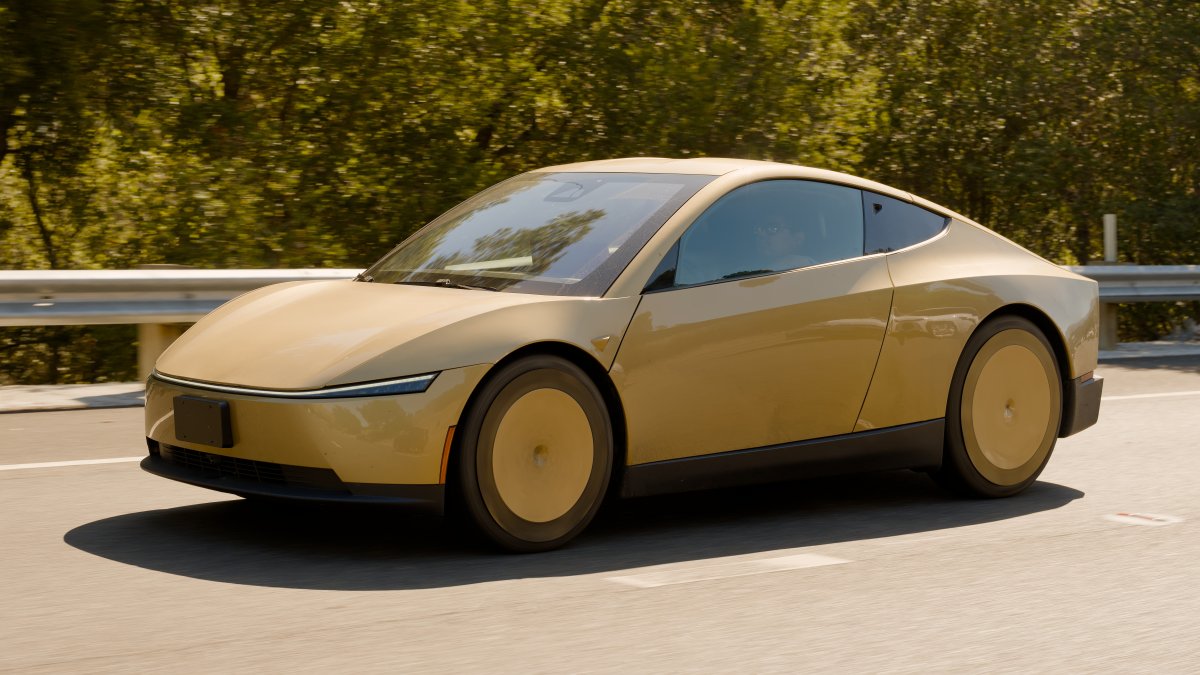
Tesla has started selling the Cybercab to private customers — a narrow, carefully gated version of it. In posts on X on Friday, the company said "select customers are now being invited to purchase Cybercab for personal use" at an estimated purchase price of $29,990. The Wall Street Journal and Bloomberg both reported the move the same day, and Chinese outlets from Huanqiu to Phoenix Auto carried the pricing within hours. InsideEVs noted the figure makes the Cybercab the cheapest vehicle Tesla has ever sold, undercutting every car in its current lineup.
The sticker is not the real price of driving one. Because the Cybercab has no steering wheel and no pedals, it cannot be operated manually at all, and it only runs where Tesla's autonomy service is supported. That service requires a $299-per-month subscription, billed after the first month, which is included in the purchase price. The order also demands a $1,000 nonrefundable deposit. Over three years, the subscription adds $10,764 on top of the sticker — and the car is unusable without it. Tesla has not said in detail what the subscription covers or whether the rate can change.
Availability is equally narrow. Buyers are being invited rather than welcomed: there is no public ordering page, no date for general sales, and early deliveries are expected only around Austin, Texas, as soon as December. The vehicle itself is a two-seater with butterfly doors and no exterior mirrors, built on a camera-only vision system. According to Chinese coverage of its specifications, it uses a 47.6 kWh lithium iron phosphate battery, a single front motor rated at 163 kW, and is rated at roughly 673 km on the EPA cycle — figures Tesla has not emphasized in its own messaging.
The context around the launch is awkward. Tesla has been operating a Cybercab robotaxi service in Austin since September 3, limited to parts of the city, and its Q3 shareholder report confirmed Cybercabs have begun joining the fleet there. The WSJ noted the personal-sales push lands amid a federal probe into Tesla's driverless program, which the company did not address in its announcement. On the Q3 earnings call, vehicle engineering VP Lars Moravy framed end-of-2026 deliveries as a small pilot to accumulate experience in personal ownership, delivery and fleet management — not a volume ramp.
Musk has been consistent about what personal sales mean in this business model. Most Cybercabs, he told investors, will remain Tesla-owned and deployed in the ride-hailing fleet; individual buyers are a component of the strategy, not the core of it. That framing explains the structure of the deal: Tesla keeps the recurring revenue via the subscription, keeps control of where the cars can operate, and gets an early cohort of paying owners to surface edge cases in private use — driveway charging, insurance, maintenance scheduling — before the model scales.
The deeper significance is that this is the first time a major automaker has sold a consumer vehicle that is legally undrivable by its owner. A Cybercab customer is not buying a car so much as a terminal license to a service, with hardware that enforces the terms. If the subscription-and-terminal model holds up commercially, it restructures what a car purchase is; if owners bridle at paying $299 a month for a vehicle that cannot leave a geofenced service area, the pilot will show that too. Either way, December's first Austin deliveries will be the first real data.
Comments (0)
Log in to join the discussion
Log InNo comments yet