Google has opened preorders for its first Android XR smart glasses, closing a loop it first teased at Google I/O in May and formally unveiled in July. The announcement, posted on November 12 by Shahram Izadi, Google's VP and GM for XR, puts a concrete price and date on the project: Warby Parker frames start at $395, Gentle Monster designs run $449 to $489, and the glasses go on sale December 10 in the United States and South Korea — and nowhere else for now.
The hardware is Samsung's, the frames belong to the eyewear brands, and the intelligence is Gemini's. Inside each pair sits a Qualcomm Snapdragon AR1 Gen 1 chip with 2GB of RAM and 64GB of storage, a 12-megapixel ultra-wide camera that shoots 3K video at 30 frames per second, four microphones and two open-ear speakers. The whole assembly weighs about 41 grams and is rated for roughly nine hours of mixed use, with the bundled charging case adding up to seven refills — about 72 hours in total.
The defining design decision is what is missing: there is no display in the lens. Everything comes back as audio. Say "Hey Gemini" or tap the frame, and the assistant describes what the camera sees, reads notifications aloud, gives turn-by-turn Google Maps directions, and translates speech in real time across more than 70 languages. A Guided Vision mode offers conversational descriptions for blind and low-vision users, with an Aira partnership that can stream the camera feed to a trained human interpreter. Samsung's Bixby is also on board, but only paired with a Galaxy phone.
Compatibility is the fine print that matters. The glasses require a Pixel 7 or newer, a Galaxy S or Z phone on One UI 9.0 or later, or an iPhone 13 or newer with at least 6GB of RAM. Processing splits between the frames and the phone, which handles the heavier AI work — outside Bluetooth range, the glasses are ordinary eyewear. Buyers also need a Google account registered in the US or South Korea and must be 18 or older. Google has given no date for Europe, Japan or any other market.
Privacy got its own announcement, a nod to the category's history: Google's first smart glasses foundered on it, and camera-equipped wearables still draw side-eye on trains and in cafes. The recording indicator light cannot be bypassed — cover it and capture stops. Bystanders' faces are redacted before Gemini processes the scene, camera visuals are not saved to Gemini History, and Google says they are not used to train models or target ads. There is a physical off switch, and data is encrypted on the device and in transit.
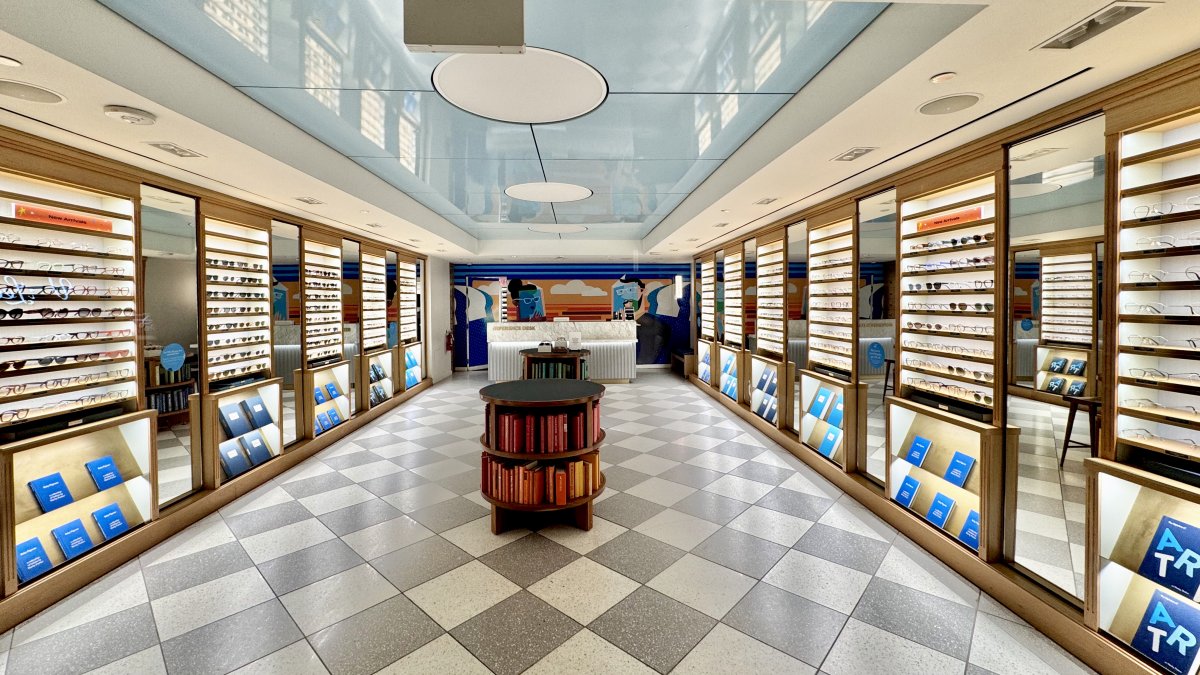
Pricing puts Google in a deliberate squeeze on Meta. The Ray-Ban Meta Gen 3, on sale since September 23, starts at $449 with the same 12-megapixel camera and nine-hour battery rating — exactly the entry price of the cheapest Gentle Monster frame, while the $395 Warby Parker line undercuts it. Meta dominates the category: IDC data cited in coverage puts its share of the AI glasses market at 72.2 percent in the first quarter. Meta also sells in far more countries, so Google is competing first on distribution through 360-plus Warby Parker stores, where demo units are already on display, rather than on specs.
The bet is easy to summarize and hard to pull off: most people will not wear a display on their face every day, but they might wear a normal-looking pair of glasses that happens to be smart. Whether this launch works will not be decided by the Snapdragon chip inside it. It will be decided by two mundane things — whether the frames pass as regular eyewear, and whether Gemini answers fast enough through an audio-only interface to feel like help rather than a party trick. December 10, when the first customers walk out with them in the US and South Korea, is when those answers start arriving.
Comments (0)
Log in to join the discussion
Log InNo comments yet