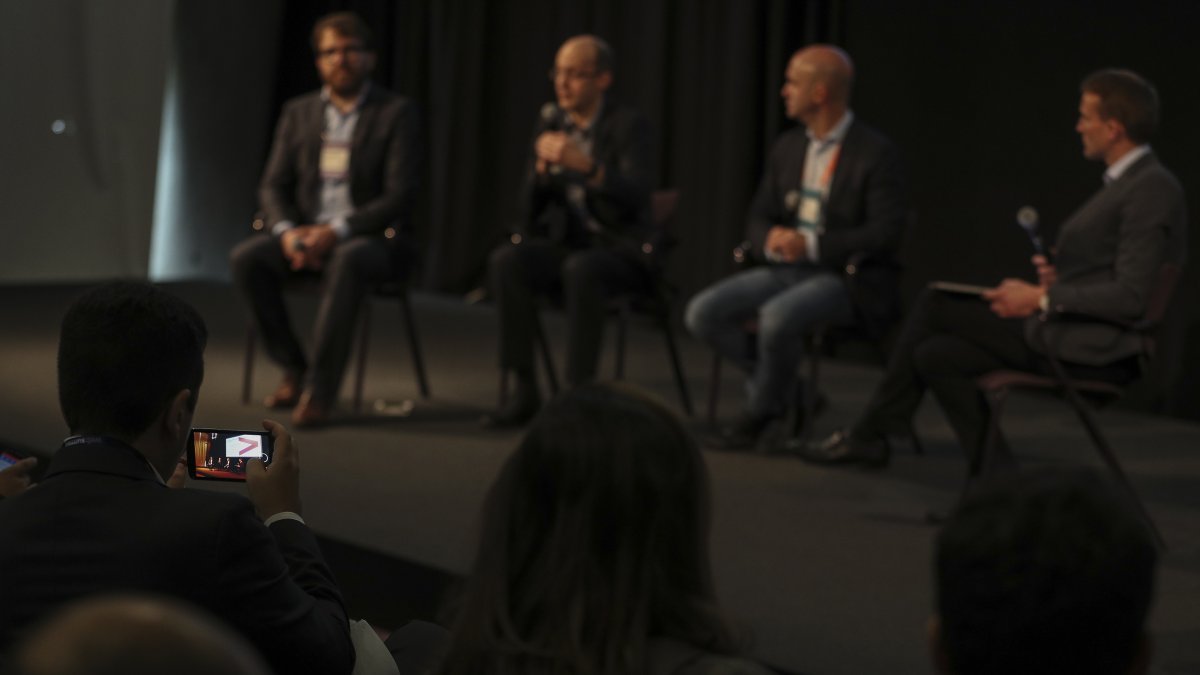
Otter.ai, the AI-powered meeting notetaker, announced its largest language expansion to date on November 10 at Web Summit in Lisbon, first reported by TechCrunch. The company is adding 27 languages — 13 available now and 14 more coming soon — taking total support from four languages (English, French, Spanish and Japanese) to 31 once the rollout completes.
The 13 languages live today are Mandarin Chinese, German, Italian, Cantonese, Korean, Brazilian Portuguese, Russian, Indonesian, Malay, Dutch, Turkish, Vietnamese and Polish. The 14 coming-soon languages include Swedish, Danish, Finnish, Arabic, Hindi, Thai, Hebrew, Norwegian, Greek, Macedonian, Persian, Czech, Hungarian and Romanian, though Otter has not given dates. The new languages carry no extra cost on any plan and work on desktop, mobile and browser.
The more technically ambitious piece is still marked coming soon: a multilingual transcription mode that detects when speakers switch languages mid-meeting and keeps transcribing without any change to settings. Otter's example is a sales call that starts in English, moves to Korean, then shifts to Portuguese — with the transcript following the whole way. Until it ships, mixed-language calls will need manual language selection.
Otter says the new languages run on its own speech models, trained on publicly available datasets, with native-speaking volunteers reviewing transcripts to check accuracy. The company reports about 96 percent average English accuracy on the Open ASR Leaderboard — a company-reported figure for English, not the new languages, so buyers should test their own language before relying on it.
The announcement fits a broader push beyond plain transcripts. Otter recently introduced Work Mode, which builds pre-meeting briefs from past conversations and connected apps, drafts follow-up emails and CRM updates in the meeting's language, and Live Assist, which offers real-time coaching during calls. Summaries, action items, speaker labels, search and AI Chat are meant to function across the supported languages. The company counts more than 40 million users and over 1 billion transcribed meetings, and in October raised $320 million from General Catalyst's Customer Value Fund — a non-dilutive vehicle — bringing its total funding to six times its lifetime equity raises.
The competitive backdrop is crowded: Microsoft, Zoom and Google are all embedding native transcription and translation into their meeting stacks. Otter cites survey data that 42 percent of international knowledge workers name language barriers as a top collaboration challenge, and its bet is that coverage breadth plus a "system of record for voice AI decisions" is a defensible position.
What it means: language coverage is becoming table stakes for AI notetakers, but the real test is the mid-call switching feature — global teams do not speak one language per meeting. Otter's accuracy claims are self-reported and English-centric; for the 13 live languages, and especially for lower-resource ones like Malay or Macedonian when they arrive, real-world accuracy is the thing to verify before betting a team's meeting record on it.
Comments (0)
Log in to join the discussion
Log InNo comments yet