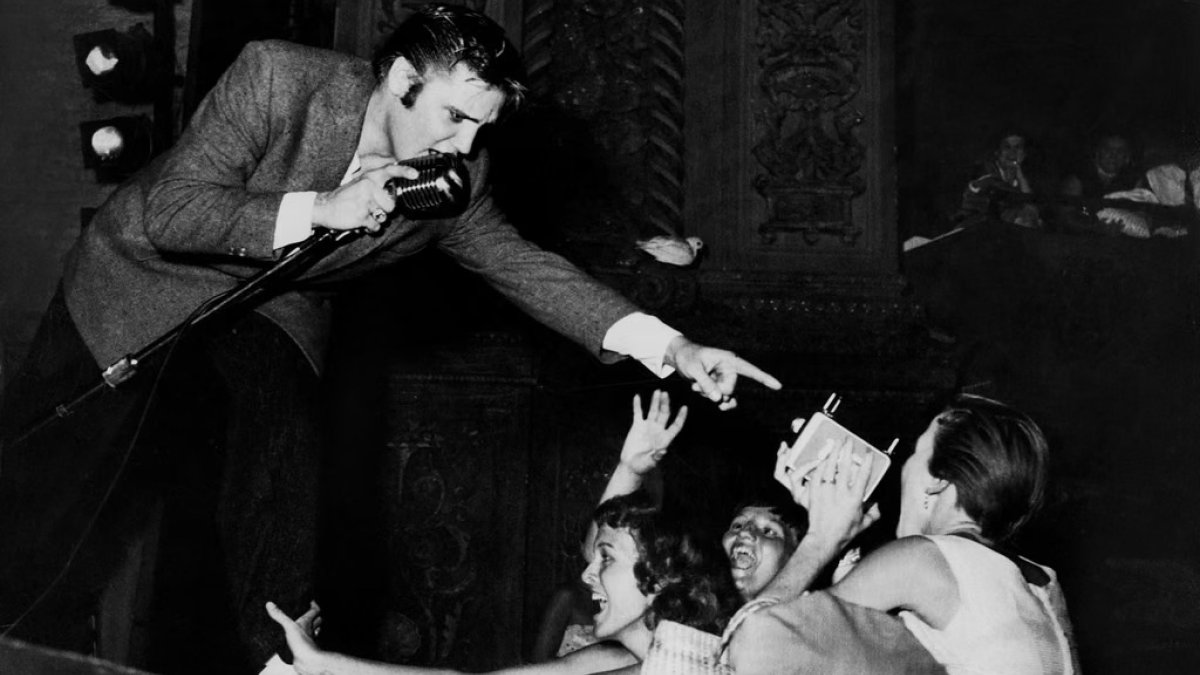
Suno was sued twice on the same day, in the same courthouse, by the same lawyer. On Nov. 6, Elvis Presley Enterprises and Eight Mile Style, the publisher that controls roughly 270 Eminem compositions, each filed suit against the AI music generator in the US District Court for the Northern District of California. Both complaints were signed by Richard Busch of Adams & Reese in Nashville, who according to reporting on the filings has now brought five cases against Suno in twelve weeks.
The Presley case, Elvis Presley Enterprises, LLC et al. v. Suno, Inc., is number 3:26-cv-13398: a 51-page complaint with a jury demand, joined by ABG EPE IP LLC, Raleigh Music Publishing and several songwriter trusts. It combines ordinary copyright claims over 859 songs with a second, less tested theory. Tennessee's Ensuring Likeness Voice and Image Security Act, passed in 2024, bars AI tools from cloning a singer's voice without a deal, removes the need to prove commercial use, and reaches the companies that supply the tools. At the statutory rates the complaint cites, the copyright claim alone works out to as much as $128.85 million.
The estate also argues for enhanced damages on an unusual ground: that Presley qualifies as a member of the armed forces under Tennessee law because he served on active duty from roughly March 1958 to March 1960, which would allow treble damages. No court has ruled on that reading. What the complaint describes is more concrete. It says that as recently as last month, Suno produced an Elvis-style vocal from lyrics that simply contained his name, which it calls proof that the ban on naming artists is, in its words, unequivocally false. The requested remedy goes past royalties: the estate asks the court to impound or destroy unauthorized copies wherever they sit, including inside training datasets, internal repositories and model weights. Its summary line, quoted by Billboard, is that the next Elvis will not pick up a guitar.
Eight Mile Style's complaint, 3:26-cv-13399, is narrower and its arithmetic is public. The publisher wants $150,000 for each of 269 compositions, or $40.35 million, plus $672,000 over the alleged removal of copyright management information, for roughly $41 million in total. Songs named in coverage of the filing include "Lose Yourself", "Without Me", "Till I Collapse", "The Real Slim Shady" and "Stan". Eminem is not a plaintiff. The core allegation is not that users type his name. It is that they do not have to: the complaint cites a style prompt such as aggressive rap, rapid-fire flow, dark humor, male rapper, horrorcore, intense beat, bass-heavy and menacing, and says the output came back with vocals clearly derived from Eminem's voice, alongside a track titled "Slim shady x Rosefalls" with AI-generated cover art. On training, it quotes Suno's own court disclosure that the model learned from essentially all music files of reasonable quality accessible on the open internet, and points to a 404 Media report about a service used to scrape songs and lyrics from streaming and lyrics sites.
Suno's answer has not changed. Spokesperson Cat McCormack told The Verge and others that the company exists to help people create new, original music, not to trade on anyone's name or likeness, that it prohibits unauthorized use of an artist's work, that it does not allow prompts naming specific artists or songs, and that third-party providers screen uploaded audio and lyrics. In the earlier Jason Isbell case, Suno's lawyers argued that an artist's name functions as shorthand for a genre rather than a request to steal a voice. Critics answer that a name filter only governs what leaves the model, while both new complaints are about what went in.
The backdrop is a crowded docket. Universal, Sony and Warner sued Suno in 2024 over training data; Warner settled and struck a partnership, while Universal and Sony remain in court and in September went after Suno's v6 model. Round Hill, Reservoir and a group of artists led by Isbell have filed separately. The same Presley rights holders sued Anthropic in October over 274 songs. Eight Mile Style has taken Meta to court on similar grounds. Suno has now been hit from the estate side, the publisher side and the label side within a single quarter.
Why the Presley filing matters more than its dollar figure: it is one of the first serious tests of a state voice-likeness statute against a generative model, and it asks a court to treat weights as copies. If judges accept that a name filter is irrelevant when a string of adjectives reproduces a recognizable voice, the guardrail that every AI music company currently points to as its defense becomes evidence of how easy the workaround is. If they reject it, the labels' training-data claims still proceed on their own track. Either way, the fight is no longer about whether AI can imitate a singer. It is about who has to license the imitation, and whether the answer arrives before or after the models are already in the wild.
Comments (0)
Log in to join the discussion
Log InNo comments yet