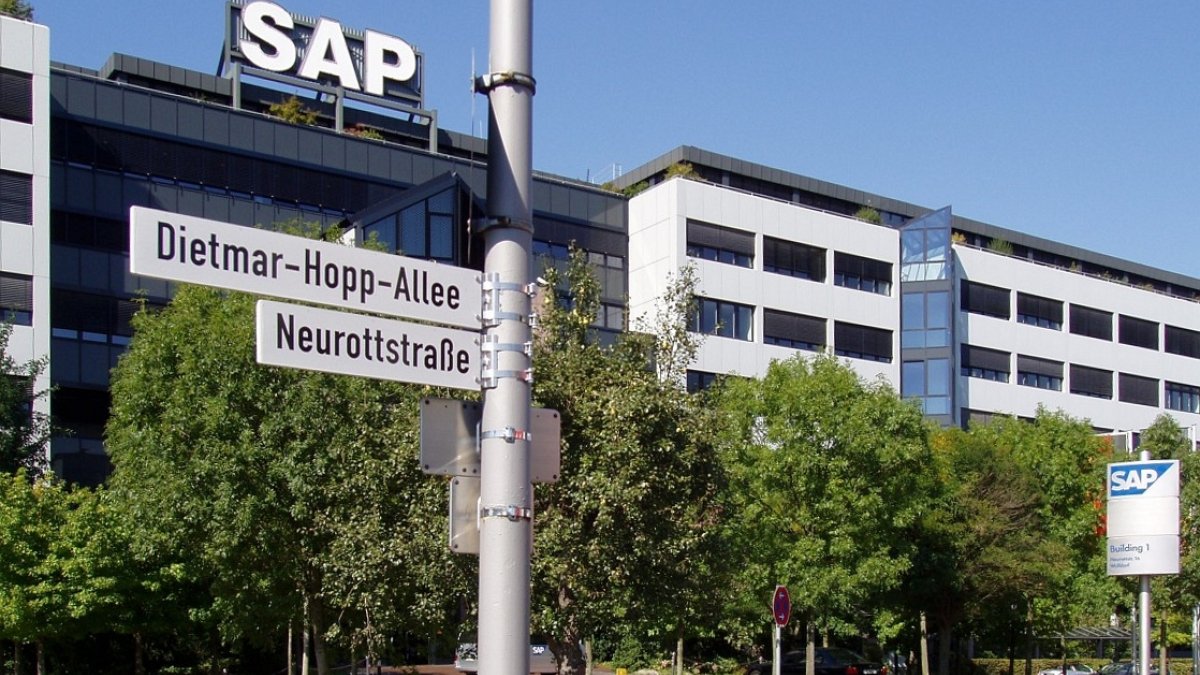
SAP said on Tuesday it has agreed to acquire TechWolf, a Belgian AI company that maps what employees work on and which skills they use, for an undisclosed sum. The deal, announced at SAP's Connect conference in Las Vegas, is expected to close in the fourth quarter of 2026 subject to regulatory approval, and hands the German software giant something its own HR software has never had: a continuously updated picture of what its customers' workforces actually do, rather than what their self-assessments claim.
TechWolf, founded in Ghent in 2018 by Andreas De Neve, Jeroen Van Hautte and Mikaël Wornoo, plugs into the HR and business applications a company already runs and infers skills from people's actual work. It calls the result a "context graph for work," and it covers three layers: the work itself, broken down to the tasks inside each job; the skills employees put to use; and the external labor market. The platform then lines that organizational model up against where the business says it is heading, giving managers deciding on hiring, retraining or restructuring something firmer to stand on than an annual skills survey.
For SAP, the acquisition is less about the product than about what its AI agents are standing on. Manoj Swaminathan, president and chief product officer for SAP Autonomous Suite, said TechWolf's graph provides "an excellent grounding layer for agent queries regarding work and skills planning and talent management," and — in a detail that says a lot about how enterprise AI is now sold — that it "makes token usage more efficient," cutting the cost of running HR agents. The company plans to make TechWolf the intelligence core of SuccessFactors, feeding skills and work data into tools for workforce planning and organizational redesign, including a Workforce Planning Assistant it introduced at Connect for early adopters this quarter.
The deal fits a pattern that has crystallized across enterprise software this year: incumbents are buying the data layer an AI agent needs to be trustworthy rather than waiting to be disrupted. SAP bought Reltio earlier in 2026 to give Joule's agents one consistent view of customers, suppliers and products; Atlassian made the same argument for its Teamwork Graph in May, claiming agents with access to its context used 48 percent fewer tokens. TechWolf was already an SAP partner — SAP was among the investors in its $42.75 million Series B in 2024, a round led by Felix Capital that also included ServiceNow and Workday, two of SAP's direct competitors for HR software budgets.
TechWolf is not a small operation hiding inside a big logo. Its customers include Booking.com, HSBC, MetLife, PayPal, AMD, Ericsson and GSK, and it will keep serving non-SAP customers after the acquisition closes. The company stays independent under co-founder Andreas De Neve, keeps its Ghent headquarters, and is familiar to developers for the JobBERT models it publishes openly on Hugging Face, which map job titles and descriptions into a shared vector space — the datasets alone have racked up millions of downloads.
The broader read: as companies reorganize around AI, the question "which skills do we have and which are we losing?" has stopped being an HR reporting problem and become an input to agent-driven planning. HR agents are only as useful as the workforce context they can draw on, and SAP has decided that buying that grounding layer beats building it. Once the deal closes, the contest shifts from who has the best model to who has the most accurate, most current map of the work itself.
Comments (0)
Log in to join the discussion
Log InNo comments yet