A San Francisco startup founded by veterans of Tesla's Optimus program and Boston Dynamics has come out of stealth with roughly $10 million in pre-seed funding and a humanoid robot built for the most dangerous jobs in the world — bomb disposal, hazardous-material response and offshore energy work.
Minerva Humanoids announced the round Tuesday. General Catalyst led, with Long Journey Ventures and Credo Ventures as co-leads, and a broad syndicate behind them including MVP Ventures, Kaya, RunwayVC, Compound, Hugging Face and Codecademy. The financing brings the company out of stealth and funds its first paid pilots, planned for this fall.
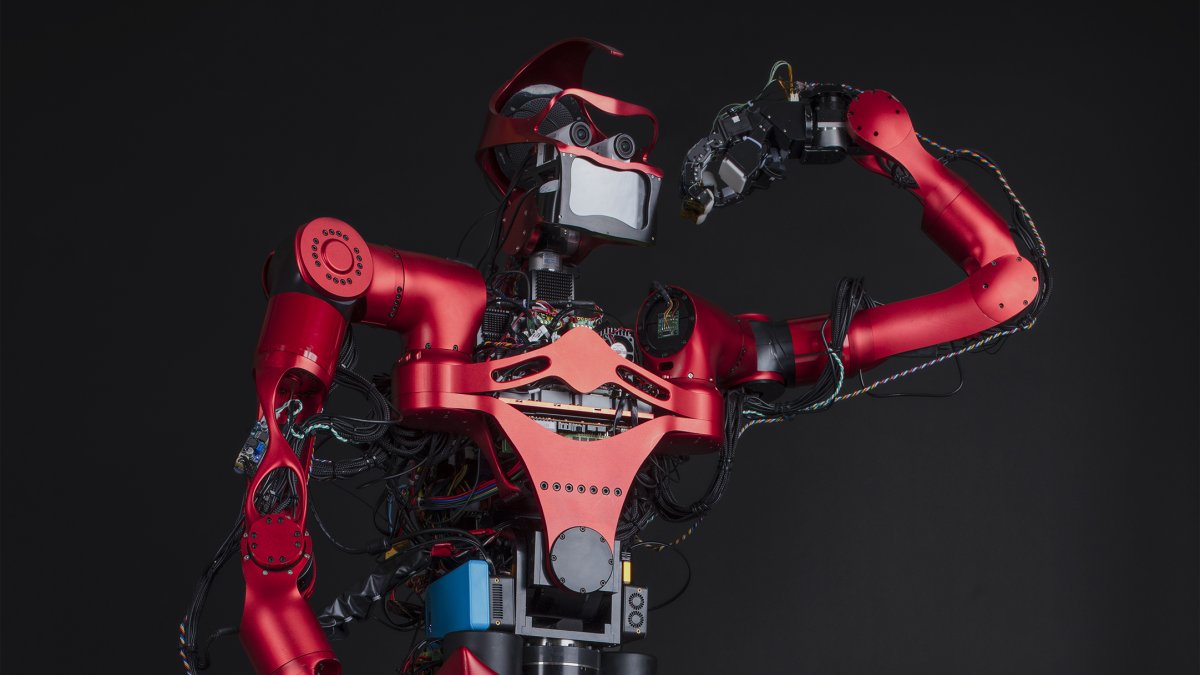
The robot, Roger, is a semi-autonomous humanoid built around a simple premise: keep the specialist's judgment at the worksite while keeping their body out of the blast radius. An AI control system called Minerva Intelligence handles balance, navigation and fall recovery, while a trained operator wearing a VR headset sees through the robot's cameras and performs fine manipulation remotely. Low-latency control loops keep the response immediate, and the company says operators learn full-body control within minutes. Haptic gloves are planned.
The pitch is grounded in a grim statistic. By the company's count, an energy worker somewhere in the world dies on the job roughly every 75 minutes — about 7,000 deaths a year — while NATO consistently ranks explosive ordnance disposal and hazmat teams as the highest-risk segment of any unit. The decades-old answer, a tracked robot with a single arm, forces operators onto what EOD veterans call "the long walk" whenever a task needs two hands and real dexterity. "Roger is a step-change for our community: the operator's judgement and hands are on the device while their body stays in the safety of the command post," said Dominic Asquith, a British Special Forces veteran who heads hazardous operations at Minerva.
The team moved fast. CEO Sandor Felber, who helped launch MIT CSAIL's humanoid robotics research line and later worked on Tesla's Optimus program, and CTO Maurice Rahme, who spent six years at Boston Dynamics as one of the technical leads on the Stretch robot, went from initial design to a fully walking humanoid in five months — including the bespoke manufacturing and assembly of the first prototypes in Germany, with software and AI development primarily in the United States. Production is planned in both countries, with a supply chain the company says avoids single-source Chinese components.
"Building a humanoid from scratch is often a years-long project, but Sandor and Maurice did it in less than six months," said Robin Dechant, partner at General Catalyst.
Minerva has presented Roger at NATO's Explosive Ordnance Disposal Centre of Excellence in Slovakia, conducted on-site public-safety testing, and says it is exploring deployments at two major airports. It also runs a two-year research partnership with MBZUAI on perception, navigation and simulation for safety-critical energy operations, and a separate collaboration with the University of Waterloo on perception in smoke, darkness and sensor failure. Roger weighs under 100 kilograms when outfitted, according to company specifications.
What the company has not disclosed is just as telling: payload, endurance, teleoperation latency, price, production targets, or a single named customer. The fall pilots will be the first real test of whether teleoperated humanoids can complete hazardous tasks reliably enough to matter — and whether "semi-autonomous," with a human on every critical decision, proves more deployable than the fully autonomous pitch that dominates the category.
Comments (0)
Log in to join the discussion
Log InNo comments yet