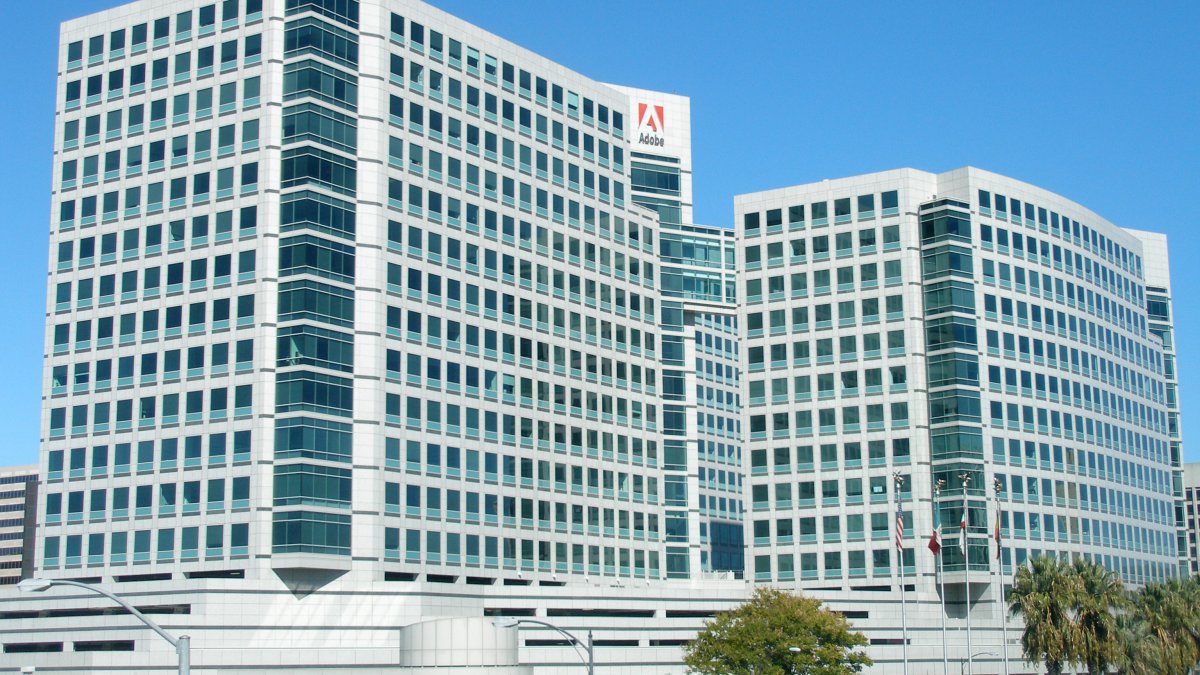
Two weeks ago, a single developer published free, open-source clones of Adobe's entire creative suite, written in Rust and built largely by AI. The internet duly lost its mind. What has happened since is a useful case study in both the speed and the limits of AI-assisted software development: the project has ballooned from seven apps to twelve, collected more than 86,000 GitHub stars in roughly ten days, and by its own candid self-assessment remains only about 45 percent ready to replace the software it imitates.
The project, ArtCraft, is the work of Brandon Thomas, a 15-year software veteran based in Atlanta whose earlier career runs from payments company Square through a celebrity-voice text-to-speech product to generative creation tools. He built the first seven apps - PhotoCraft (Photoshop), VectorCraft (Illustrator), FilmCraft (Premiere Pro), LightCraft (Lightroom), PdfCraft (Acrobat), EffectCraft (After Effects) and DesignCraft (InDesign) - between September 30 and October 1, using Claude Opus 5.5 as the main workhorse. Anthropic's model is credited on roughly three out of every four changes, with 10 to 20 agents working in parallel. On October 7, five more followed: WordCraft for Word, GridCraft for Excel, DeckCraft for PowerPoint, CADCraft for AutoCAD and SoundCraft for Pro Tools. Thomas has said he was driven to it by Adobe's cancellation fees - the same dark patterns that pushed Adobe into a 150 million dollar US federal settlement - and declared simply: "Software is over."
The traction is real. PhotoCraft alone passed 27,465 stars by October 9 per one GitHub API read and roughly 43,000 by October 11 - Star History clocked it adding about 42,900 stars in a single week, one of the fastest runs for a pure-Rust desktop app in recent memory - and the full set of repositories crossed 86,000 stars within ten days. PhotoCraft moved from version 0.1 to 0.7 in nine days; the current 0.7.0 release ships native installers for macOS, Windows and Linux (plus FreeBSD), renders on Metal, Vulkan, DirectX 12 and WebGPU with no Electron shell, opens and saves layered PSD and PSB files, and runs every menu item through a command registry that scripts and AI agents can drive over MCP. WebAssembly builds mean the editors can also run in a browser tab. Everything is MIT or Apache-2.0 licensed, with no subscription, no account and no telemetry; Thomas says development is funded by an optional credit-based AI studio on the ArtCraft platform.
Now the reality check, which - to the project's credit - its own documentation supplies. The progress report puts PhotoCraft at roughly 76 percent of Photoshop's feature list, but only about 45 percent ready for real work. Every menu item is wired to something, yet the developers note that this "says nothing about behaviour": only about half of Photoshop-made test files render exactly as Photoshop renders them, and in filter testing just 5 of 30 cases produced matching output. Smart objects remain the classic failure point; testers found one complex PSD pushing memory use to around 5 GB, and big brushes lag. The issue tracker had logged 579 open issues by October 10, mostly about panels, shortcuts, files and layers. FilmCraft does multi-track editing and color grading but cannot load third-party VST3 or Audio Units plugins, and some effects still process on the CPU. WordCraft runs most of Word's commands but silently drops charts and SmartArt on a document round trip. The project estimates that reaching 45 percent took 2,000 to 4,000 hours of AI agent time - and that full parity will take about as much again, because the last stretch is the hardest.
Even the timeline has softened. Thomas initially promised 100 percent feature parity within a month; days later, under Hacker News questioning, he revised that to 99 percent parity in "months and not years," explaining that the early public launch was meant to recruit testers who file issues. That honesty is matched by the project's warning that the apps are early alpha and "not anywhere close to ready" for daily professional work. Lifehacker's hands-on with PhotoCraft landed in between: the layout, panels, menus, dialogs and keyboard shortcuts track Photoshop almost exactly, basic image work "did everything I needed it to," and the reviewer's conclusion echoed the mood of many early users - impressed, and still not cancelling a Photoshop subscription.
There is also the unresolved question of legality. Clean-room reimplementation - writing new code to match observed behavior without copying source - has historically been tolerated in US practice, but software is protected by more than code: trade dress claims become live if a clone reproduces the look and feel of the original too closely, and PhotoCraft's deliberately Photoshop-identical interface is precisely the kind of choice that invites the question. Ars Technica's legal read was that nobody is sure yet. Adobe, which is mid-way through its own CEO handover and a contentious AI-driven pricing transition, has so far not commented publicly on ArtCraft.
The deeper story is what the episode says about software economics. AI coding has collapsed the cost of the first 45 percent - the architecture, the familiar interface, the plausible feature list - to a fraction of what it used to be, and it did so for a market Adobe has priced at hundreds of dollars a year. What it has not collapsed is the long tail: decades of edge cases, obscure file formats, plugin ecosystems and rendering fidelity that make enterprise software trustworthy. As the project's own numbers show, copying is now almost free; finishing, maintaining and earning trust are as expensive as ever.
Where to try it yourself: all twelve Crafting Apps have pages with download links on the official site at getartcraft.com/apps; the flagship PhotoCraft 0.7.0 installers for macOS, Windows, Linux and FreeBSD are at getartcraft.com/apps/photocraft, and the full source is on GitHub at github.com/storytold/photocraft. Budget for early alpha: impressive at first touch, thin under professional load.
Comments (0)
Log in to join the discussion
Log InNo comments yet