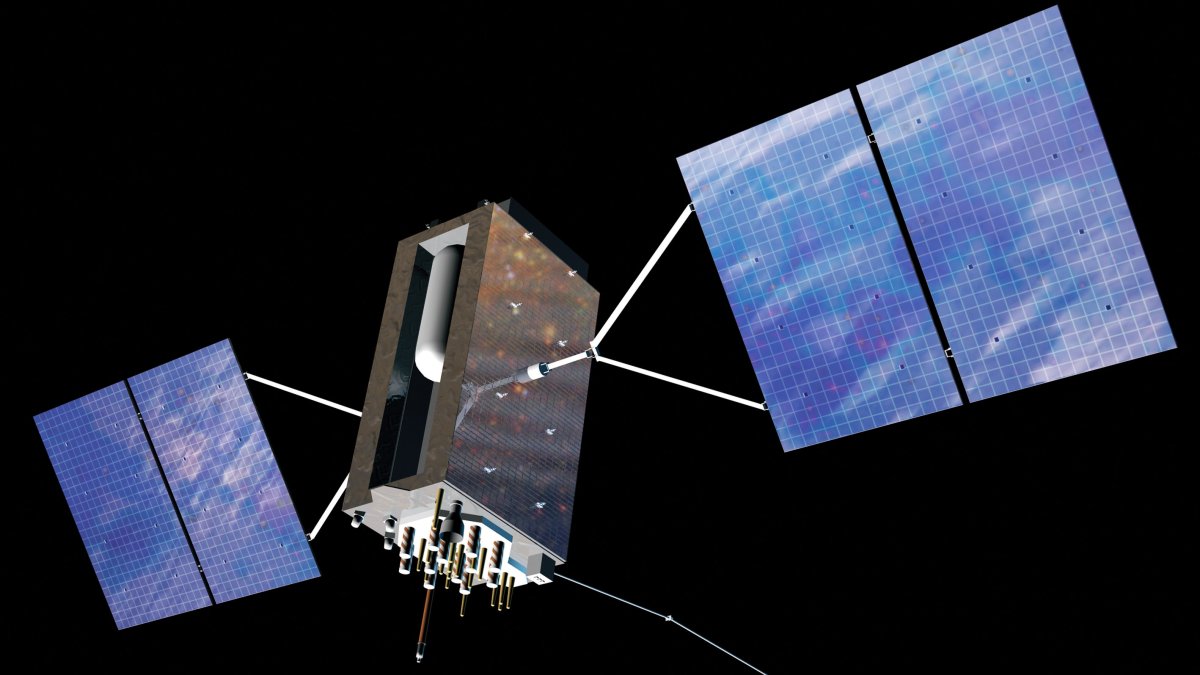
Satlyt, a space-tech startup founded by former Google and SpaceX product manager Rama Afullo, has raised an $8 million seed round to pursue a deceptively simple idea: instead of beaming raw satellite data down to Earth for processing, run the AI directly on the spacecraft. The round was led by non sibi ventures, with participation from investors including TLCOM and Antler.
The satellite industry has a data bottleneck. Spacecraft capture terabytes of imagery and sensor data daily, but downlinking it is expensive and slow, and most satellites stay effectively blind between ground-station passes. Satlyt's answer is an operating system that lets AI models run on existing satellites in low Earth orbit - software that can be pre-programmed before launch or uploaded to partner satellites in flight, with no new hardware required.
The company says a recent demonstration ran Google DeepMind's Gemma model onboard a spacecraft, processing imagery and diagnosing software faults in orbit while shrinking the required data downlink by more than 60%. That figure is company-reported and has not been independently verified, but the direction is notable: the value of edge computing in orbit is measured in bandwidth saved and latency removed, not raw compute.
Satlyt's positioning is deliberately software-first, in contrast to the orbital data-center race led by Google's Project Suncatcher - whose first TPU test satellite launched this week on the same SpaceX Transporter-18 mission that also carried a Satlyt payload. Where Google is building dedicated compute spacecraft, Satlyt wants to be the platform layer that turns other operators' satellites into a shared, distributed cloud - a vision its backers describe as the "Android of orbital computing," with comparisons to VMware or Snowflake for space.
The ambition stretches to satellites from different operators coordinating compute across constellations that today operate as isolated fiefdoms, each locked to its own ground stations. If that interoperability materializes, satellite networks could process data at the edge and transmit only encrypted, actionable outputs - saving operators substantial downlink costs and enabling real-time autonomous operations in orbit.
The seed round puts Satlyt in a small but fast-growing cohort betting that the bottleneck of the space economy is shifting from launch to software. As constellations multiply, the question is no longer only how cheaply you can get hardware to orbit, but how intelligently that hardware can decide what is worth sending home.
Comments (0)
Log in to join the discussion
Log InNo comments yet