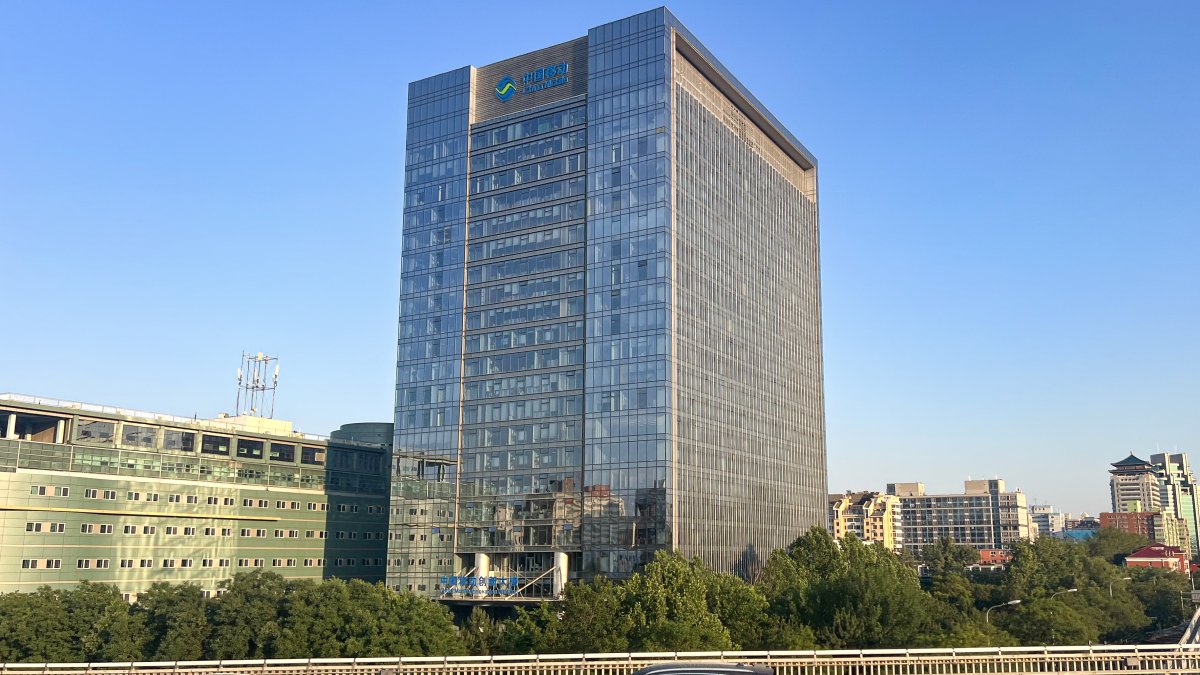
While US chip stocks wobble under the weight of AI-bubble debate, China's two biggest telecom operators are putting fresh money on the table. China Mobile and China Telecom have launched or staged centralized procurement of AI "supernode" equipment with a combined scale above 55 billion yuan (roughly 7.7 billion dollars), according to tender disclosures and Chinese media reports on November 26.
China Mobile on November 24 published the winning results for the first batch of its 2026-2027 new-generation AI supernode equipment tender, which covers 20,480 accelerator cards. Five domestic server makers won shares: Sichuan Huakun Zhenyu, Shenzhen-based Poer Computer (Supower), Zhejiang Huaqi Wisdom, Baixin Information Technology and Beijing Shenzhou KunTai. In one disclosed data point, Shenzhou KunTai bid 11.666 billion yuan for a 2,048-card share.
A second batch is already moving. China Mobile launched it on November 21 with a scale of 52,160 cards, plans to select six to seven winners, and will open bids on December 14 — with no maximum price disclosed. Guolian Minsheng Securities estimated in a November 25 research note that the second batch alone is worth roughly 30 billion yuan, extrapolated from first-batch pricing.
The supernode program has expanded fast through 2026. In March, China Mobile tendered 6,208 cards, with April shortlist bids each exceeding 2 billion yuan. On September 29 it opened the first 20,480-card batch, which also covered 448 RoCE switches and 82 storage systems. Adding the second batch launched November 20, the three tenders total close to 80,000 accelerator cards within a single year.
China Telecom is running a parallel track. On November 16 it issued a tender notice for N-series intelligent computing supernode cluster equipment covering 5,248 intelligent computing servers, 110 sets of high-performance storage and 374 RoCE switches, with a maximum bid price of 25.788 billion yuan.
The contrast with the market mood is the story's point. The same week that a research firm cut its 2030 AI chip forecast, a ratings agency put Nvidia on CreditWatch negative and US memory prices spiked, China's state-owned operators — whose procurement is funded through multi-year capital plans rather than quarterly sentiment — are committing tens of billions of yuan to domestic accelerator-based clusters. All five first-batch winners are Chinese server integrators, consistent with the domestic-accelerator supernode architecture Chinese carriers have favored since export controls tightened.
For hardware suppliers, the tenders are a demand signal that does not depend on the US hyperscaler capex cycle: operator-grade compute buying in China is now large enough, and regular enough, to form its own market. For observers of the AI buildout, the December 14 bid opening for the 52,160-card batch will show whether the roughly 30 billion yuan estimate holds — and whether China's compute spending is still accelerating into 2027.
Comments (0)
Log in to join the discussion
Log InNo comments yet