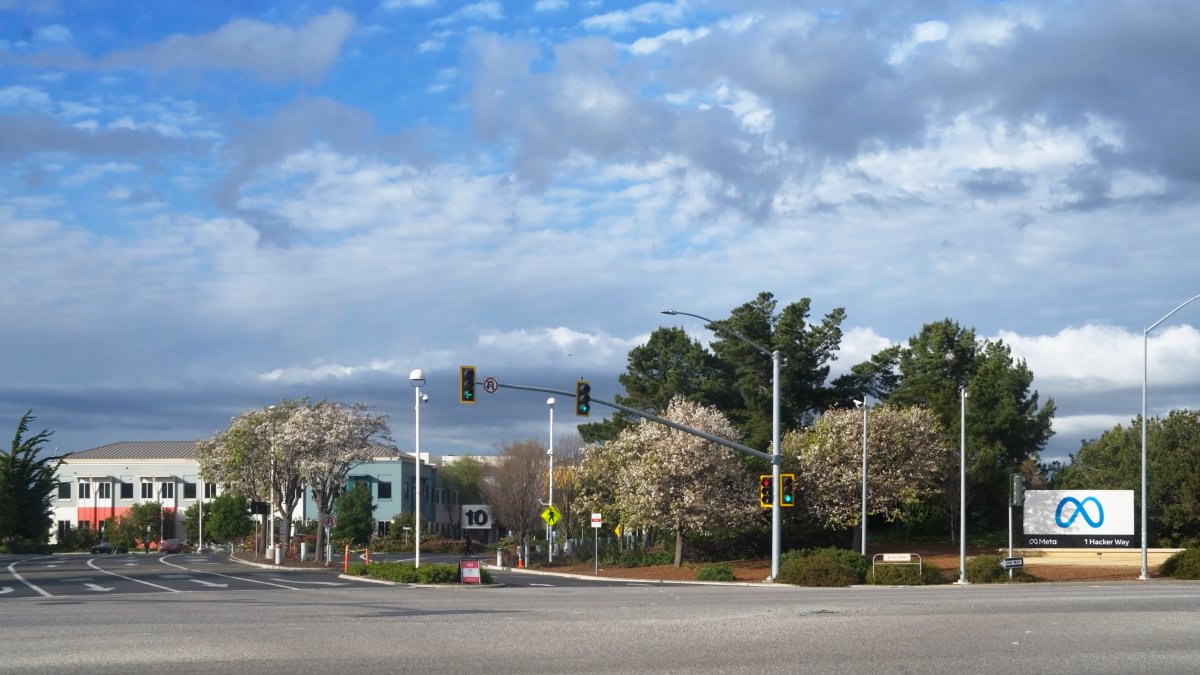
Meta said Monday it plans to raise up to $95 billion in equity to fund its accelerating investment in AI infrastructure and superintelligence, launching the largest leg of the financing immediately. The stock rose about 1.6 percent in premarket trading after the announcement.
The first tranche totals roughly $35 billion in underwritten public offerings: about $22.5 billion of Class A common stock sold through forward sale agreements, and about $12.5 billion of newly issued Series A mandatory convertible preferred stock in the form of 250 million depositary shares expected to trade on Nasdaq under the ticker METAM. The preferred converts automatically into Class A or Class C shares around August 15, 2029. Underwriters also received a 30-day option for up to 37.5 million additional preferred depositary shares and $3.375 billion of additional common stock. Morgan Stanley and Goldman Sachs are lead bookrunners.
On top of that, Meta plans an at-the-market program of up to $60 billion that will begin only after its new non-voting Class C shares start trading, which the company expects in the first quarter of 2027. Meta shareholders authorized the Class C structure earlier this year; Monday's filing turns that authorization into a concrete fundraising pipeline, though the company stressed the ATM agreements have not yet been signed and the $95 billion figure is a ceiling, not a completed raise.
The most unusual detail in the filing is who wants in. Nvidia, AMD and Broadcom have each expressed interest in buying up to a combined $5 billion of Meta Class A shares at the same price and terms as other investors. The intentions are non-binding, but three of Meta's most important chip suppliers lining up as cornerstone buyers of its equity underscores how tightly the AI supply chain and the hyperscalers funding it have become entangled.
The raise follows a third quarter that showed both the strength of Meta's core business and the cost of its AI ambitions. Revenue rose 26 percent year over year to $64.60 billion, beating estimates, and net income reached $9.9 billion. But free cash flow turned negative for the first time in more than a decade at minus $2.12 billion, against a positive $10.63 billion a year earlier. Meta raised the bottom of its 2026 capital expenditure forecast to a range of $135 billion to $145 billion, reported $82.45 billion in cash and marketable securities against $80.92 billion of long-term debt, and disclosed about $825 billion in future spending commitments driven by data centers, computing power and cloud build-outs.
Meta said the proceeds will support "emerging AI opportunities" across its family of apps, its Muse AI agent and its data center business, funded through a mix of operating cash flow, investment-grade debt, partnerships and equity. The company is betting that AI-driven gains in engagement, ad performance and monetization will eventually outrun a balance sheet stretching to keep pace with OpenAI and Anthropic.
The bigger signal is structural. The hyperscalers have already leaned heavily on debt to fund the AI boom; Meta's move shows equity markets are now being tapped at scale too. Investors spent the past quarter rewarding growth but punishing spending that lacked visible returns, and Meta's shares slid after its earnings on capex worries. A $95 billion ask is a test of whether the market will keep underwriting the superintelligence race now that the industry's cash flows no longer can.
Comments (0)
Log in to join the discussion
Log InNo comments yet