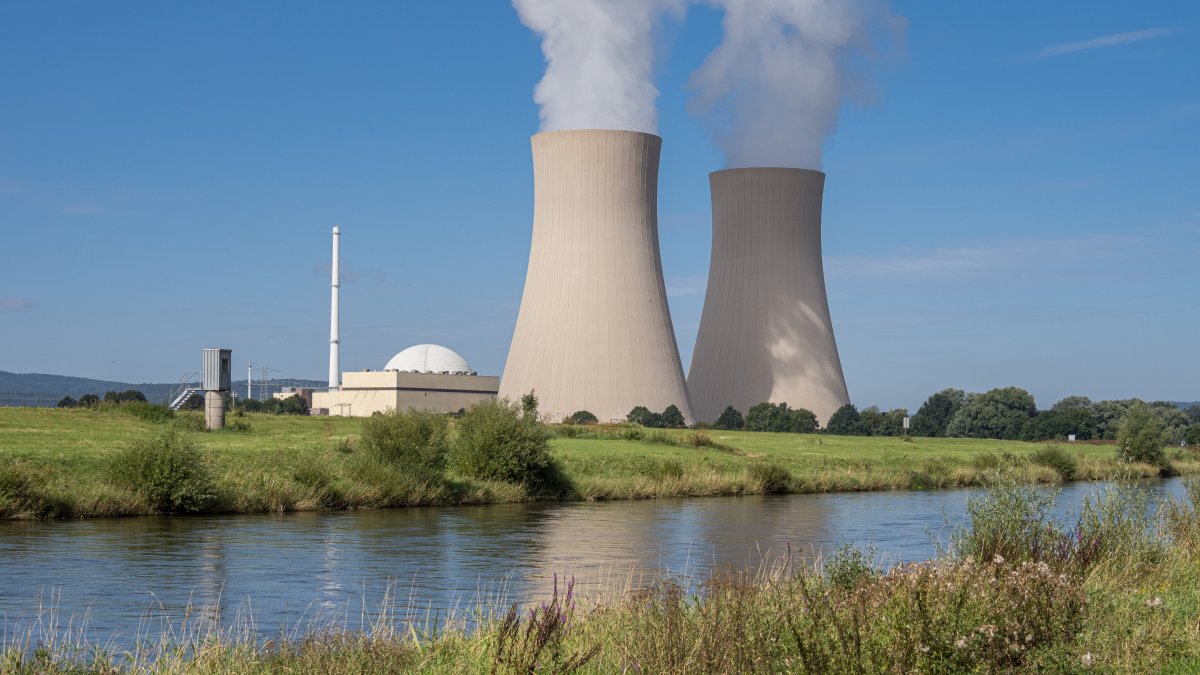
Germany spent two decades unwinding its nuclear program, shutting the last three reactors in April 2023. Now the sites may be coming back to life for a different energy-hungry tenant. PreussenElektra, the E.ON subsidiary responsible for dismantling eight former reactors, said this week it is working with NVIDIA to assess whether the former nuclear plant locations can be converted into data centers, according to Bloomberg. The company offered no further details, and both companies stressed the work is at an evaluation stage.
The portfolio is significant. PreussenElektra is handling the decommissioning of eight German nuclear plants, including Isar 2 - a roughly 1,400 MW pressurized water reactor that was Germany's most powerful when it shut down on April 15, 2023, having supplied about 18 percent of Bavaria's electricity - as well as Brokdorf (about 1,480 MW) and Grohnde (about 1,430 MW), both closed at the end of 2021. Grohnde alone is scheduled to complete dismantling by 2039 and still employs around 500 people. PreussenElektra CEO Guido Knott has said the company's goal is to finish its fleet dismantling by 2040 and make the sites "available for new uses."
What makes the sites attractive is exactly what made them good reactor locations: high-capacity grid connections and existing electrical infrastructure. A connection sized for a 1,400 MW reactor is, in today's German market, a trophy asset. New transmission-level connections for large loads have been rationed under a procedure in force since April 2026, and at some connection points the earliest capacity a new large load can secure is 2030 to 2036. Bloomberg also reported that rival utilities RWE and Uniper have screened several former coal plant sites for potential sale to data center buyers.
The demand side is equally strained. Data centers already account for as much as 40 percent of Frankfurt's municipal electricity consumption, and colocation vacancy in the city fell to 3.1 percent in the second quarter of 2026 according to JLL - less than half the 6.4 percent average across Europe's main data center markets. Grid queue analysis by EY puts Germany's connection backlog at roughly 70 GW, and Bruegel and other European analysts argue that grid access, not capital, is the binding constraint on European AI infrastructure.
The timing is no accident. NVIDIA staged its GTC conference in Berlin on October 21, where CEO Jensen Huang confirmed the Vera Rubin platform is in full production, unveiled the DSX POD containerized AI factory that cuts on-site deployment from about six months to as fast as 14 days, and announced supply-chain prepayments across substrate, packaging and testing partners. NVIDIA has also said it is committing roughly $10 billion to the European technology ecosystem. Idle power-plant sites with existing grid headroom are a natural fit for that European pitch.
The obstacles should not be understated. Dismantling schedules mean most of these sites will not be genuinely free until the mid-to-late 2030s; Isar 2's teardown is expected to run to the end of the decade. Converting a licensed nuclear site involves radiation-survey obligations, waste logistics and planning rules that do not disappear because the reactors are gone. And German nuclear politics remain fraught - Bavaria's environment minister has publicly called the 2023 shutdown a mistake, while the federal government has shown no sign of reversing it.
Still, the direction of travel is clear: the AI build-out has made pre-connected, high-amperage sites so scarce that utilities are digging through their own retirement portfolio for them. If the assessment pans out, Germany's most contested energy decision in a generation would get an ironic second act - the graveyards of its nuclear exit becoming the substations of its AI entry.
Comments (0)
Log in to join the discussion
Log InNo comments yet