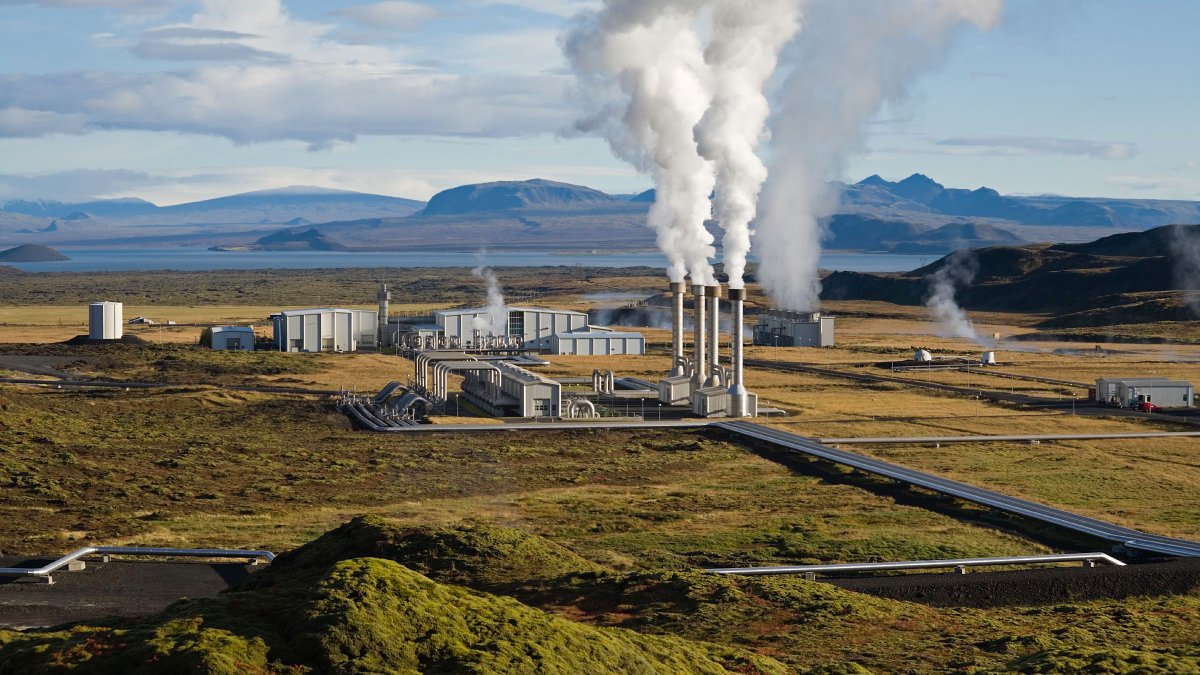
Google has signed a 15-year power purchase agreement with Quaise Energy for 50 megawatts from a geothermal project the Houston startup is developing in central Oregon, a deal the Wall Street Journal values at more than $500 million. The electricity is earmarked for Google's existing data centers in the state, and deliveries could begin as early as 2030. Neither company disclosed the contract price, so the dollar figure rests on WSJ reporting rather than a filed tariff.
The project, called Obsidian, sits near Newberry in Deschutes County. Local planning materials describe a 50 MW net engineered geothermal facility built in two blocks of 20 MW and 30 MW, with June 2030 listed as a commercial operation target. Quaise puts total project investment at roughly $350 million, which makes the reported contract value larger than the capital cost of the plant itself.
The drilling method is the reason this is not an ordinary geothermal contract. Quaise plans to sink a well to about 2.5 miles with conventional equipment, then switch to a gyrotron, essentially a large millimeter-wave source, that vaporizes rock instead of grinding it, extending the hole toward three miles. At that depth the rock exceeds 300 degrees Celsius, or 572 Fahrenheit, hot enough that injected water returns as steam capable of driving a turbine. The company says a superhot well can yield up to ten times more power than a conventional geothermal well, a figure that comes from Quaise and has not been independently verified at commercial scale.
That caveat carries weight. No one has run gyrotron drilling as a commercial power project, and the Oregon plant will be the first attempt. Carlos Araque, Quaise's chief executive, framed Google's signature as validation: the search company is effectively telling the market it believes the approach is worth backing before the first well is proven.
For Google, the attraction is firm output rather than novelty. Training and inference clusters run around the clock and cannot follow a solar curve, which is why the company has been signing nuclear, long-duration storage and geothermal contracts in parallel. Earlier this year it agreed to buy power from Fervo Energy, a developer using the more conventional enhanced-geothermal playbook of horizontal wells and reservoir stimulation. Lucia Tian, who leads advanced clean energy technology sourcing at Google, has described the strategy as building an ecosystem of early-stage clean technologies because the scale of AI load exceeds what incremental grid imports can supply.
The risks are concentrated in the schedule. Permits, water rights, transmission upgrades and financing all sit between a signed PPA and electrons, and a first-of-a-kind drilling program has no track record to smooth the timeline. Deschutes County staff have reviewed a five-year property tax abatement tied to roughly 173 million dollars of taxable project value in the first year, a reminder that the local package is still being assembled. If commercial operation slips past 2030, the economics of a fixed-term contract shift against the developer, not the buyer.
The larger question is whether millimeter-wave drilling changes the cost curve for firm clean power or remains a demonstration. If it works, geothermal stops being a niche resource confined to volcanic geology and becomes a scalable source of baseload electricity that does not depend on gas pipelines or long transmission runs. If it does not, Google still holds a contract that starts in 2030 and a portfolio of alternatives, while Quaise carries the engineering risk. Either way, the deal marks a shift in how hyperscalers buy power: not just megawatt-hours, but options on the machinery that produces them.
Comments (0)
Log in to join the discussion
Log InNo comments yet