Business IEA Says Data Center Power Demand Could Double to 1,000 TWh by 2030, With AI Supplying Three Quarters of the Growth Chatbots ChatGPT Now Transcribes as You Talk: OpenAI Removes the 10-Minute Cap and Streams Words Live on Every Plan Business Ex-Alibaba Executive's Everful Raises $48.5 Million to Put AI Agents in Charge of Sourcing From 30,000 Factories AI Agents Google Built a Mirror Dimension of the Internet to Train Its Chrome AI Agents Without Breaking the Real Web Productivity Canva Finally Adds an Off Switch for Its Generative AI Features, and a Filter to Hide AI-Made Templates Business Anthropic Begins Trading Today: 980 Million Shares at $83, a $1.5 Trillion Valuation and the Largest IPO on Record News Google Books Blue Origin New Glenn to Launch TPU-Carrying AI Satellites in Early 2029 Security Hackers Used the AI Penetration Tool ARTEX to Disrupt European Commission Systems for Over Ten Days Business IEA Says Data Center Power Demand Could Double to 1,000 TWh by 2030, With AI Supplying Three Quarters of the Growth Chatbots ChatGPT Now Transcribes as You Talk: OpenAI Removes the 10-Minute Cap and Streams Words Live on Every Plan Business Ex-Alibaba Executive's Everful Raises $48.5 Million to Put AI Agents in Charge of Sourcing From 30,000 Factories AI Agents Google Built a Mirror Dimension of the Internet to Train Its Chrome AI Agents Without Breaking the Real Web Productivity Canva Finally Adds an Off Switch for Its Generative AI Features, and a Filter to Hide AI-Made Templates Business Anthropic Begins Trading Today: 980 Million Shares at $83, a $1.5 Trillion Valuation and the Largest IPO on Record News Google Books Blue Origin New Glenn to Launch TPU-Carrying AI Satellites in Early 2029 Security Hackers Used the AI Penetration Tool ARTEX to Disrupt European Commission Systems for Over Ten Days

Max Hodak's Science Corporation Raises $400 Million at a $3.5 Billion Valuation to Bring Its Vision-Restoring Chip to America

Max Hodak's Science Corporation Raises $400 Million at a $3.5 Billion Valuation to Bring Its Vision-Restoring Chip to America

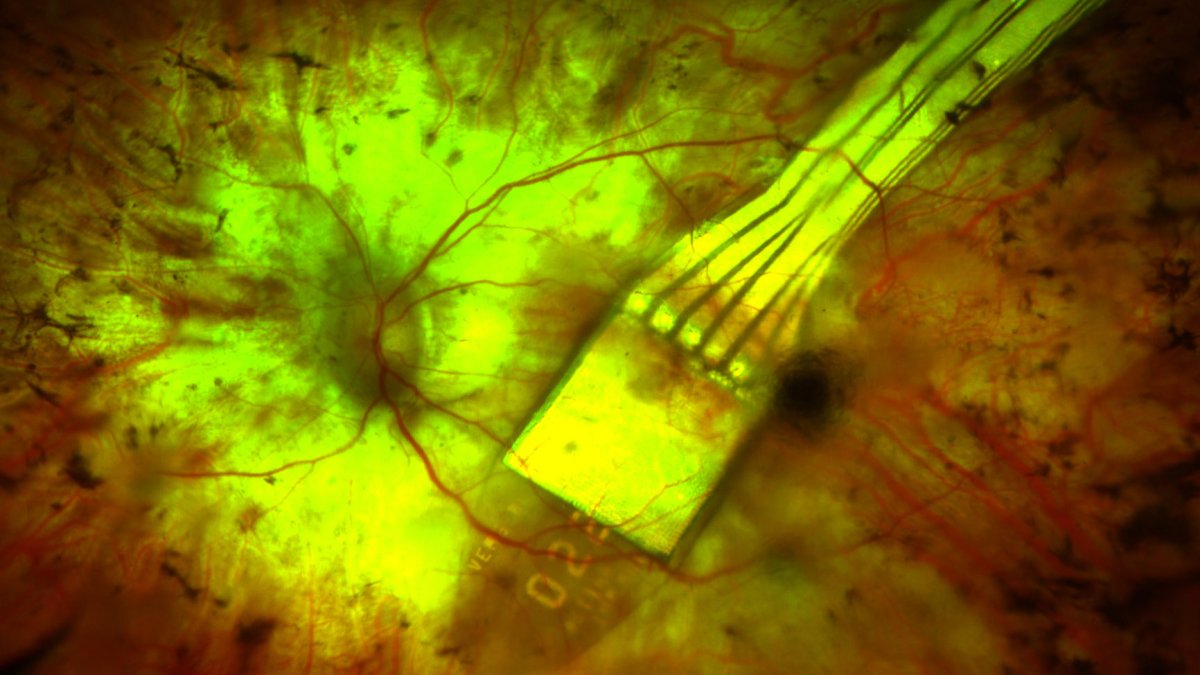
Science Corporation, founded by former Neuralink president Max Hodak, raised a $400 million Series D at a $3.5 billion valuation, TechCrunch reported. Its PRIMA implant restores vision in age-related macular degeneration patients and is approved in Europe; the company now plans US entry through the FDA's Humanitarian Device Exemption.

Science Corporation, the brain-technology startup founded by former Neuralink president Max Hodak, has raised a $400 million Series D round that values the company at $3.5 billion, according to TechCrunch, which cited a person familiar with the deal. Backers include Khosla Ventures, the Ackman Oxman Institute, hospital operator Tenet Healthcare, 885 Capital, Y Combinator and PLC Neurotech.

Founded in 2021, Science has taken a deliberately different path from its better-known predecessor. Rather than chasing a general brain interface from day one, it built its first commercial product around a concrete, bounded medical need: PRIMA, a small implantable and wearable chip system that helps people with age-related macular degeneration recover useful sight.

PRIMA is already approved in Europe and available in Germany, and is being trialed for additional conditions. In October, Hodak announced on stage at TechCrunch Disrupt that the device had been implanted in its first Stargardt disease patient, a hereditary form of early-onset vision loss - extending the technology beyond the aging population it was originally designed for.

The new funding is aimed chiefly at the US market. Science plans to bring PRIMA to American patients through the FDA's Humanitarian Device Exemption, a regulatory pathway for technologies that treat rare conditions, after convincing the agency that advanced macular degeneration in both eyes qualifies as uncommon enough.

The longer-term ambition remains the founding one: connecting directly to the human brain through a bio-hybrid sensor built from cultured neurons grown on silicon. The company is designing initial human trials with Yale neurosurgery professor Murat Gunel, who told TechCrunch earlier this year that the device could eventually offer treatments for Parkinson's disease and other brain injuries.

The valuation puts Science among the most valuable neurotechnology companies that have not yet shipped a true brain interface - a bet that revenue-grade medical devices, rather than demos, are the right way to build toward one. With $400 million in hand, FDA clearance for PRIMA is now the nearest and most testable milestone on that roadmap.

Comments (0)

Log in to join the discussion

Log In

No comments yet